
CHALLENGING SITUATIONS

Nervous Dogs
Nervous dogs can find even familiar grooming procedures difficult, and their responses aren't always obvious. Understanding what contributes to their anxiety, recognising signs of distress and adapting the appointment can make a considerable difference to their comfort and welfare.
-
Dogs may experience anxiety during grooming for many different reasons. Some have had limited opportunities to become familiar with grooming equipment and handling, while others may have experienced frightening events, painful procedures or changes in their health. We don't always know a dog's history, and even dogs who have previously been comfortable with grooming can develop new sensitivities.
Anxiety can appear in many ways, including trembling, panting, drooling, pacing, barking, avoidance or attempts to escape. Some dogs become very still or shut down, which can be mistaken for cooperation. Recognising these responses helps us make decisions about whether to continue, adjust or stop a procedure.
-
A quieter grooming environment can make a considerable difference to dogs who are sensitive to noise or activity. Where possible, schedule appointments during less busy periods, reduce unnecessary movement around the dog and provide distance from barking dogs, dryers and other sources of stimulation.
Some dogs are more comfortable with gentle background sound, while others prefer a quieter environment. Observe the individual rather than assuming that music or other calming sounds will be helpful.
-
Rushing an anxious dog can increase their distress. Allow sufficient appointment time for introductions, breaks and gradual transitions between grooming procedures.
Where possible, maintain consistency in the groomer, handling approach and appointment routine. Give the dog opportunities to investigate unfamiliar equipment and recognise what is happening before introducing new sensations.
A calm, patient approach is important, but so is recognising when the dog is struggling. Continuing a procedure simply because the groomer remains calm does not necessarily make the experience easier for the dog.
-
Some dogs find familiar, gentle contact reassuring, while others become more distressed when touched or restrained. Observe the dog's response and avoid assuming that stroking, holding or having another person present will automatically help.
A second groomer may be useful for certain procedures, particularly when additional physical support is needed, but extra handling can also increase pressure on an anxious dog. Any assistance should be coordinated, necessary and appropriate for the individual.
-
Not every dog can comfortably complete a full grooming appointment. Depending on the dog's needs, it may be more appropriate to divide the groom into shorter visits, prioritise essential hygiene or postpone less urgent styling.
Some dogs may benefit from separate bathing and trimming appointments, while others may find repeated visits more difficult. The decision should be based on the dog's responses and circumstances.
A comfortable, achievable groom is more important than a complete cosmetic finish.
-
Consider appointment timing, the number of people and dogs present, and how long the dog will need to remain at the grooming premises.
Some nervous dogs benefit from an early appointment before the environment becomes busy. Others may do better at a different time of day, depending on their routine and individual needs.
Where possible, arrange prompt collection once the appointment is finished rather than requiring the dog to wait unnecessarily.
-
A familiar blanket, suitable toy or other item from home may help some dogs feel more comfortable. Owners can often tell us which items or routines their dog finds reassuring.
Food rewards, where appropriate and welcomed by the dog, can also help build positive associations with particular grooming procedures. These should support the dog's comfort and willingness to participate, rather than be used to distract them through handling they find distressing.
-
Owners can provide valuable information about their dog's behaviour, previous grooming experiences, sensitivities and preferences. Discuss what the dog finds difficult, what has helped before and what is realistically achievable during the appointment.
Record any changes made, the dog's responses and recommendations for future visits. For dogs experiencing significant or persistent distress, veterinary assessment and support from an appropriately qualified behaviour professional may be needed.
The aim is not simply to get through the groom. It is to help the dog feel safer and more comfortable, while recognising when grooming needs to be modified or postponed.
MAGGIE AND ELSIE
Maggie and Elsie are Groodle sisters from different litters. Elsie is confident and steady. Maggie is more sensitive and nervous about the grooming process.
In this four-part tutorial, Alicia walks through a full groom on both girls while demonstrating a clear behaviour-informed approach. You’ll see how asking instead of forcing changes the entire experience for a nervous dog, reduces physical strain on the groomer, and creates a calmer, more efficient workflow.
The haircut is a practical, low-maintenance #4F blade spring trim. The real lesson is in the handling, communication, and decision-making throughout the groom.
This tutorial is also available as a fastForward
Part 1 – Bathing, Consent & Foundation Handling
Alicia demonstrates how she manages two large dogs in the bath while supporting a nervous temperament. Watch how she:
Asks dogs to enter the bath rather than dragging or lifting
Uses sister confidence to support a nervous dog
Avoids common rinsing triggers by protecting the nose and ears
Maintains safety with nooses without adding tension
Uses warm water and calm repetition to build trust
This section sets the tone for the entire groom and shows how small adjustments dramatically reduce stress.
Part 2 – Clipping Strategy & Nervous Dog Positioning
Maggie’s full body clip is completed with a #4F blade for a practical spring length. Key focus areas include:
Head shaping with clippers to reduce scissoring time
Using a wall for physical and emotional stability
Stretching skin correctly to avoid nicks in rolls and flanks
Holding legs within natural range of motion
Asking for movement instead of physically turning the dog
You’ll clearly see the difference between forcing a turn and asking for one.


Part 3 – Hygiene Areas, Tail Work & Technical Safety
This section covers:
#10 blade hygiene work with light hand pressure
Safe tail clipping with a snap comb over a #30 blade
Awareness of tailbone placement when using attachment combs
Efficient prep work to reduce scissoring time
Managing large dogs without compromising your body
Alicia reinforces that good prep equals good finish.
Part 4 – Scissoring Finish & Easy Maintenance Styling
The final section completes the groom with:
Neat, tight ear edging technique
Low-maintenance face shaping while preserving eyelashes
Safe foot scissoring and checking between toes
Final balance and symmetry checks
Working efficiently without escalating nervous behaviour
The result is a practical, owner-friendly trim completed in two hours for both dogs together.


When nervous dogs need us to think differently
Maggie and Elsie's tutorials explore the hands-on challenges of grooming nervous dogs, including adapting handling, recognising distress and making adjustments to help dogs cope with the grooming process.
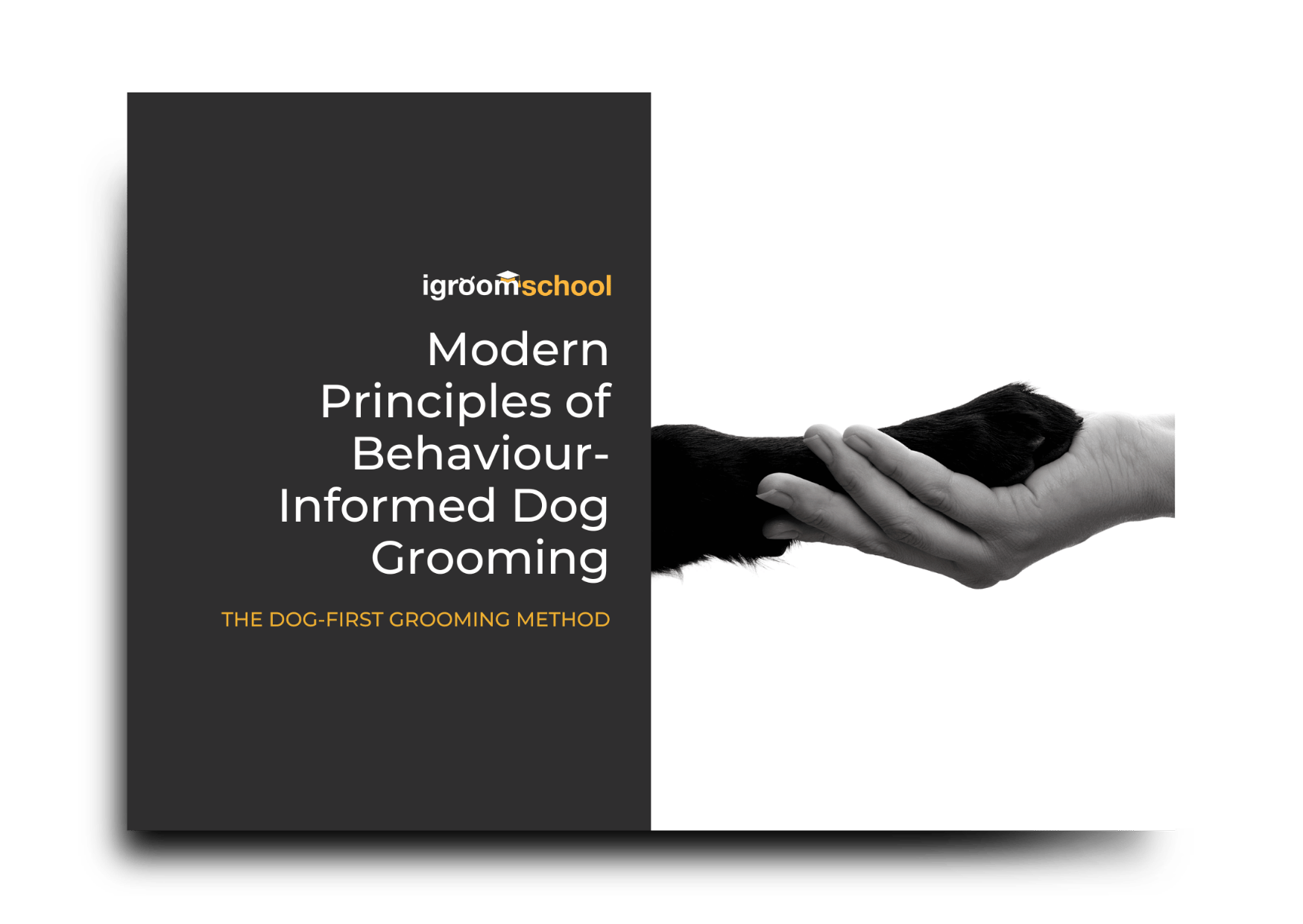
For a deeper and more current understanding of what anxious dogs may be communicating, how stress affects their behaviour, and how our own approach can influence their responses, head to Modern Principles of Behaviour-Informed Dog Grooming.
Modern Principles takes the conversation further, helping groomers recognise subtle signs of discomfort, understand why a dog may be struggling, and make thoughtful decisions about handling, expectations and when it's time to change course.