Bathing and Drying Techniques
Combination Coats
Defining the Combination Coat
Includes
COMBINATION COATS
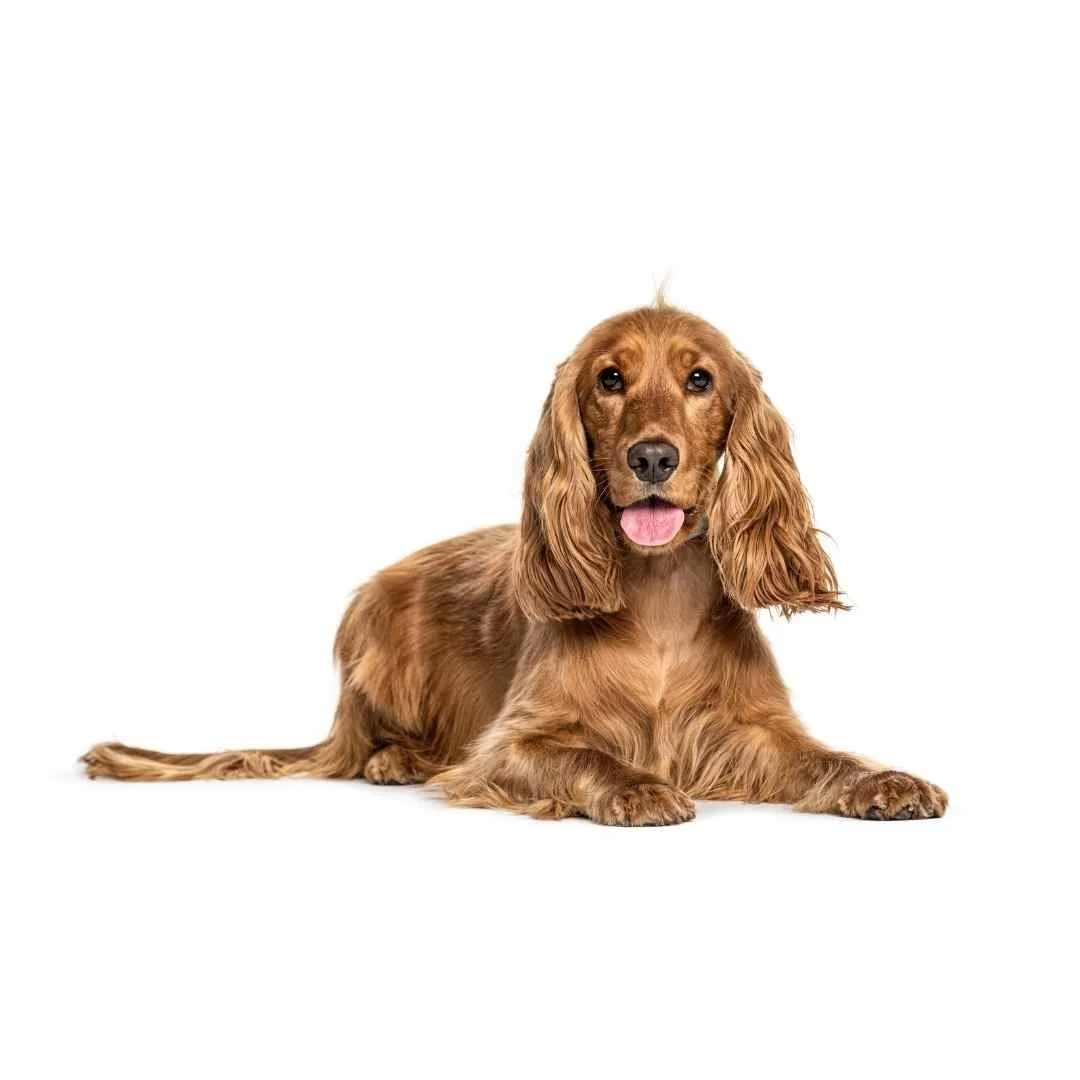
Combination of long silky coat and short, smooth coat
Think of King Charles Cavalier Spaniels, Golden Retrievers, Long Haired Chihuahuas and Border Collies

And
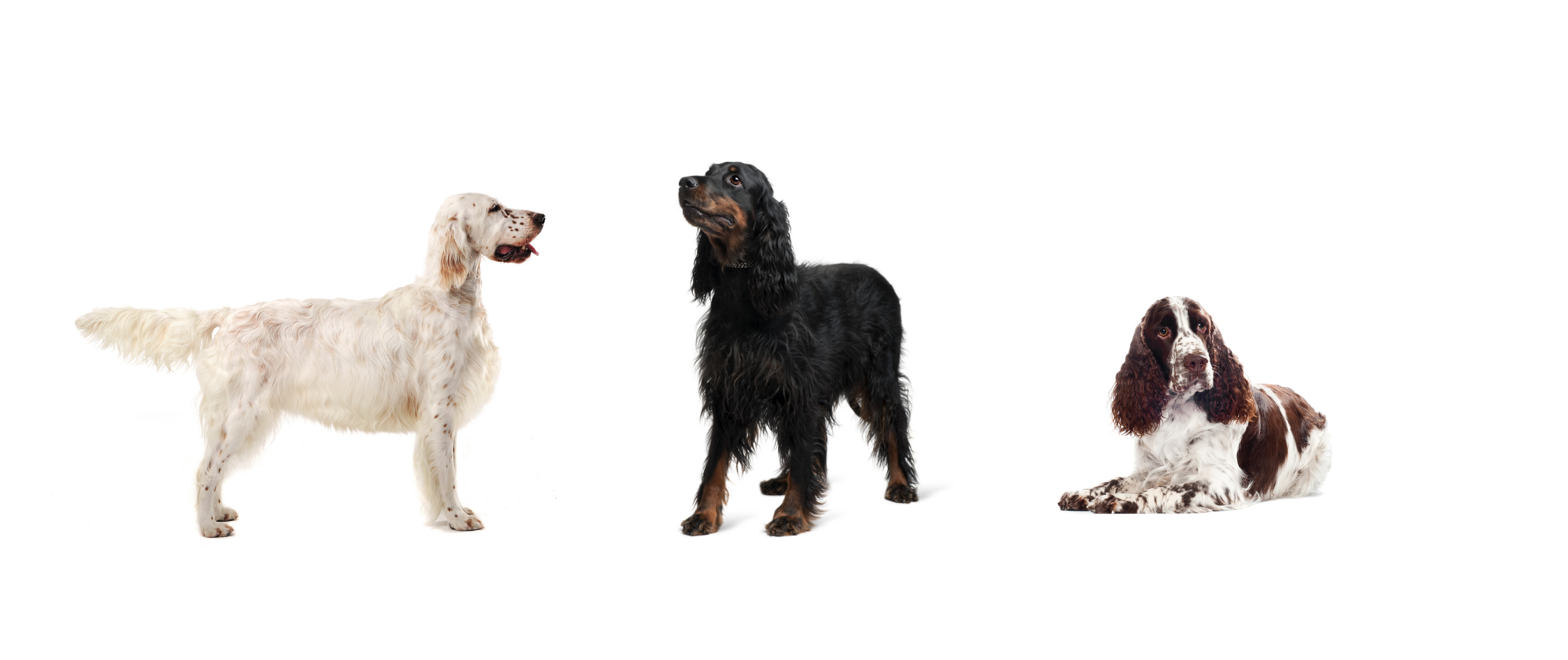
SILKY COATS
Long silky coat + short smooth coat on some parts of body
Seasonal shed depending on climate.
Think of English Setters, Gordon Setters, Welsh Springer Spaniels

Quick guide
Combination coats bring together different lengths, textures and densities of hair across the body. A shorter, flatter jacket may sit alongside longer, softer feathering on the ears, chest, legs, belly and tail. Some breeds also have a substantial undercoat. Bathing and drying these dogs involves recognising which areas need thorough undercoat removal, which need careful conditioning, and how the finished coat should lie.
-
Combination coats are not uniform. The body coat may be relatively short and close-fitting, while the longer feathering requires more attention to prevent tangling and breakage.
Silky coats share some of these characteristics, particularly the contrast between a shorter jacket and longer, flowing furnishings. However, the amount of undercoat, hair texture and coat density can differ considerably between breeds and individual dogs.
The grooming approach should reflect these differences. A lightly coated Border Collie will not require the same preparation as a heavily coated American Cocker Spaniel, even though both have areas of shorter body coat and longer furnishings.
-
Begin by assessing the coat's condition, density and distribution. Check for loose undercoat, tangles and compacted areas, particularly behind the ears, beneath the front legs, through the chest and around the hindquarters.
Longer feathering can trap dirt and debris, while dense areas may conceal knots that are not immediately visible from the surface.
Consider the intended finish before selecting products. A natural pet groom may require thorough cleansing, conditioning and removal of loose undercoat, while a full-coated show dog may need different products and preparation techniques for different areas of the body.
Handle longer furnishings gently to avoid unnecessary breakage.
-
Thorough cleansing is particularly important where the coat contains a substantial undercoat. Saturate the hair completely, working through the outer layer to reach the skin.
A hydrobath can be useful for dense coats, helping distribute shampoo and water through areas that may otherwise be difficult to penetrate.
Work methodically through the body, paying particular attention to the chest, legs, feet, belly and ears. A second shampoo may be appropriate where dirt, grease or product build-up remains.
Longer furnishings should be washed carefully rather than rubbed together, which can create tangles.
Product selection may vary across the coat. Cleansing products suited to the body jacket may differ from those chosen for longer, silky areas or furnishings requiring additional volume.
Rinse thoroughly, ensuring shampoo is removed from both the shorter body coat and longer feathering.
-
Conditioning helps maintain the longer, finer areas of a combination coat, reducing friction, tangling and breakage.
Pay particular attention to ears, feathering, tails and other areas where the hair is vulnerable to damage. Choose products according to the coat's condition and the finish required.
For a natural pet groom, the priority is generally a clean, manageable coat that lies comfortably and retains its natural appearance.
For show and competition preparation, different sections may require different finishes. A flatter, flowing body coat may benefit from smoothing products, while particular furnishings may require additional body and lift.
The American Cocker Spaniel demonstration illustrates how product selection can be adjusted across the same dog to achieve these contrasting results.
Rinse thoroughly according to the products used.
-
Begin by removing excess water with a towel or chamois, taking care not to rub longer feathering into tangles.
Where there is a substantial undercoat, use a high-velocity dryer to remove moisture from the skin outwards. Work systematically, ensuring the roots are dry rather than concentrating only on the outer hair.
Adjust the nozzle and airflow to suit the coat's length and texture. Concentrated airflow can be useful for removing moisture from dense areas, while gentler airflow may be preferable through longer, finer furnishings.
Keep the dryer moving, monitor the temperature and adjust the process according to the dog's comfort.
As drying progresses, use appropriate brushing techniques to separate and straighten longer hair where required.
-
Different areas of a combination coat may need to lie in different directions.
For everyday grooming, directing airflow along the natural growth of the hair helps maintain a neat finish. Longer feathering may benefit from brushing and controlled drying to reduce wave, tangles and unevenness.
Show preparation can be more specialised. On an American Cocker Spaniel, for example, the body coat is prepared to lie smoothly and flow downwards, while the lower foot furnishings are encouraged to lift and form the desired shape.
This may involve different products, drying directions and finishing techniques within the same groom.
The goal is to work with the coat's natural characteristics while preparing it for the intended style.
-
Many combination-coated dogs have an undercoat that sheds and requires regular maintenance.
Thorough bathing and high-velocity drying can help release loose undercoat before brushing begins, reducing the amount of mechanical work required afterwards.
Once the coat is dry, use suitable brushes and combs to remove remaining loose hair, taking care around longer feathering and sensitive areas.
Avoid excessive brushing or repeatedly working the same section. The aim is to remove loose undercoat while preserving healthy hair and maintaining the coat's natural appearance.
Not every combination coat sheds heavily, so the amount of deshedding required should be determined by the individual dog.
-
Once drying is complete, check that the coat is thoroughly dry, particularly through the chest, hindquarters and other dense areas.
Comb through longer feathering, ears, legs and tail to identify remaining tangles or areas requiring additional attention.
For natural pet grooming, the coat should be clean, comfortable and manageable, with loose undercoat removed and the longer furnishings separated.
For show and competition grooming, assess how the different sections lie and whether the preparation supports the intended breed-specific finish.
The result should reflect the individual dog's coat characteristics and grooming requirements.
Bathing and Drying Demonstrations
AMERICAN COCKER SPANIEL
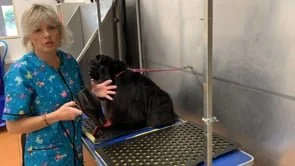
This advanced demonstration follows the bathing and drying preparation of a full-coated American Cocker Spaniel for showing or grooming competition. The groom explores how different areas of the coat require different finishes, with the jacket kept smooth and flat while the lower furnishings are prepared for additional volume and shape. Watch how product selection, selective bathing and carefully directed airflow work together to create the desired presentation, followed by straightening and finishing with a slower dryer. Nicky goes into similar detail with her English Cocker Spaniel tutorial also.
BORDER COLLIE
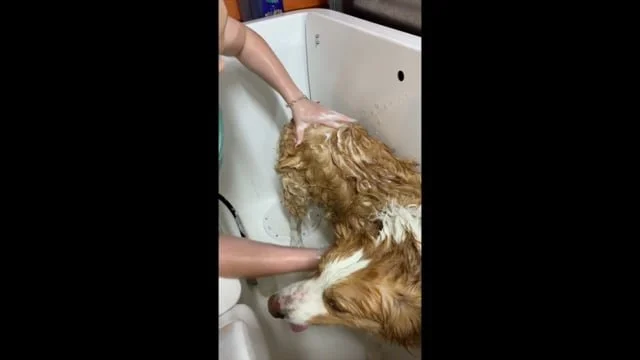
Leo's bathing and drying demonstration shows the everyday care of a lighter combination coat with an undercoat. The tutorial covers thorough cleansing with a hydrobath, reaching the skin beneath the outer coat and using high-velocity drying to remove moisture and release loose hair. Particular attention is given to drying from the skin outwards, protecting the face and ears, and making the process comfortable for a dog attending the salon for a routine groom.