
Bathing and Drying Techniques
The Hairless Coat
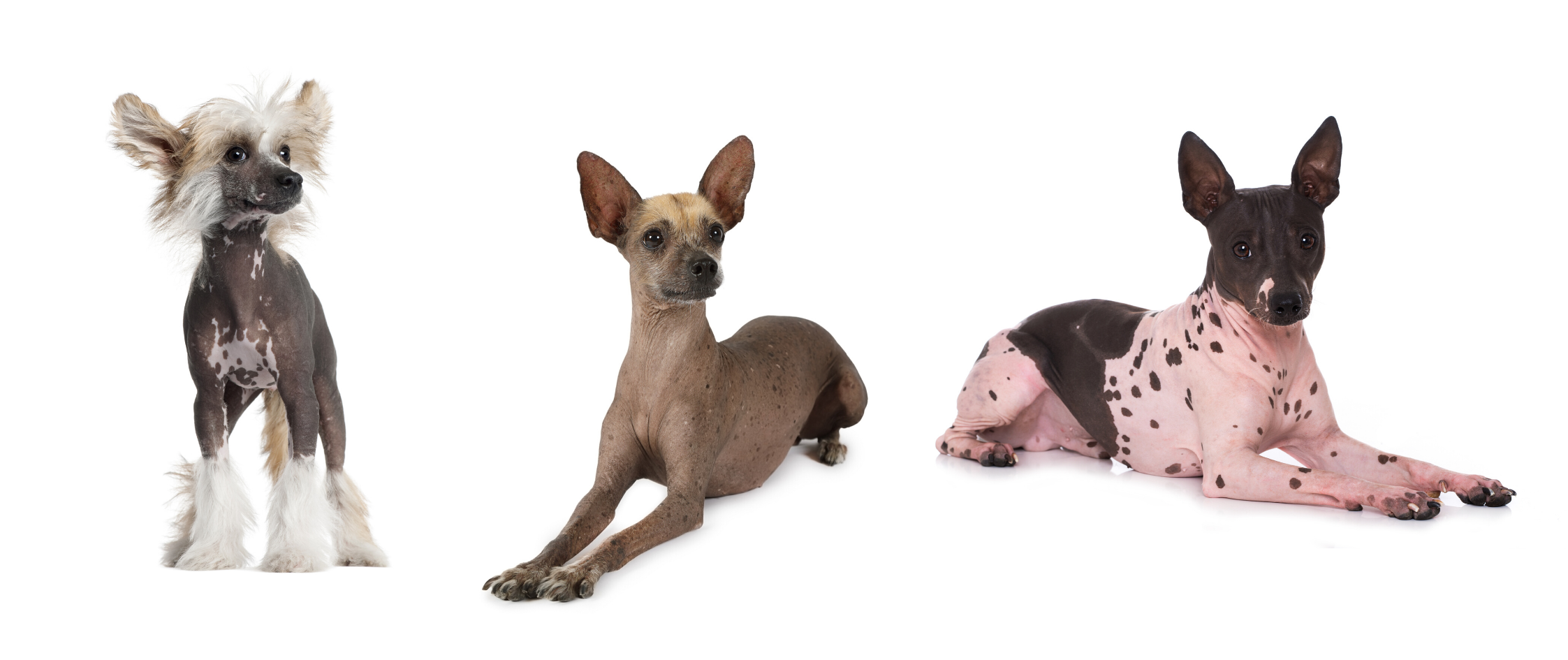
HAIRLESS
Prone to skin problems
Require special oils and sunscreen
Sparse hair on body sometimes
Silky hair on extremities sometimes
Chinese Crested, Xoloitzcuintli, American Hairless Terrier

Quick guide
Bathing and drying hairless dogs is primarily about skin care. Without the protection of a full coat, exposed skin needs particular attention, while the hair on the head, feet, tail and ears requires gentle handling and conditioning. The aim is to maintain clean, comfortable skin without irritation and protect the coat that remains.
-
Begin by checking the skin for dryness, blackheads, excess oil, redness, irritation or other changes. Hairless dogs can develop skin concerns that require a different approach from those used for fully coated breeds.
Where clipping or shaving is part of the groom, bathing first helps remove dirt and oils that might otherwise contribute to irritation during clipping.
Consider the dog's individual skin condition before choosing products or exfoliating techniques. Avoid exfoliating areas that are already inflamed, broken or uncomfortable, and refer persistent or concerning skin problems for veterinary assessment.
-
Use comfortably warm water and a mild, dog-appropriate shampoo suited to the skin's condition. Some hairless dogs benefit from gentle exfoliating products to help remove surface dirt, excess oil and accumulated dead skin cells.
Massage the shampoo carefully over the exposed skin, using light pressure rather than vigorous scrubbing. Exfoliating gloves or products containing fine particles may be used where appropriate, but excessive friction can cause redness and irritation.
Pay attention to areas where oil and blackheads tend to accumulate, while avoiding broken or inflamed skin. Gentle cleansing is preferable to attempting to remove every blackhead during a single bath.
Where the dog has longer hair on the head, feet or tail, choose a shampoo suited to those areas. Colour-enhancing products may be used on white furnishings where appropriate.
Rinse thoroughly to remove all product residue, taking care around the eyes and ears.
-
Although hairless breeds have little body coat, their furnishings still need appropriate care. Hair on the head, feet, tail and sometimes the ears can be fine and vulnerable to tangling or breakage.
Apply a suitable conditioner to these areas, distributing it gently without pulling or rubbing the hair excessively. A light protein-based conditioner may be selected where the hair needs additional support, depending on its condition.
Use only as much product as needed and rinse according to the manufacturer's directions.
The aim is to maintain soft, manageable hair while protecting the exposed skin from unnecessary product build-up or irritation.
-
Hairless dogs generally require much less mechanical drying than heavily coated breeds. Begin by gently removing excess moisture with a soft towel or chamois, avoiding vigorous rubbing over exposed skin.
A hands-free dryer with controlled airflow can be used to dry the remaining furnishings. High-velocity drying is generally unnecessary for the small amount of coat present and may be uncomfortable for some dogs.
Use a pin brush to gently separate and dry the hair on the head, feet, tail and ears. Avoid dragging a slicker brush across exposed skin, as its pins can cause scratching or discomfort.
Monitor the temperature carefully. With little coat to buffer the airflow, exposed skin can become uncomfortable or overheated quickly.
The skin and remaining hair should be completely dry before proceeding with any clipping or finishing work.
-
After bathing, assess whether the skin would benefit from a light, dog-appropriate moisturiser. Choose products suited to the individual dog's skin and avoid heavy or irritating formulations.
Check around the feet and nail beds, where dirt and oils can accumulate. Clean these areas gently, paying attention to any redness, swelling or discomfort.
Before completing the groom, check that the skin is clean, dry and comfortable, and that the remaining furnishings have been conditioned and brushed without unnecessary pulling.
Regular skin care is important, but more exfoliation or more product isn't necessarily better. The frequency and intensity of care should reflect the individual dog's skin condition and needs.
CHINESE CRESTED
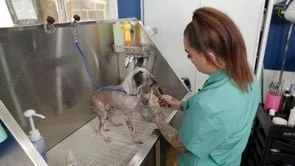
Alicia demonstrates bathing and drying Simon, a minimally hairless Chinese Crested being prepared for a show trim. With skin care as the priority, Alicia explains her approach to gentle exfoliation, managing blackheads and selecting different shampoos for the exposed body and white furnishings. She also demonstrates conditioning the remaining hair, cleaning around the nails and using a stand dryer with a pin brush to protect Simon's delicate skin and coat.