Bathing and Drying Techniques
Smooth Coats
Defining the Smooth Coat
Includes
SMOOTH COATS
Coat is short and close to body
Soft, sensitive skin – use care with brushes and shampoos
Coats, jackets, sunscreen
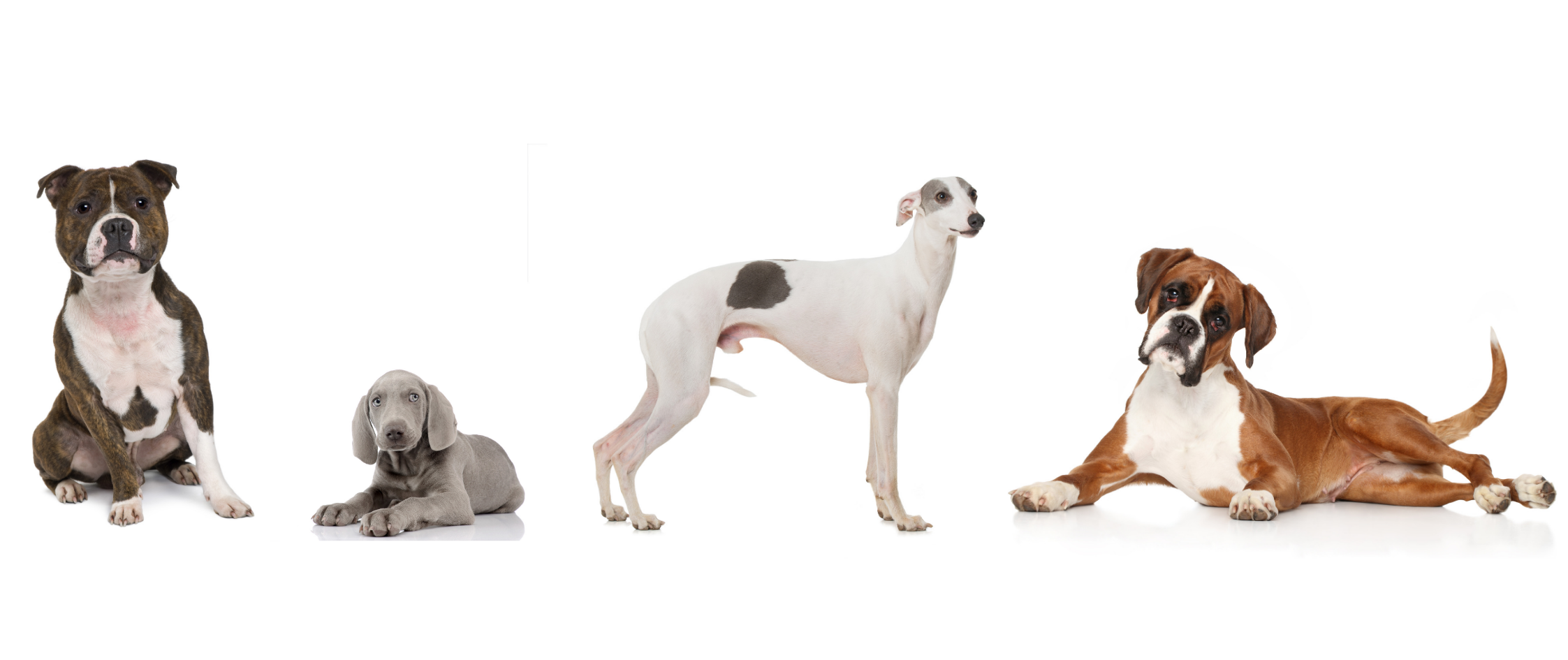
Think of Staffies, Weimaraners, Whippets, Boxers
And
SHORT COATS
Coat is short and close to body, but much longer than Smooth Coated
Needs weekly grooming, depending on season
Think of Pugs, Labradors, Australian Cattle Dogs, Mastiffs


Quick guide
Short hair doesn't necessarily mean simple coat care. Some dogs have fine, smooth hair lying close to the skin, while others have a much denser coat with a substantial undercoat. These differences influence how thoroughly the coat needs to be washed, how much loose hair can be removed during bathing and drying, and which grooming tools are appropriate. Skin sensitivity, body shape and the dog's ability to tolerate the grooming process are equally important considerations.
-
Smooth coats generally have very short, close-fitting hair with little visible undercoat. Breeds such as Greyhounds, Whippets and Staffordshire Bull Terriers often require relatively little brushing, but their exposed skin and prominent bony areas need careful handling.
Short coats may be slightly longer and considerably denser. Labradors, Rottweilers and Australian Cattle Dogs, for example, have short double coats that can hold a surprising amount of loose undercoat.
The amount of shedding, coat density and skin condition should guide the grooming process rather than hair length alone.
-
Before bathing, run your hands through the coat to assess its density, condition and the amount of loose hair present.
Check for dry or irritated skin, lumps, abrasions, sensitive areas and any changes that may require further attention. On smooth-coated dogs, these concerns can be particularly noticeable because there is little hair to conceal them.
For short double coats, work against the direction of hair growth with your hand to assess how much loose undercoat is ready to shed.
Consider the dog's age, body condition and comfort. Thin-skinned or bony dogs may be sensitive to firm brushing, while larger, heavily coated dogs may need more time for thorough cleansing and drying.
-
Choose a dog-appropriate shampoo suited to the coat and skin condition. A gentle cleansing shampoo may be sufficient for a lightly soiled smooth coat, while denser short coats may require more thorough washing to reach the skin.
Rubber grooming mitts or soft bathing gloves can help distribute shampoo, massage the skin and loosen shedding hair. Use controlled pressure and avoid vigorous scrubbing, particularly over prominent bones or sensitive areas.
For dense short coats, a hydrobath can help distribute water and shampoo through the undercoat. Two shampoos may be useful where the coat contains accumulated dirt, oil or loose hair.
Pay attention to the neck, chest, feet, tail and areas where grease and debris can collect.
Rinse thoroughly with clean water, ensuring no shampoo remains against the skin. Product residue can contribute to irritation and make drying more difficult.
-
Conditioner can help maintain the hair and skin, improve coat manageability and assist with removing loose undercoat.
For short double coats, an appropriate conditioner can help loosen shedding hair during bathing. A rubber curry brush may be used gently through the wet coat to distribute conditioner and encourage loose hair to release.
Smooth coats may require less product, but this doesn't mean conditioning is unnecessary. Choose a light, suitable conditioner according to the dog's skin and coat condition.
Avoid heavy product build-up, and rinse thoroughly according to the manufacturer's instructions.
-
Begin by removing excess water with a towel or chamois. Smooth coats generally release water quickly, so a considerable amount of moisture can be removed before mechanical drying begins.
A dryer can then be used to remove remaining moisture, with airflow adjusted to suit the dog. Keep the dryer moving and monitor skin temperature, particularly where the coat is fine or sparse.
Avoid directing concentrated airflow into the eyes, ears or face. Reduce airflow or remove the nozzle when working around sensitive areas.
Some dogs are uncomfortable with dryer noise or airflow. Begin at a manageable setting, observe their response and allow breaks where needed.
A completely dry coat should feel comfortable against the skin, without damp patches or remaining product residue.
-
Short double coats often hold considerably more moisture than their appearance suggests.
High-velocity drying can help remove water from the undercoat while releasing loose hair. Work systematically from the skin outwards, rather than drying only the outer surface.
Adjust the airflow to suit the dog's comfort and coat density. Loose hair may be released throughout the drying process, so appropriate protective equipment is important for the groomer.
Once dry, use suitable deshedding tools to remove remaining loose undercoat. Rubber curry brushes and other gentle tools can be particularly useful for short coats.
Avoid excessive pressure or repeated brushing over the same area, especially where the hair is thin or the skin lies close to prominent bones. The aim is to remove loose hair without irritating the skin or damaging healthy coat.
-
Some smooth-coated breeds have prominent bones, thin skin or very little hair covering sensitive areas. Choose grooming tools carefully and avoid dragging firm blades or brushes across the spine, hips, legs and other bony areas.
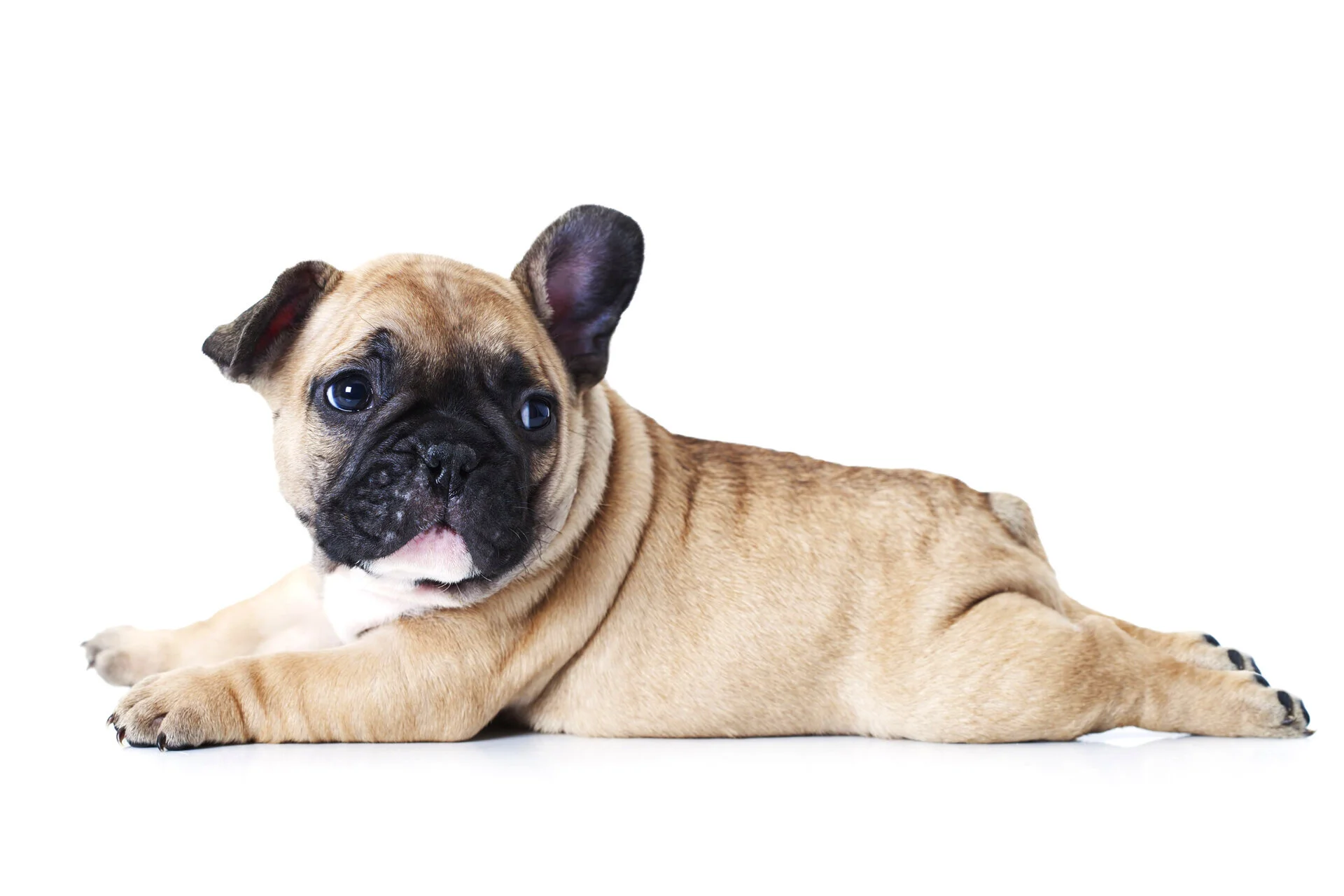
Brachycephalic breeds, including Pugs and Boxers, require additional attention to breathing, temperature and stress during bathing and drying.
Keep sessions comfortable, avoid unnecessary heat and monitor for signs of respiratory difficulty or overheating. Dogs showing concerning breathing changes should have grooming stopped and receive appropriate veterinary attention.
Facial folds also need careful cleaning and drying where present. Use suitable products and avoid directing water, shampoo or strong airflow towards the eyes or nostrils.
-
Once the dog is dry, run your hands over the coat to check for remaining moisture, loose hair, product residue or areas of skin irritation.
For smooth coats, the finish should be clean and comfortable, with the natural close-fitting appearance preserved.
For short double coats, check that the undercoat is thoroughly dry and that loose hair has been removed without excessive brushing.
The finished coat should reflect the dog's natural texture, skin condition and individual grooming needs.
Bathing and Drying Demonstrations
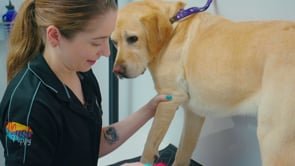
LABRADOR
Follow Pippa through a complete bath and deshedding service, from assessing her shedding coat to the final brush-out. The demonstration covers thorough cleansing with a hydrobath, conditioning and using a rubber curry brush to loosen undercoat during bathing, followed by high-velocity drying and further deshedding. It also shows how the groomer adapts the process to Pippa's preferences, choosing to towel-dry her head rather than cause unnecessary stress with the dryer.
ROTTWEILER
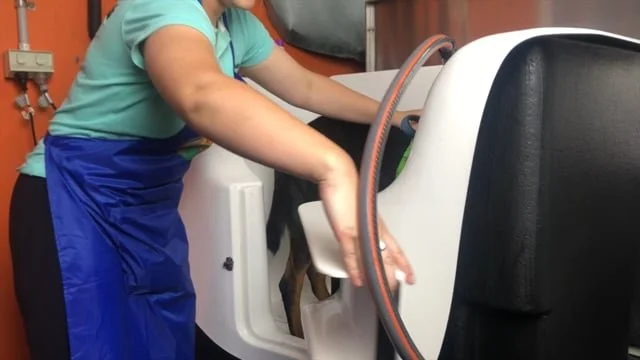
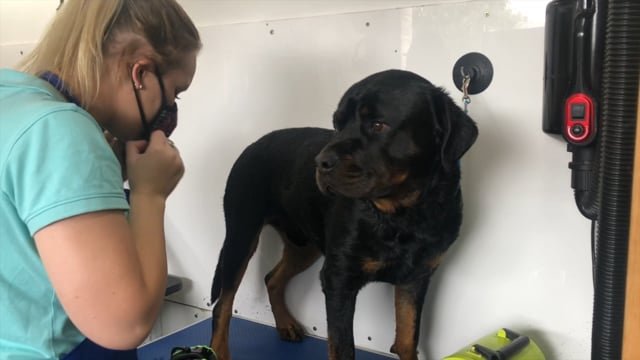
A two-part bathing and drying demonstration featuring a Rottweiler's dense, short coat. The tutorial covers thorough cleansing with a hydrobath, cleaning around the face and ears, and using a chamois to remove excess water. High-velocity drying is then used to remove moisture from the skin outwards while releasing loose hair, with attention to dryer noise, airflow and safe handling of a large dog.
GREYHOUND
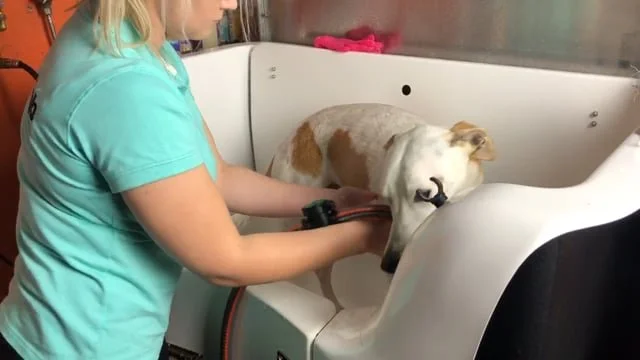
This demonstration follows a Greyhound through the bathing process, showing how to cleanse a fine, smooth coat while being mindful of sensitive skin and prominent bony areas. It covers gentle shampoo application, the use of exfoliating gloves and thorough rinsing, with particular attention to keeping the dog comfortable throughout.