

Danger points are the areas on a dog’s body where grooming accidents are most likely to happen. Thin skin, folds, movement, sharp anatomical points, and sensitive areas can all quickly turn a routine groom into an injury if you’re not paying attention.
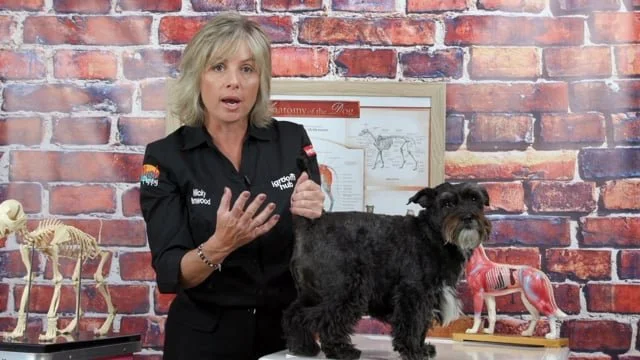
In this lesson, Nicky walks through some of the most common high-risk areas groomers encounter, including lips, eyes, ears, webbing, flanks, armpits, hocks, neck folds, and sanitary areas. She explains why these spots are vulnerable, what commonly causes accidents, and the handling techniques groomers use to work more safely and confidently.
This tutorial is designed to build awareness, improve technique, and help newer groomers develop safer habits around clippers, scissors, and sensitive areas of the dog.
Danger Points
Key Danger Points to Watch
Lip lines and lip folds
Small dimples and folds around the lips can easily catch in fine blades, particularly during face work or poodle faces. Older or looser-lipped dogs are especially vulnerable.Eye area and eyelids
The skin around the eyes should be gently tauted, not overstretched. Too much tension can increase the severity of an accident if a nick occurs.Ear edges and ear tips
Ear leather is extremely thin and one of the most commonly injured areas in grooming. Nicky demonstrates the importance of thumb placement when clipping over the head to protect the ear tip.Webbing between the toes
Particularly risky when using shorter or wider blades around feet, especially on heavily coated or matted dogs.Armpits
Thin, stretchy skin and awkward angles make the armpit a high-risk clipping area, particularly with larger blades.Flank skin
The loose skin between the rib cage and rear leg can easily catch in blades if exposed incorrectly. Nicky recommends clipping “down and around” rather than directly into the fold.Fibula / hock area
Small, prominent bones near the hock are vulnerable, especially when forcing blades through matting or thick knots.Sanitary and bottom areas
Sudden sitting or movement during sanitary clipping can lead to accidents. Nicky explains why her salon now prefers scissoring certain areas where appropriate.Tongues during face work
Never groom around the mouth while a dog is panting heavily. Tongues can move unpredictably and are easily injured.Loose neck folds
Particularly common in Cavaliers, Cockers, and older dogs. Skin folds can bunch into the blade if not properly tauted or approached from a safe angle.
Important Grooming Reminders
Slow down when approaching high-risk areas.
Never force blades through matting.
Use appropriate blade lengths for the area you’re working on.
Taut the skin gently rather than overstretching it.
Anticipate sudden movement, especially with sensitive dogs.
Safe grooming habits are developed through awareness and consistency, not speed.
