

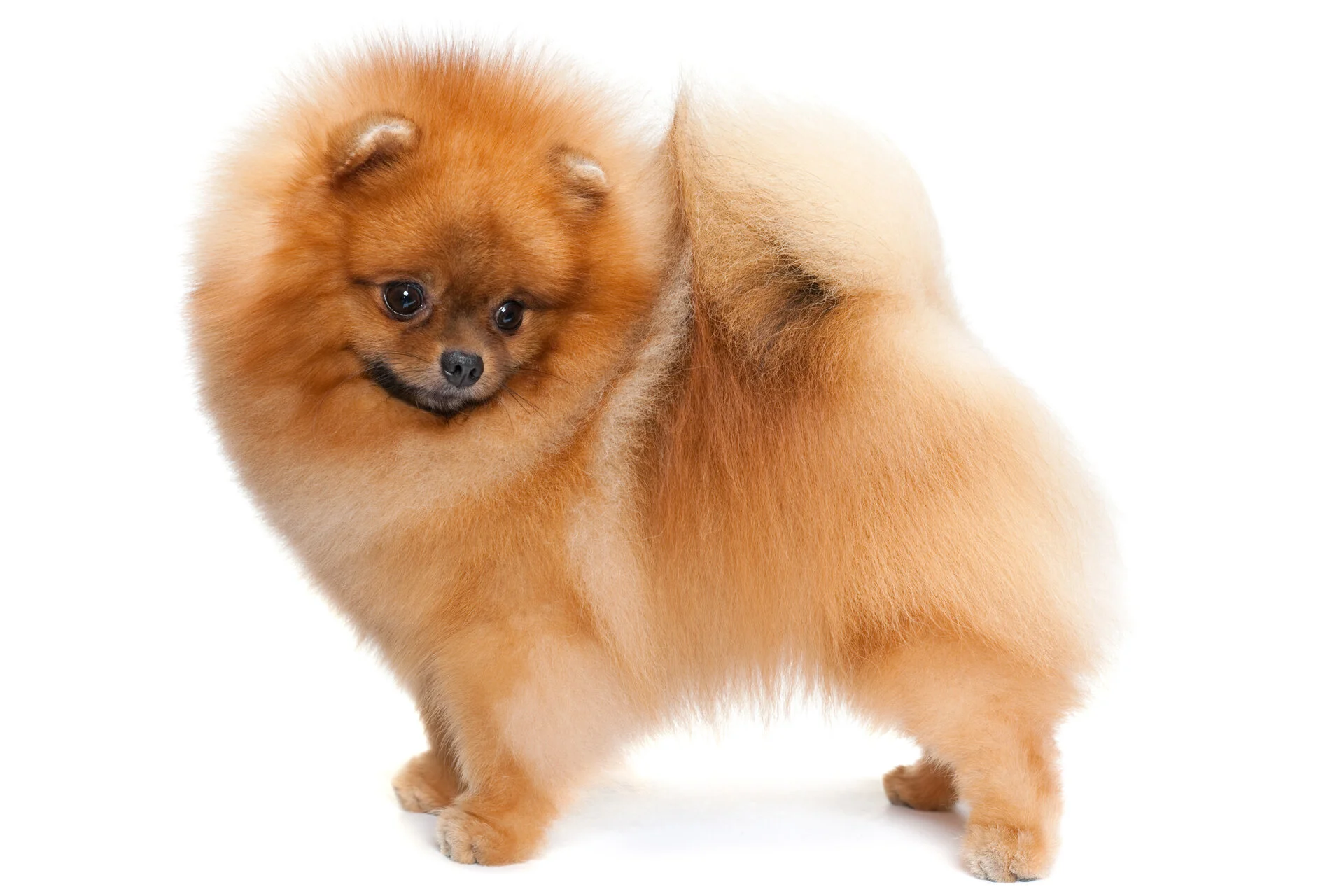
Bathing and drying techniques
Double Coats & Groomouts
Defining the Double Coat
Includes
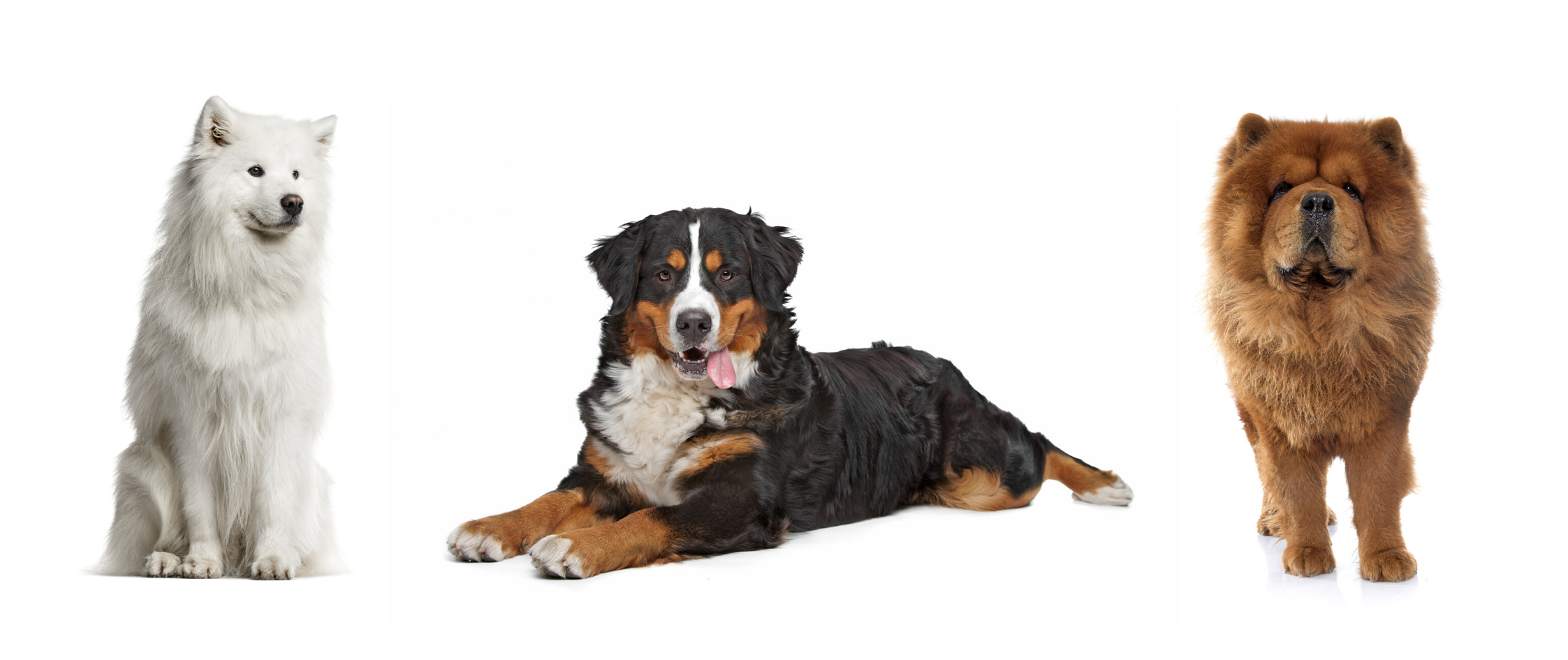
HEAVY COAT
Long thick silky coat, and a limited amount of short, smooth coat
Think of Samoyeds, Bernese Mountain Dogs, Chow Chows
And
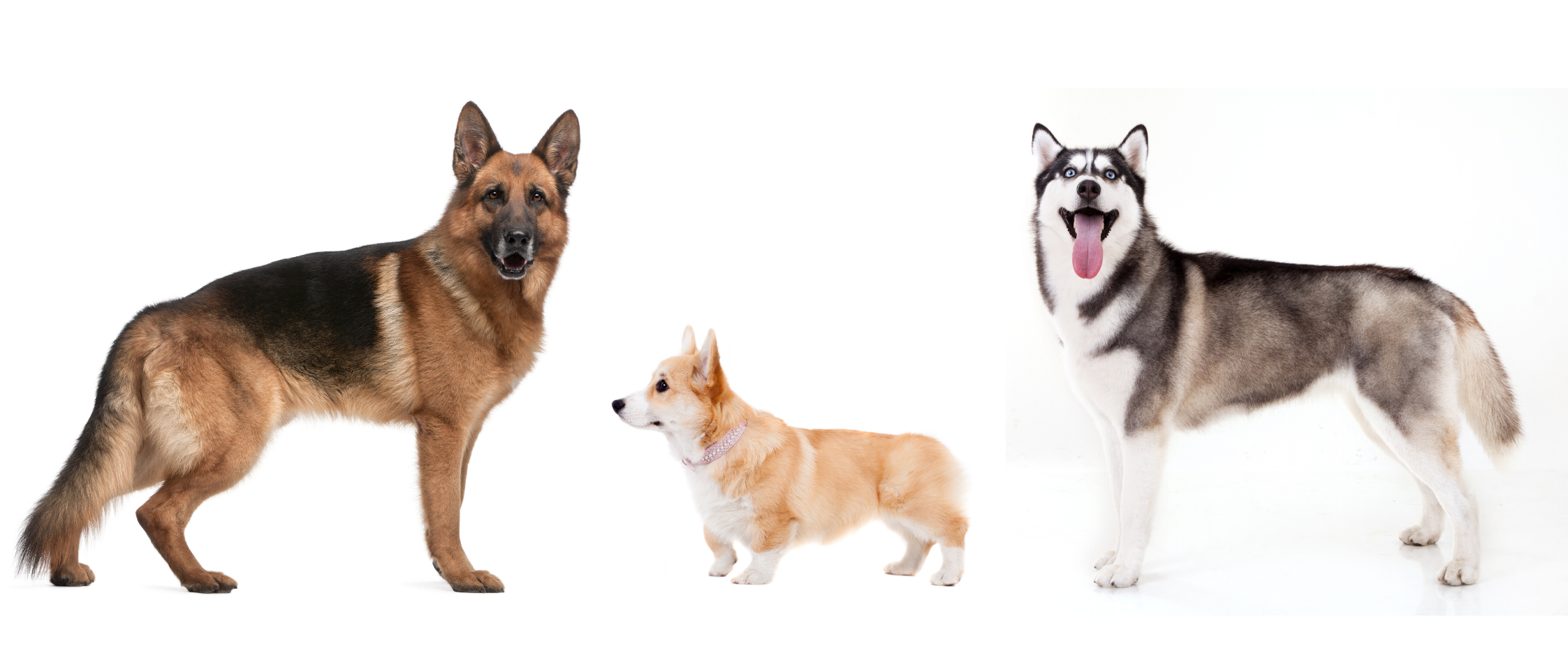
DOUBLE COAT
Short to moderate length straight coat, with soft down undercoat
Think of German Shepherds, Corgis and Huskies

Quick guide
The key to bathing and drying double coats is understanding how the outer coat and undercoat work together. Thorough cleansing, conditioning and careful drying help release loose undercoat, reduce compaction and maintain the coat's natural protective qualities. Different double coat types require different approaches, particularly when it comes to airflow, brushing and deshedding.
-
Before bathing, assess the coat's density, condition and the amount of loose or compacted undercoat present. Check for knots and tangles, particularly behind the ears, under the elbows, around the groin, beneath the tail and through longer furnishings.
Consider the dog's age, mobility, skin condition and tolerance for handling. Heavily coated dogs can require lengthy grooming sessions, so plan the process around the dog's individual needs and comfort.
Regular brushing and coat maintenance between appointments help prevent excessive undercoat build-up and compaction, making bathing and drying more manageable.
-
Double coats need to be thoroughly saturated, with water and shampoo reaching through the outer coat to the skin. A hydrobath can be particularly useful for dense coats, helping distribute products and loosen dirt and undercoat.
Work methodically through the dog, paying attention to the feet, legs, chest, belly and areas where dirt and grease accumulate. A deep-cleansing shampoo may be useful for removing heavy grime and product build-up, while a second shampoo helps ensure the coat is thoroughly clean.
Specialised deshedding shampoos can assist with releasing loose undercoat during bathing, reducing the amount of brushing required afterwards.
Rinse carefully, working through the coat to ensure shampoo is removed from both layers. Thorough cleansing makes the subsequent drying and groom-out considerably easier.
-
Conditioning is an essential part of maintaining healthy double coats. Appropriate conditioners help restore manageability, improve the condition of the hair and reduce friction during drying and brushing.
Choose a conditioner suited to the coat's texture, condition and intended finish. Fuller, standing coats may benefit from lighter formulations, while longer furnishings and areas prone to tangling may need additional conditioning.
Conditioning and deshedding products can also help loosen dead undercoat. A rubber curry brush may be useful for distributing conditioner through shorter double coats and releasing loose hair while the coat is wet.
The more loose undercoat that can be released during bathing and drying, the less mechanical brushing may be required afterwards.
Rinse thoroughly according to the product's directions.
-
Thorough drying is particularly important for double coats, where moisture can remain trapped beneath an apparently dry outer layer.
A high-velocity dryer helps separate the coat, remove excess water and release loose undercoat. Work systematically in sections, directing airflow towards the roots and drying from the skin outwards.
For longer or denser coats, line drying allows the groomer to open the coat with one hand and direct airflow into the exposed section. Continue progressively through the coat, ensuring each area is thoroughly dry before moving on.
Adjust the nozzle and airflow to suit the coat's length and density. Concentrated airflow can be effective for removing moisture, but may create tangles in longer, softer coats. A more open nozzle provides gentler airflow where needed.
As the coat approaches dryness, brushing and combing can be introduced to help separate the hair and remove remaining loose undercoat. A hands-free dryer (such as a neck or stand dryer) may be useful during this finishing stage.
Check that the coat is completely dry through to the skin, particularly around the chest, hindquarters and other dense areas. Avoid excessive heat and adjust the process according to the dog's comfort and tolerance.
-
Effective deshedding begins with thorough bathing, conditioning and drying. These processes help loosen and release undercoat, reducing the amount of mechanical brushing required afterwards.
Once the coat is dry, work through it systematically using tools appropriate to its length, density and texture. Longer coats may benefit from line brushing with a pin brush and comb, while shorter double coats often respond well to a rubber curry brush.
Work in small sections, gradually exposing the coat beneath. Progress from wider-toothed tools to finer ones where appropriate, rather than forcing a fine comb through compacted hair.
Avoid repeatedly brushing the same area or using excessive pressure, particularly where the skin is sensitive or the coat is already thin.
The aim is not to remove every loose hair. Work until the majority of shedding undercoat has been released, taking the dog's comfort, skin condition and tolerance into account. Excessive brushing can damage healthy hair and irritate the skin without providing meaningful additional benefit.
-
Double coats consist of an outer layer of guard hairs and a softer undercoat. These layers have different growth and shedding cycles, with the undercoat providing insulation and the outer coat contributing protection from the environment.
Many double-coated dogs experience periods of increased shedding, often referred to as blowing coat or moulting. Seasonal changes, daylight hours, hormones and individual coat characteristics all influence these cycles.
During a heavy shed, large amounts of undercoat may loosen and become trapped within the surrounding hair. Without appropriate maintenance, this can lead to compaction, tangling and reduced airflow through the coat.
Regular brushing, thorough bathing and effective drying help remove released undercoat while preserving the healthy outer coat.
Not every double-coated dog sheds in the same way or at the same rate. Coat density, breed characteristics, age and individual health all influence the amount of maintenance required.
-
A double coat has several important functions. The outer guard hairs help protect the skin from sunlight, weather and environmental exposure, while the undercoat contributes insulation. Together, these layers help the dog manage changing conditions.
Removing the coat with clippers changes this natural structure and reduces the protection it provides. Shaving also does not stop shedding; it simply makes the shed hairs shorter.
Some double-coated dogs experience changes in coat texture, colour or regrowth following clipping. Regrowth may be uneven or prolonged, particularly in dogs with certain coat types or underlying health conditions. Although permanent changes are possible, they are not inevitable.
A well-maintained double coat, with loose undercoat removed, allows air to move more freely through the hair. However, coat management is only one part of keeping a dog comfortable in warm weather. Access to shade, water, ventilation and appropriate environmental temperatures remains essential.
There are circumstances where clipping may be appropriate, including medical needs, severe matting, welfare concerns or situations where an elderly or unwell dog cannot comfortably tolerate extensive coat maintenance.
Where clipping is being considered, discuss the potential outcomes with the owner, explain the limitations and document informed consent. This may include acknowledging that:
Coat regrowth cannot be guaranteed to return to its previous appearance or texture.
Clipping may cause temporary skin irritation.
Shaving does not necessarily make the dog more comfortable in hot weather.
Shaving does not prevent shedding.
The dog's immediate welfare and individual circumstances should guide the decision rather than applying an absolute rule to every double-coated dog.
-
Once drying and deshedding are complete, check the coat thoroughly for remaining moisture, tangles and compacted undercoat.
Pay particular attention to the chest, hindquarters, behind the ears and other dense areas. Use a comb to check that the hair is separated and manageable without unnecessary pulling.
The finished coat should be clean, thoroughly dry and free of excessive loose undercoat, with its natural structure and appearance preserved.
A successful groom is not measured by how much hair has been removed, but by the condition of the coat and the comfort of the dog.
Bathing and Drying Demonstrations
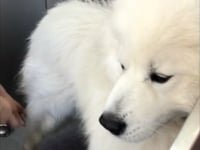
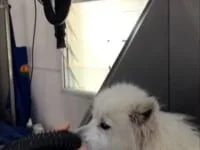
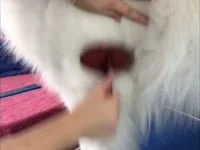
SAMOYED
Across four demonstrations, Nicky takes us through the preparation, bathing, drying and final groom-out of a heavily coated Samoyed. Watch how she checks for compacted undercoat before bathing, thoroughly cleanses the coat and uses high-velocity airflow to dry from the skin outwards. The final stages demonstrate line brushing and combing to remove remaining loose undercoat and achieve a clean, full finish.
CORGI X
Jess demonstrates bathing, conditioning, drying and deshedding Sheba, a Corgi Cross with a shorter double coat. She uses a hydrobath, conditioner and rubber curry brush to loosen and release undercoat, reducing the amount of brushing required afterwards. The demonstrations also show how Jess adapts her techniques to accommodate Sheba's anxiety and sensitive nose, prioritising her comfort throughout the groom.


PART 1 Jess uses the hydrobath to clean and de-shed Sheeba. A hand wash will feel the pressure points on the dog where hair may be compacted. 2 really good washes and 1 conditioner! Note: Any shampoo left on the dog will make the dog itchy. Rinse, rinse, rinse!
PART 2 Drying the double-coat. Jess blasts the moisture from the skin using a high velocity dryer. For the purpose of the video, Jess is not wearing her PPE mask. Jess uses a rubber curry comb when the dog is fully dried. Apart from a nail clip and an ear clean, Sheeba is ready to go. Note: De-shedding a double coated dog gives the dog the ability to cool or warm itself, depending on the weather. A compacted coat makes it unable to correctly insulate.
POMERANIAN
Working with Pumpkin, Tay and Nicky demonstrate bathing and drying a soft, dense double coat. The bathing tutorial explores deep cleansing, product selection and conditioning the longer tail while maintaining a full, lifted finish through the body. The drying demonstration highlights nozzle selection, managing airflow to avoid tangling, and using a slower dryer and brush for the final finish.


ALASKAN MALAMUTE
Working with Sasha, an 11-year-old Alaskan Malamute, Nicky demonstrates the challenges of bathing and drying a large, heavily coated senior dog. The tutorial explores using a hydrobath to thoroughly cleanse the dense coat, selecting deshedding and colour-enhancing products, and removing excess water before high-velocity drying. Nicky also discusses safe handling, managing Sasha's patience and comfort, and the importance of protective equipment when working with large amounts of loose hair and dander.

JAPANESE SPITZ + FUREX
How to use FurEx (by ProGroom) to de-shed
STEP ONE: CLEANSE
Cleanse is a deeply penetrating yet gentle shampoo designed to cleanse and neutralize the ionic charge within the coat and remove all dirt, odour, and excess sebum. This prepares the coat for loose hair removal and begins the deshedding process.
STEP TWO: RELEASE
Release contains Protein ingredients which fill in damaged or rough areas of hair cuticle making a smooth surface that permits easy release of loose coat. Advanced silicone ingredients provide slip and allow dead coat to slide out with little or no force.
STEP THREE: CLOSE
Close is a mildly acidic silicone conditioning spray further seals the hair cuticle and promotes maximum release of tangled and collected hair within the coat. Spray application allows the groomer to adjust the amount of product applied to different areas of the coat as needed.
Bathing Tips:
On badly packed coats, consider using forced air dryer to push suds through the coat.
When bathing twice, use a more diluted (10:1) shampoo solution for the first bath to help thoroughly wet a thick coat and follow with a less diluted (4:1) shampoo solution for thorough cleaning.
Force Drying Tips:
Use a cone nozzle or a small flat nozzle, or towel thoroughly to remove excess water before applying ProGroom FurEx Close spray.
Best results are achieved by being systematic and thoroughly drying each area before moving to the next. Dry front to back, top to bottom. The greatest hair release will occur as the coat in any given area is thoroughly dry. The Close Spray will work as it dries.
To encourage the release of coat, gently wave the nozzle of your dryer from side to side 3-4 inches.
Directions:
For best results, always use all three of the FurEx system products. The ProGroom FurEx system has been designed to work together to greatly reduce the time and effort of removing collected undercoat. No pre-bath brushing is necessary with ProGroom FurEx system.
Step One: Place dog directly in tub, thoroughly wet coat and apply diluted FurEx Clean shampoo and work through coat completely. Rinse lightly and apply a second shampoo. The goal of the first shampoo is to thoroughly wet the coat; the serious cleaning happens with the second shampoo.
Step Two: FurEx Release Conditioner can be diluted and poured through coat, or applied full strength to seriously packed areas such as ruff or hip area. It is important to treat the entire coat with the Release conditioner. Rinse well.
Step Three: After toweling and/or blowing off excess water, spray damp coat thoroughly with FurEx Close spray. Lift coat from bottom up to insure that entire coat is treated. Spray lightly, but thoroughly.
Use a high velocity, forced air dryer to gently blow out the loosened undercoat. Brushing is only necessary in severe areas. Apply more spray product as needed.
