


Bichon Frise
NICKY WALLACE
BICHON
Cas is our back-to-basics Bichon. Nicky takes this pet groom from bath and coat preparation through to body clipping, simple angulation, legs and head, with an emphasis on building a clean Bichon shape that’s achievable and manageable for a pet.
The breed standard still matters in a pet groom. The aim isn’t to reproduce a show trim, but to understand the Bichon underneath the haircut: a short-backed, balanced little dog with proud head carriage, a strong outline and a head that belongs in proportion with the body. Keeping those features in mind helps you modify coat length without losing the breed altogether.
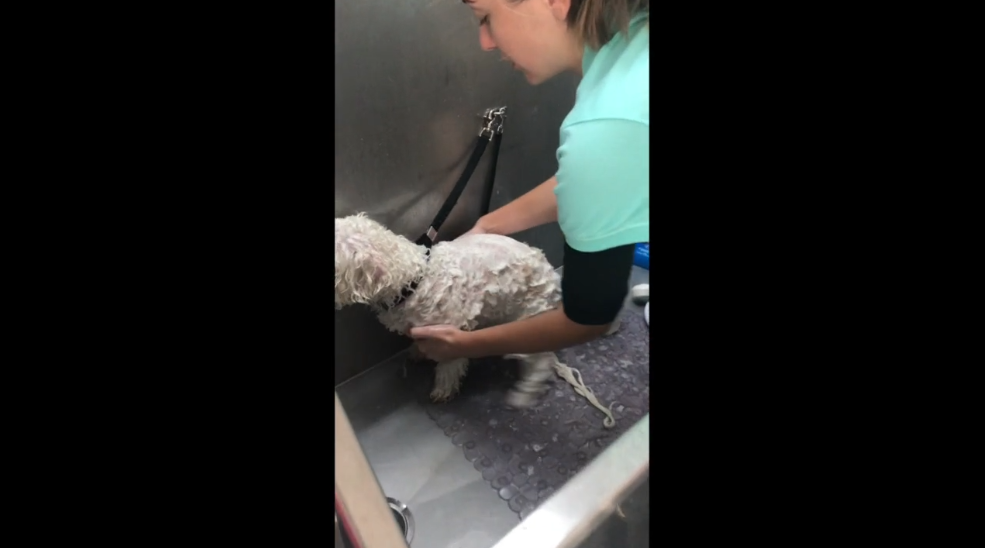

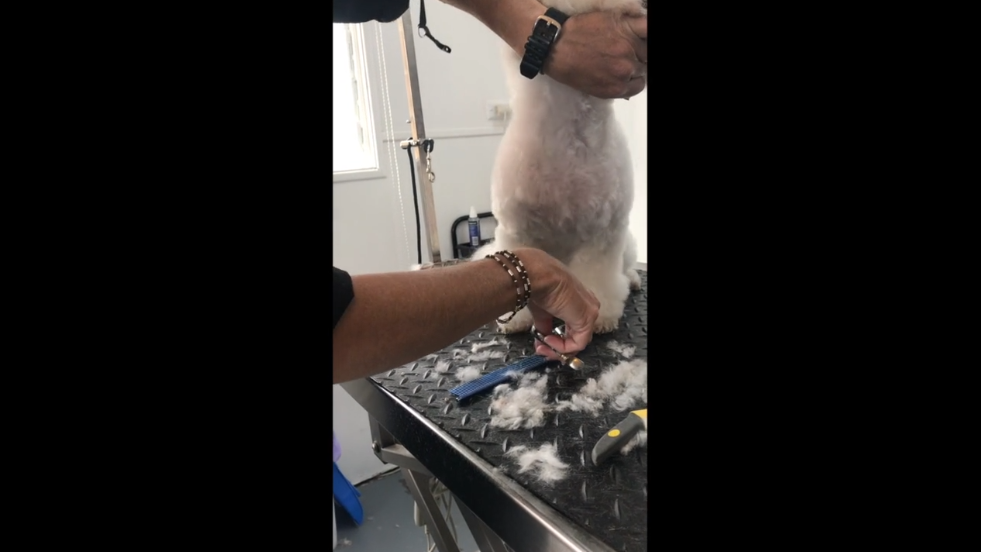
Part 1 | Bathing & preparing the Bichon coat
Nicky begins with the prep work, including pads, hygiene areas and around the eyes before Cas goes into the bath.
The bath itself is part of the lesson. She uses a body-building shampoo followed by a purple shampoo to brighten the white coat, then begins drying at the head so the powder-puff coat doesn’t start air-drying into curls before it can be straightened for scissoring.
Part 2 | Basic rear angulation
Using a combination of blade and attachment comb work, Nicky establishes the rear shape before refining it with scissors.
She uses the ischium and hock as landmarks, clips over the rump and straight off the leg rather than simply following every contour, then leaves the turn of stifle and foot to be shaped. The finished foot is kept clear of the pad so Cas appears to stand neatly up on his toes rather than disappearing into oversized fluffy feet.
Keep stepping back and looking at the whole dog. A Bichon should read as balanced and approximately square, so the body, leg length and angulation need to work together rather than being groomed as separate pieces.
Part 3 | Front legs & building the Bichon head
The front legs are scissored into parallel lines and balanced against the shorter body, again keeping the feet neat and clear of the pads.
Then Nicky breaks the Bichon head into its component shapes. Rather than simply trying to “scissor it round”, she first sets the back skull, ears and eyes, then uses those landmarks to establish the sides, muzzle and top of the head. The ears are brought tightly into the silhouette and the coat beneath the jaw is balanced against the ear leather before the final shape is softened and refined.
This is where proportion really matters. A huge round head sitting above a very short body clip can easily throw the whole dog out of balance. The goal is a round Bichon head that suits the length left on the body, keeps the eyes open and expressive, and supports that characteristic proud head carriage.
