

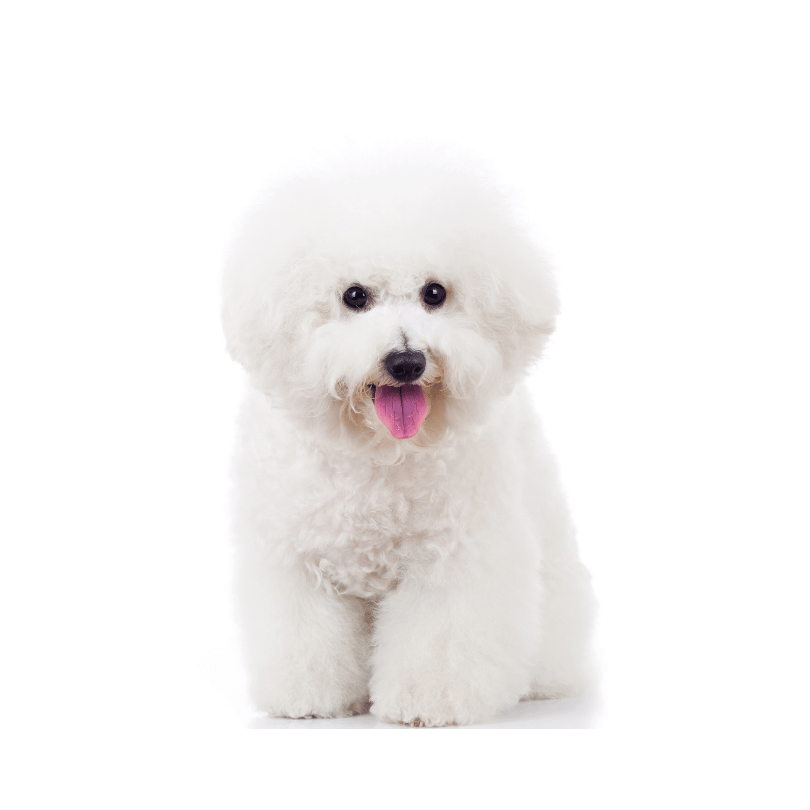
Bichon Frise
KAREN TAYLOR
CASTIELLE
Castielle is an older, retired show dog, and that beautiful grown-out coat gives Karen plenty to work with as she demonstrates a Bichon pet groom that retains much of the breed’s characteristic shape.
His body is shortened with an attachment comb, while the legs, hindquarters, crest and head are shaped by hand. The result is more manageable for a pet while still retaining the balance, curves and unmistakable outline of a Bichon
Equipment list: Clippers, mini trimmers, scissors, #7F blade, #10 blade, #15 blade, yellow extension comb, slicker brush, comb
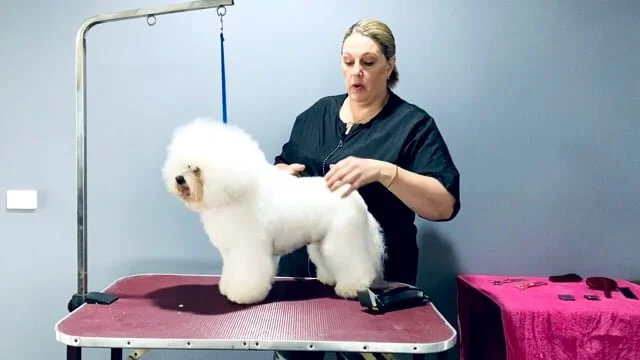
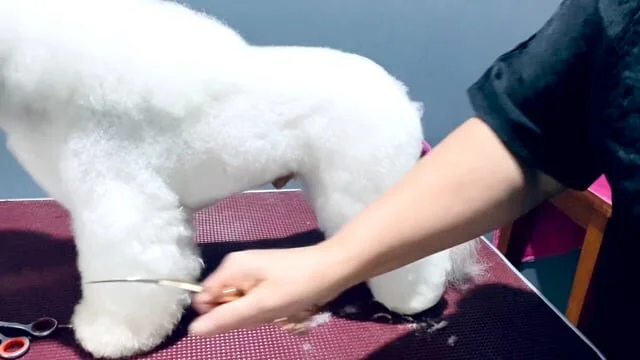
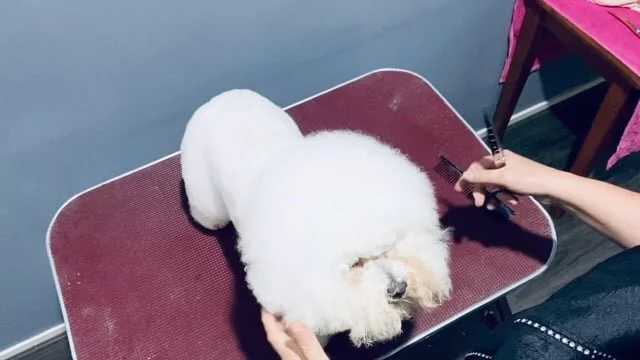
Part 1 | Body, underline & setting the shape
Karen begins with the hygiene areas and feet before setting a clean V beneath the throat. She then clips the torso, leaving Castielle’s crest intact and retaining more length because his owners prefer a fuller finish.
The clipper work establishes the body before the scissoring begins. Karen tidies the underline into the ribcage, blends the torso and cleans the top of the tail so it flows neatly into the topline.
Part 2 | Building the Bichon rear
This section is a detailed lesson in constructing the hindquarters with scissors. Karen works from the loin into the thigh and rear projection, creating the rounded rump, scoop behind the knee and the clean lines through the inside and outside of the legs.
There’s an important sequencing lesson here too: the foot comes last because its size needs to relate to the finished width of the leg. Once that width is established, Karen rounds the foot and shapes the hock and rear leg into the characteristic Bichon curves.
Part 3 | Crest & round Bichon head
Karen first establishes the width of the crest from the back, using Castielle’s body width as her guide. From the side, she builds the sweep from the neck up and over towards the head, leaving herself enough coat to refine the shape rather than cutting the crest in too early.
Then it’s onto that Bichon head. Karen begins with the crescent around the eyes before working up, over and around the head, continually combing the coat out and checking the silhouette from different directions.
The goal is a circle whichever way you view it: from the front, side, back and underneath. The chin, cheeks, ears, top of the head and crest are gradually brought together until they read as one balanced shape rather than separate pieces.
