

MASTERCLASS
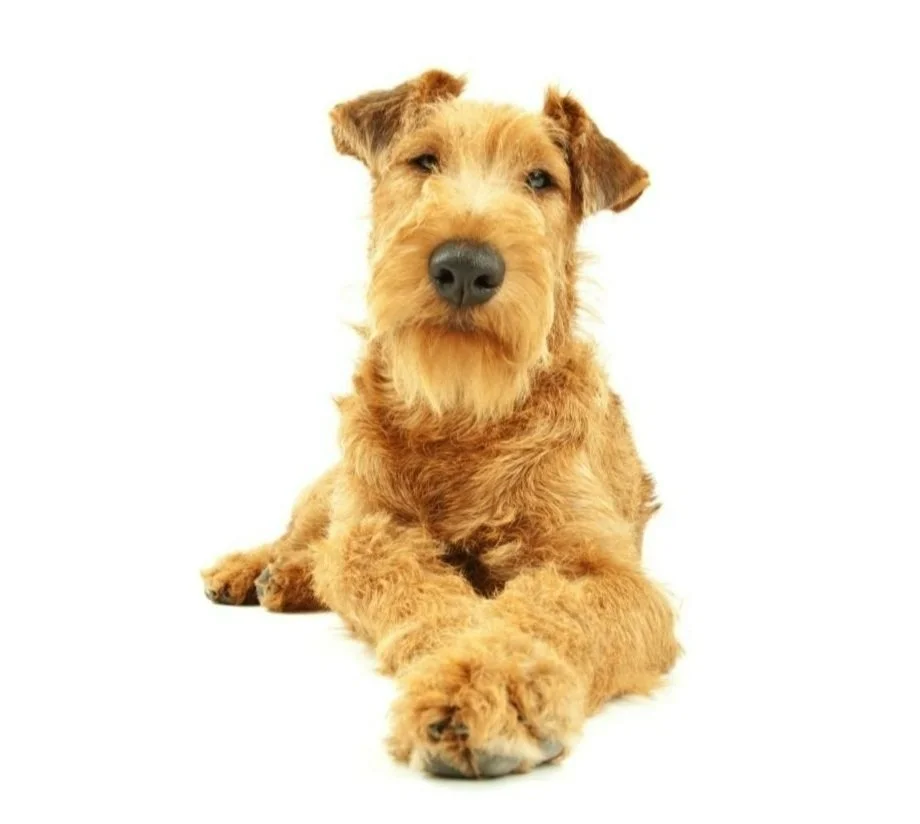
Irish Terrier
MICHELLE WEBER
FERGUS AND MURPHY
WHAT’S HAPPENING HERE?
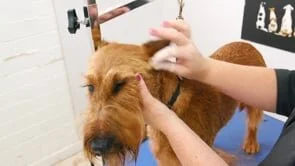
An introduction to hand stripping the Irish Terrier. Explore 2 different coat qualities on the same breed with our contributor, Michelle, and the handsome Fergus and Murphy. Learn how to correct a damaged coat, without adding any more stress to the hair.
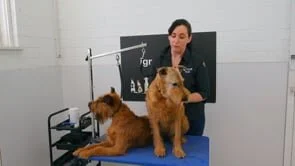
FERGUS | 9 YEARS OLD
PART 1 Taking out the old undercoat, which Michelle calls “fairy floss”, then moving on to learning which tools to use on the top coat.
PART 2 Michelle explains why she prefers to strip a dirty coat, using lots of different tools and how to use them. See the difference six weeks can make.
PART 3 Starting on the thigh of the leg as this is a sensitive area. If your dog gets frustrated you can move to a different part of the leg. Understand what dead and blown hair is, and when to use stripping powder.
PART 4 When grooming any pure breed dog, it is very important to understand the breed standard. This tutorial focuses on the head.
PART 5 What is expected in the finishing process, after the bath. Everything up around the body with no more bulk removing, just neatening and tidying the groom.

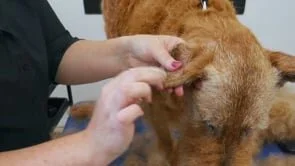
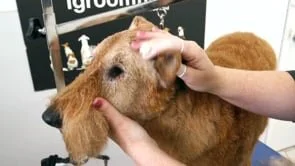
Study Notes | Key Concepts
-
Start with removing dead undercoat to allow for new, coarse growth. Use a diamond stripper or pumice stone to reduce bulk without breaking the coat.
Regularly hand-strip to maintain the breed’s wiry coat texture, avoiding clippers as they soften the coat. Repeat every six weeks to encourage healthy growth.
-
Use a fine knife, diamond stripper, or grooming stone for detailed areas and damaged coats. Finger grips prevent blisters and improve grip when pulling smaller sections.
Always keep the skin taut when stripping to avoid damaging the coat and creating holes.
-
The top line should have a slight rise over the loin, ending at the base of the tail. Shape with curved shears, blending seamlessly from the shoulders to the rear.
Avoid creating a bulky or flat top line; the transition should be smooth and follow the dog’s natural shape.
-
The skull should be flat with no visible stop, and the eyebrows should be kept short and slightly arched.
The beard starts at the corner of the eye to the mouth, trimmed to keep it from appearing overly full. Use thinning shears to blend without cutting the shape.
-
Keep the legs tight and cylindrical, and avoid over-trimming the furnishings to maintain balance with the body.
Foot trimming should create a compact, natural appearance, emphasizing the slender, leggy look typical of Irish Terriers.
-
Sensitive areas like the flank, belly, and rear should be handled with gentle hand-stripping, pulling small sections at a time.
Check symmetry and ensure even blending throughout the coat for a balanced, polished finish that highlights the Irish Terrier’s natural angulation.
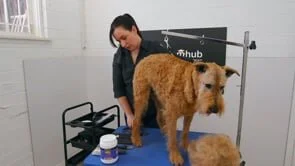
MURPHY | 9 MONTHS OLD
PART 1 Introduction, stripping the body. Checking your work is important! Work to remove lighter coloured hair. In delicate areas, only tackle small areas at a time.
PART 2 The neck - stripping with the grain of the coat. Having a break is important for both groomer and dog.
PART 3 The head - Michelle explains the nuances of the Irish Terrier head. Working to a system for efficiency.
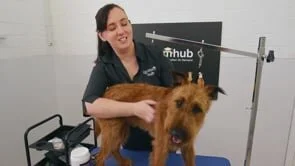
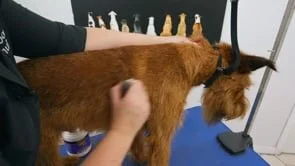
Study Notes | Key Concepts
-
Medium-sized dog with a wiry appearance and minimal undercoat.
Needs regular hand-stripping to maintain coat health, color, and texture
-
Finger condoms: For grip in sensitive areas.
Pumice stone: To remove bulk hair without damaging the coat.
Diama Stripper: Effective for back areas, allowing for layering of the coat.
Plush Puppy Powder: Helps improve grip for effective stripping.
-
Start on the back jacket, where there is the most wiry texture.
Hand-strip along the grain of the hair, using skin tension to make the dog comfortable.
Use the pumice stone on larger areas and finger techniques for sensitive spots.
-
Ideal for show dogs; involves removing dead longer layers to maintain shorter underlayers.
Creates a layered look that supports coat health.
-
Use thumb and finger stripping on neck, underline, and ears due to the delicate skin.
Go slowly on younger dogs, using positive reinforcement and calming techniques.
-
Aim for a flat face with minimal “stop” (the slope between the eyes).
Carefully strip cheek and beard areas to keep a balanced look.
Maintain hair-free ears with hand stripping to preserve coat color.
-
Praise the dog to create a comfortable grooming experience.
Take breaks to avoid overstressing young or anxious dogs.
