

MASTERCLASS
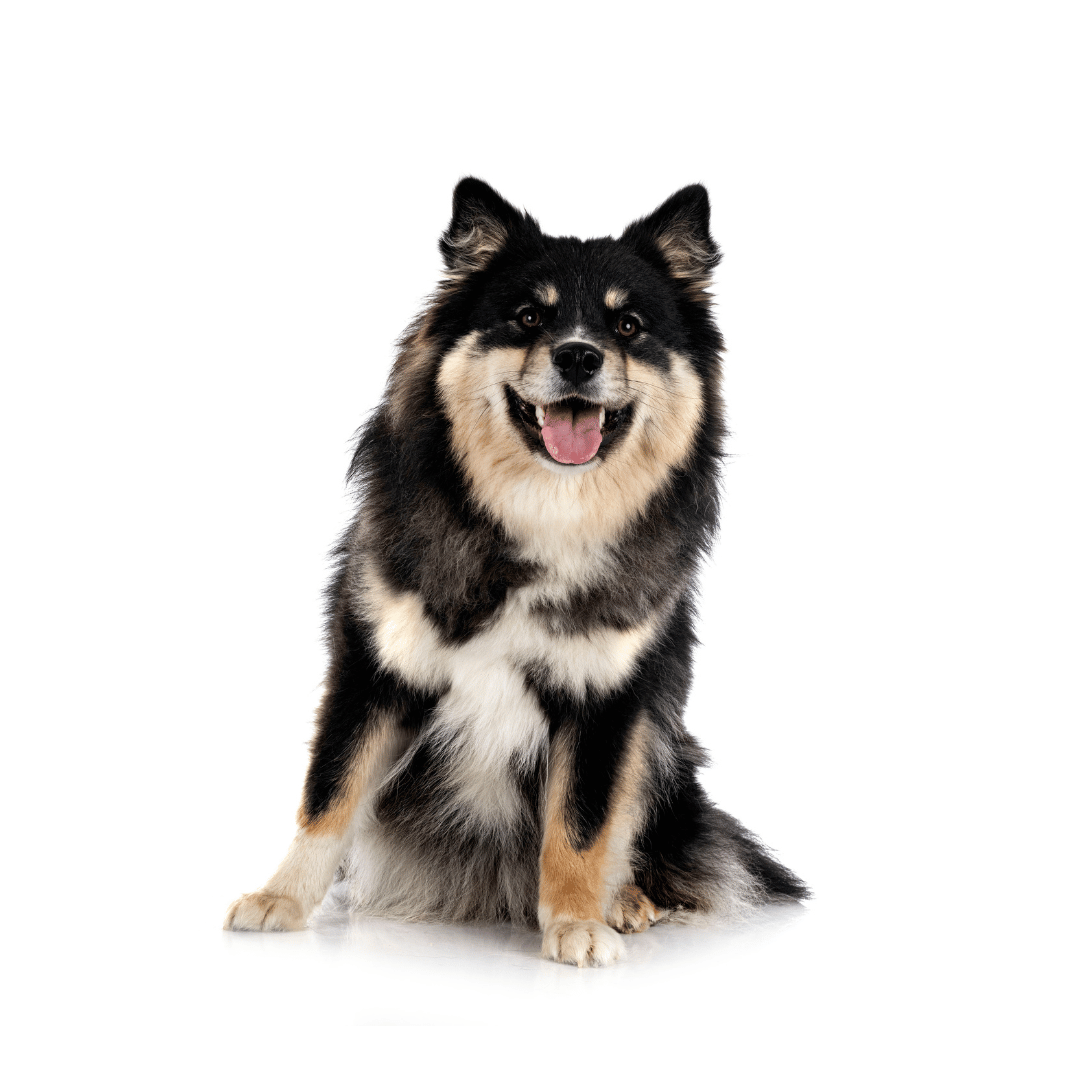
Finnish Lapphund
BARRY
Meet Barry, a magnificent Finnish Lapphund with a profuse double coat and a rather impressive grooming competition record!
In this four-part masterclass, Tep will guide you through her approach to bathing, drying, deshedding and finishing a heavily coated breed. From removing loose undercoat in the bath to carefully directing the coat during drying, Tepra demonstrates how thoughtful preparation and systematic techniques can make a considerable difference to both the finished groom and the amount of hair left floating around the grooming environment.
Barry is Tepra's much-loved grooming competition partner, with multiple awards in double coat categories. While this masterclass focuses on the preparation and maintenance of his profuse double coat rather than a full breed-standard groom, Tep demonstrates how to achieve a beautifully finished result while respecting the Finnish Lapphund's natural coat and outline.
Along the way, we'll explore coat management, product selection, line brushing and combing, carding, and the importance of working with the natural direction of coat growth.
Although Barry is our model, the techniques demonstrated are relevant to many profuse double-coated breeds, including Samoyeds, Malamutes and other heavily coated dogs.
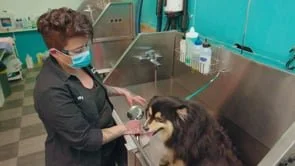
Part 1 | Bathing a Profuse Double Coat
Tepra begins with the foundations of an effective deshedding groom: getting the coat thoroughly wet and removing as much loose undercoat as possible during the bathing process.
Using her close-open-close method, she demonstrates how an initial conditioner treatment helps loosen and release undercoat before moving through two shampoos and a final conditioning treatment.
You'll see how Tepra works through Barry's dense coat, why she favours different shampoos for the first and second washes, and how careful rinsing helps ensure that no product remains against the skin.
She also discusses personal protective equipment, safe handling and the importance of protecting both dogs and groomers during the bathing process.
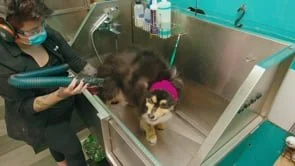
Part 2 | Drying and Coat Direction
With Barry thoroughly washed and conditioned, Tepra moves on to drying, beginning with the removal of excess moisture before working systematically through the coat.
She demonstrates spit drying and line drying using a double-barrel dryer, explaining how airflow direction influences the finished appearance of the coat.
You'll learn why dryer distance matters, how to prevent longer hair from twisting back on itself, and how to encourage the coat to lie naturally rather than creating unnecessary volume.
Tepra also covers hearing protection, managing moisture during drying and adapting equipment and techniques when working around sensitive areas such as the face and ears.
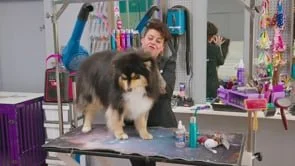
Part 3 | Line Brushing, Combing and Carding
Once Barry is dry, Tepra demonstrates a thorough and systematic approach to removing any remaining loose undercoat.
Working in small, overlapping sections, she takes us through line brushing and line combing, explaining how to check the entire coat without missing hidden tangles or compacted areas.
You'll see why brush pin length matters, how to work through the furnishings, tail and dense body coat, and why a sturdy comb is essential for checking the results of your brushing.
Tepra finishes by demonstrating light carding on selected shorter-coated areas, removing undercoat that brushing and combing alone may not release.
Part 4 | Breed-Appropriate Finishing
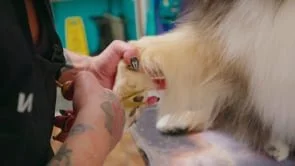
In the final part, Tepra demonstrates the restrained finishing techniques she uses to maintain Barry's natural Finnish Lapphund appearance. She keeps his coat close to the breed's natural presentation, with minimal scissoring and particular attention to creating neat, cat-like feet.
Tep explains how she approaches the furnishings, hocks and natural outline, including the differences between maintaining a breed-appropriate finish and accommodating a pet owner's grooming preferences.
She also demonstrates subtle ear detailing and discusses managing static and adding shine without creating unnecessary volume.
It's a lovely reminder that finishing a profuse double coat is often as much about knowing what to leave alone as knowing what to trim.
This groom is also available as a fastForward
Study Notes | Key Concepts
-
One of the most important techniques Tepra demonstrates is her close-open-close bathing method, designed to release loose undercoat before the drying process begins.
The first conditioning treatment adds slip to the coat, allowing loose undercoat to move more freely during brushing. This helps keep much of the released hair in the bath rather than sending it into the air during drying.
Tep follows this with two shampoos. The first, typically a clarifying or deshedding shampoo, removes dirt and buildup. The second is a conditioning shampoo that helps restore moisture and manage the coat's texture.
A final conditioning treatment completes the process.
Thorough rinsing is essential throughout, particularly with a coat as dense as Barry's. Tepra emphasises rinsing down to the skin and checking that the coat has regained a clean, slightly grippy feel rather than remaining slippery with product.
The aim is a clean, manageable coat with as much loose undercoat removed as possible before drying begins.
-
Drying a profuse double coat involves more than removing moisture. The direction and distance of the airflow have a considerable influence on the finished appearance.
Tepra begins by removing excess water through spit drying, using a chamois to catch moisture rather than allowing it to settle back onto the dog.
She then moves into line drying, working systematically through the coat while directing the airflow in the direction the hair should naturally lie.
On Barry, this is particularly important along the back, where excessive lift would create an undesirable, puffed-up appearance.
Dryer distance also matters. When the nozzle is held too close, longer hair can whip back on itself, twisting into spirals and potentially creating tangles.
By adjusting the distance and working in overlapping sections, Tepra can reach the skin, release undercoat and encourage the coat to settle into its natural position.
The objective is a thoroughly dry, well-separated coat that lies correctly.
-
A dense double coat can appear beautifully brushed on the surface while still concealing loose undercoat and tangles closer to the skin.
Tepra demonstrates line brushing by lifting the coat and releasing small sections at a time, brushing each section thoroughly before moving to the next.
Working in small, overlapping sections allows the groomer to check the entire coat systematically, including areas that are easily overlooked, such as the furnishings, underarms, belly, tail and behind the ears.
The length of the brush pins should suit the depth of the coat. Barry's longer coat requires a brush capable of reaching through the hair rather than simply working across the surface.
Once brushing is complete, Tep repeats the process with a sturdy comb.
Line combing provides a final check for tangles and removes undercoat that may have been missed during bathing, drying and brushing.
The comb should move freely through the finished coat, confirming that the hair has been thoroughly separated and checked.
-
Not all areas of a double-coated dog respond equally to brushing and combing.
Tepra demonstrates light carding on selected areas of Barry's shorter coat, including the fronts of the legs, the shorter hair around the hocks and parts of the face.
These areas can retain considerable amounts of loose undercoat despite appearing relatively flat and tidy.
Using a fine carding knife with gentle pressure, Tepra removes loose hair without disturbing the longer furnishings or changing the natural appearance of the coat.
She is particularly careful around the face, avoiding the whiskers while working through the cheeks and beneath the chin.
Carding is used selectively, with the tool and pressure suited to the coat being worked.
The objective is to remove retained undercoat while preserving the correct texture and natural appearance of the surrounding hair.
-
The Finnish Lapphund is intended to retain a natural appearance, and Tep demonstrates a restrained approach to finishing Barry's coat.
Although Barry is a successful grooming competition dog, Tepra keeps his finish close to the breed's natural presentation, limiting scissoring primarily to his feet and maintaining the length and shape of his furnishings, underline and body coat.
His feet are shaped into a neat, cat-like appearance, with excess hair removed carefully around the pads and toes.
Tepra explains that pet grooming may allow for some additional tidying according to the owner's preferences, particularly around the furnishings and hocks.
However, even when tidying these areas, she recommends removing only what is necessary rather than dramatically changing the dog's outline.
The natural fall of the coat should guide both brushing and finishing.
A successful finish respects the dog's coat type and breed characteristics rather than imposing an artificial shape.
-
Working with a profuse double coat presents challenges for both the groomer and the dog, particularly during bathing and HV drying.
Tep discusses the importance of personal protective equipment, including respiratory, eye and hearing protection, to reduce exposure to airborne hair and dryer noise.
She also uses hearing protection for Barry and adjusts her drying equipment when working around sensitive areas.
Handling and positioning are considered throughout the groom. Barry has a tendency to sit, so Tepra demonstrates how appropriate support equipment can help maintain a comfortable working position without excessive physical strain on the groomer.
She also adapts her techniques around the face and ears, using gentler airflow where necessary.
Removing as much loose undercoat as possible during bathing can help reduce airborne hair during drying, making the grooming environment more manageable.
These considerations are an important part of working efficiently while maintaining the comfort and welfare of the dog. ♥
