

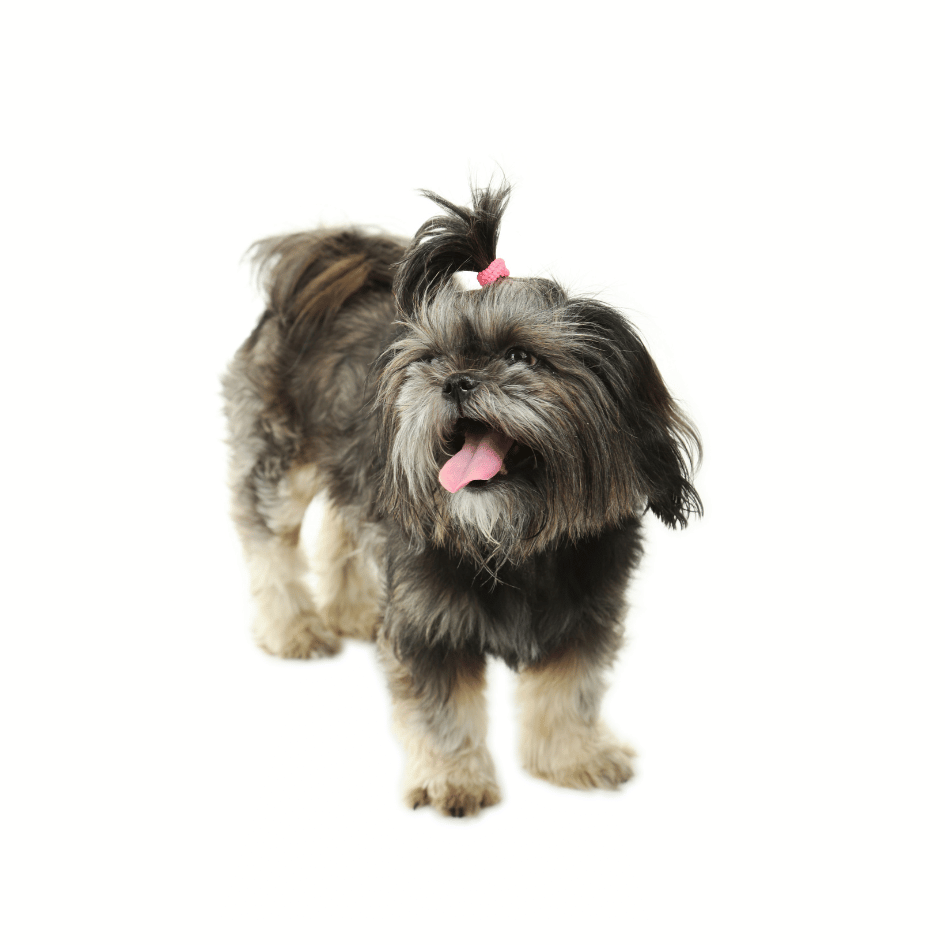
Shih Tzu
MICHELLE WEBER
MISHKA
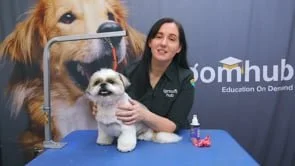
Mishka is tiny, fluffy and apparently has a reputation for being a bit of a sass-pot. Unfortunately for Michelle’s story, she decides to be rather good for this groom.
Michelle gives her a short #4 body with longer hand-scissored legs and a round teddy head, but Mishka’s little personality runs through the whole tutorial. Rather than overpowering her when she objects, Michelle keeps adjusting the groom: changing holds, letting her sit, giving her time to pant and choosing scissors over clippers where she knows Mishka is more comfortable.
This is a great groom to do if the dog wears a jacket in the Winter. Mishka has had her basics, bath and dry completed prior to filming.
Part 1 | Short body, longer legs
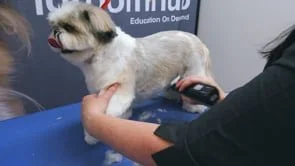
The #4F body gives Mishka a clean, easy-care base while leaving those tiny legs for scissoring. Michelle sets the rear, shoulder, neck and chest, keeping mat-prone and hygiene areas short and tidy.
Mishka also gets plenty of opportunities to sit. Michelle is conscious of her weight and little knees and keeps standing time brief rather than insisting on a textbook position for every bit of clipping.
Part 2 | Building Mishka’s teddy face
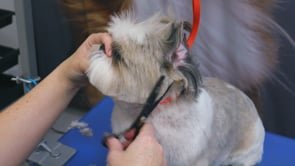
With such a short Shih Tzu muzzle, Michelle wants the eyes open and visible while leaving enough beard to create a balanced circle around the face.
Mishka’s eyelashes stay, the cheeks and jaw are shaped around her little round head, and Michelle repeatedly works in short opportunities between panting and movement. The ears finish short and youthful, with a lovely warning about how easily drop coat can show every overenthusiastic snip.
Part 3 | Tiny cylinders & a potentially grumpy customer
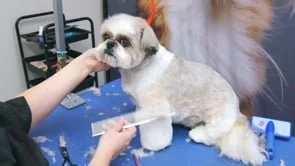
The legs are where Michelle expects Mishka’s opinions to appear. Instead of running clippers over them, she hand scissors because Mishka prefers it and there’s little point creating stress when another technique can achieve the result.
Michelle shapes the tiny legs into soft cylinders, but the handling is just as useful to watch as the scissoring. She keeps her holds low and supportive, gives Mishka room to move and lets her sit whenever she can. And despite all the warnings about incoming Chewbacca noises, Mishka is rather magnificent about the whole thing.
Part 4 | Work with what the dog gives you
The tail and remaining legs bring the whole philosophy together. If Mishka wants to sit, Michelle finds something she can do while she’s sitting. If standing is necessary, she keeps it brief. If she can support some of Mishka’s weight herself, she does.
By the end, the allegedly difficult little Shih Tzu hasn’t growled once. As Michelle points out, they kept things slow and kept her comfortable, and Mishka was able to get through her groom without needing the battle everyone was expecting.
Study Notes | Key Concepts
-
Many Shih Tzus dislike their feet being touched—handle with care.
Always be aware of your emotions; dogs pick up on stress.
Work with the dog rather than against it—choose battles wisely.
-
Use a #4 for the body to save time and create a smooth finish.
Hand-scissor the legs to maintain a balanced and natural look.
Always back-brush before scissoring to ensure an even cut.
Drop coats require thinners for blending to avoid choppy lines.
-
Start at the corner of the eyes and trim to maintain clear vision.
Use thinners instead of a #10 for a natural, soft look.
Keep a balance between the jawline and head length to maintain symmetry.
Avoid excessive trimming on the nose area—this breed needs a slight beard for a rounded face.
-
Shih Tzus have short, cylindrical legs, so shape them carefully.
Keep foot hair short but not overly rounded, avoiding a cowboy-pants effect.
For drop coats, constantly comb in the direction of the cut.
Be mindful of arthritis in older or chubby dogs—support their weight gently.
-
Keep the rear area tight and neat for hygiene purposes.
Fan the tail out to check for straggling hairs before shaping.
Avoid removing too much from the back of the ear—preserve natural flow.
-
Check from multiple angles to ensure balance and symmetry.
Use mirrors or take photos to spot uneven spots.
Give the dog breaks to prevent irritation and discomfort.
