
ASIAN FUSION
Bichon
JESS BARDEN
CAS
If you love the look of Asian Fusion but want something a little more wearable for real life, this one’s for you. Jess grooms her own Bichon, Cas, using a hybrid approach that keeps the body shorter and tidy, but leaves more length through the coat using attachment combs for a softer finish. The legs are styled with a teddy, column feel rather than extreme flares, and the feature moment is the mushroom head. Along the way, Jess shares practical tips on prep, saving time with clipper work, and how to use simple shaping choices to visually shorten a longer dog.
Part 1
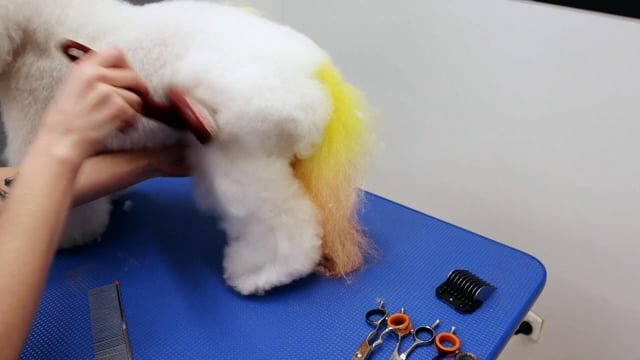
Asian style grooms traditionally feature a short body with big statement legs, but Jess shows how you can tweak that formula without losing the vibe. She starts Cas’s body using longer attachment combs, explaining how to keep the outline neat while still leaving plush length that suits a more neutral, everyday finish. This part is full of handy detail on where to begin your clipper work, how to keep a little crest to help shorten the dog visually, and why you’ll often need to fluff, comb, and re-run the same areas to get an even result with comb attachments. If you’re aiming for “styled but not extreme,” this is a great blueprint.
Part 2
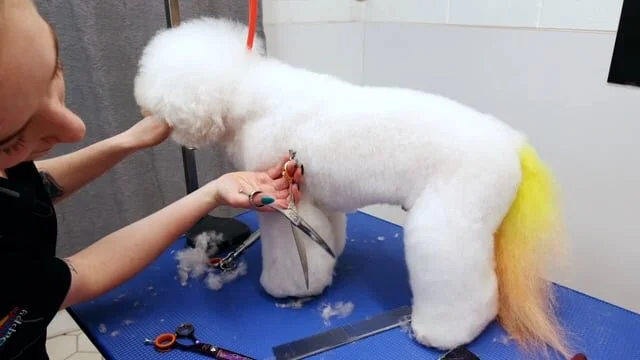
Before the scissoring starts, Jess reinforces the big rule: prep matters, especially on coats like this. She talks through what “groomed out well” actually looks like, why straightened coat makes shaping easier, and how a finishing comb helps remove those wispy bits that can ruin a clean scissor finish. From there, she begins the rear leg, showing where to start your shape, how to create a tidy foot, and how to build a balanced outline that still looks soft and full. There’s also a helpful focus on angulation and optical illusion: what to leave longer, what to tighten up, and how those choices can make a longer Bichon look more compact.
Part 3
Jess moves into the front legs and shows a smart time-saver: doing a clipper “cut in” first so you’re not scissoring bulk for no reason. She explains where to take the leg shorter for balance, how that affects the dog’s silhouette, and why this step makes the rest of the shaping quicker and cleaner. She also repeats an important finishing rule for feet: no hair should sit on or touch the pad line, because that’s where neatness and comfort start. While you’re still learning, Jess recommends being kind to yourself. Get the shape in first, then go back over your work with thinners or chunkers to soften edges and smooth any accidental harsh lines.
Part 4
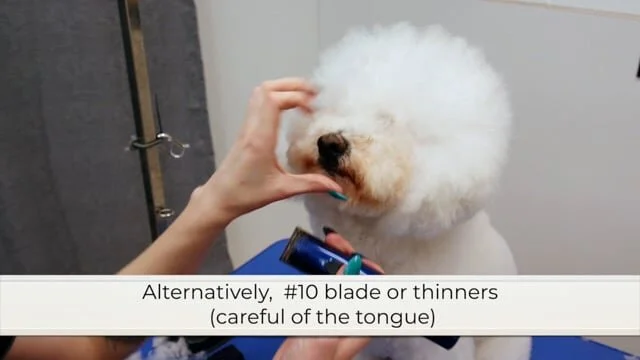
Step-by-step mushroom head, from messy overgrowth to clean, rounded structure. Jess starts by clearing the eyes and setting the muzzle, keeping the face tidy so expression isn’t hidden. From there, she shows how to build the mushroom shape in stages: crest first, then rounding the back of the head, then refining the sides, fringe, and shelf so everything connects smoothly into the neck. The key idea is that the head is built like a framework. You create the guide shape, then keep combing, rounding, and refining until the finish looks intentional from every angle. Jess also chats through length choices and maintenance, including what she’d do differently for a client versus her own dog, and how to keep the head bold without swallowing the eyes.