


ASIAN FUSION
Cavoodle
PRUE HAMMOND
POPPY
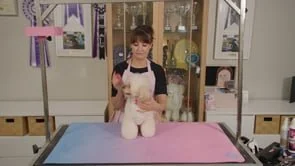
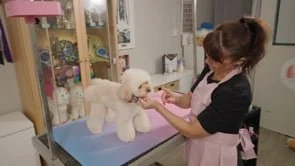
Prue gives Poppy a stylish and creative makeover, complete with flared legs, a soft donut muzzle, and a hand-scissored bow shape on the rear. Using playful styling choices, Prue demonstrates how to adapt Asian Fusion techniques for oodle coats, balancing precision with fun.
This tutorial is also available as a fastForward
Part 1 Prue clips the body with a #3F blade, leaving coat around the rear to form the bow shape. She outlines the bow and preps the surrounding area using a #5 for contrast, creating clear lines while keeping the clipper work soft and safe. The shape is carved in early, setting the stage for the rest of the groom.
Part 2 The legs are flared with careful bevels and tapering, using chunkers, blenders, and curved scissors. Prue uses clippers to save time on the inside of the legs and then refines the shape with soft scissoring. Emphasis is placed on flow and comfort, with plenty of reminders to check the silhouette from all angles.
Part 3 Poppy’s head is shaped into a lifted donut-style muzzle with a soft, rounded crown. Prue sculpts using thinners, curves, and her fingers, adjusting for cowlicks and sparse muzzle coat. The look is light and expressive, with plenty of scissor control and coat management techniques along the way.
Part 4 Prue brings the bow to life with gentle rounding, soft bevels, and subtle tapering to create definition. She finishes with a tidy tail that flows into the design and offers ideas for adding colour, chalk, or glitter. The bow is balanced and wearable, making it a perfect client-pleasing feature.


KEY POINTS
Uses curved lines, lifted faces, and creative rear shapes for visual interest
Body is clipped with a #3F, with hand-scissored legs and muzzle for softness and balance
Bow shape is carved using clippers and refined with scissors and blenders
Finished look is playful and practical, perfect for clients who love something a bit extra
Use clippers to block in shapes, then blend and sculpt with chunkers and curves
Muzzle shaping is done in layers, slowly lifting and softening while working around sparse coat
Legs are flared from the foot upward with careful control of bevels and symmetry
Always work with the coat texture, not against it. Drying, prepping, and fluffing are key
