


Canine Oral Health
Oral health is a key part of a dog’s overall wellbeing, but it’s often overlooked until there’s a visible problem.
As groomers, we’re in a unique position to notice early signs of dental issues. While we’re not there to diagnose or treat dental disease, understanding what’s normal, what’s not, and when to refer on is an important part of professional care.
This page will help you recognise the signs of dental disease, understand how it develops, and see what light maintenance can look like in a grooming context.
What is Dental Disease?
Dental disease is one of the most common health issues in dogs, and it often develops gradually.
It begins with plaque, a soft film made up of bacteria. If not removed, this hardens into tartar, which attaches firmly to the teeth. Over time, this leads to inflammation of the gums (gingivitis) and can progress to periodontal disease.
At this stage, damage extends below the gum line, affecting the structures that support the teeth. This can cause pain, infection, and tooth loss, and may impact other areas of the body if bacteria enter the bloodstream.
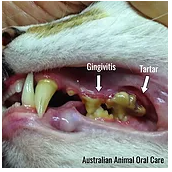

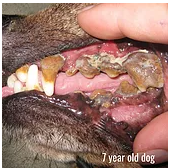
Thank you to Australian Animal Oral Care for the pictures
Understanding how dental disease progresses helps explain why early intervention matters.
Check out the source website http://www.willardvet.com/
What can groomers do?
As groomers, our role is not to perform dental procedures, but we can:
Observe and flag concerns to owners
Encourage regular veterinary dental care
Support general maintenance where appropriate
In some cases, very light plaque removal may be demonstrated, but only when the dog is comfortable, the build-up is minimal, and the groomer is confident and experienced
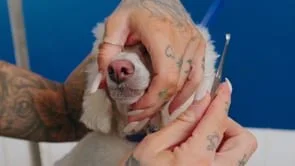
Alicia Demonstrates Light Plaque Removal
In this demonstration, Alicia shows how she approaches very light plaque removal in a calm and controlled way.
This is not a substitute for professional veterinary dental care. It’s simply an example of what low-level maintenance can look like when conditions are appropriate.
Before attempting this
The dog must be calm and comfortable with handling
Plaque must be minimal and superficial
You must be confident in your handling and tool use
When in doubt, refer to a veterinarian
Stop immediately if:
The dog shows signs of stress or discomfort
There is significant tartar or gum inflammation
The dog resists handling
You are unsure at any point
Good oral health starts with awareness. Knowing what to look for and when to refer is just as important as anything hands-on.
