

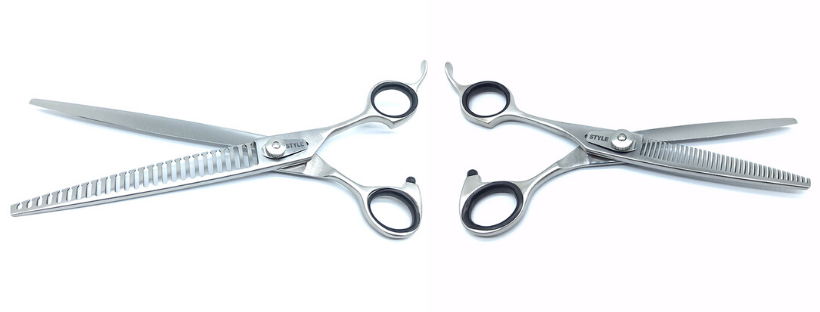
Thinners, Blenders and Chunkers
What they actually do, and when to use each
In dog grooming, thinners, blenders and chunkers are all designed to remove coat without leaving hard scissor lines. The difference isn’t just the name. It comes down to tooth count, spacing, and how much hair is removed per cut.
There’s no universal standard across brands, so understanding how each type behaves matters more than what it’s called.
1. Thinning Shears
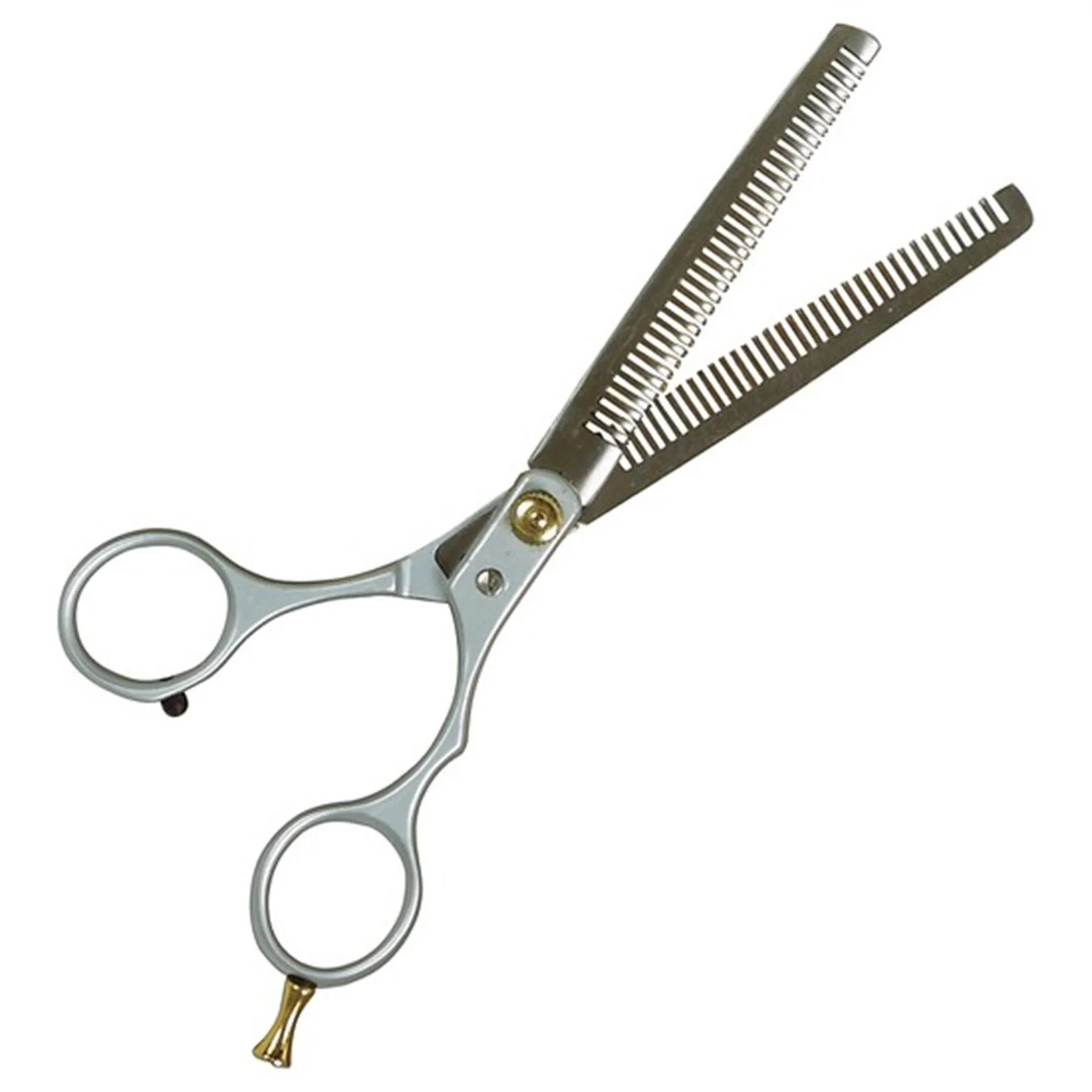
High tooth count | Light coat removal
What they do
Thinners remove a small amount of hair with each cut, softening lines without changing the overall shape.
Typical features
40–60+ teeth
Single or double sided
Straight or curved
Best used for
Faces and ears
Feathering
Final polish
Softening clipper or scissor lines
What they’re not for
Bulk removal
Shaping dense coats
2. Blending Shears
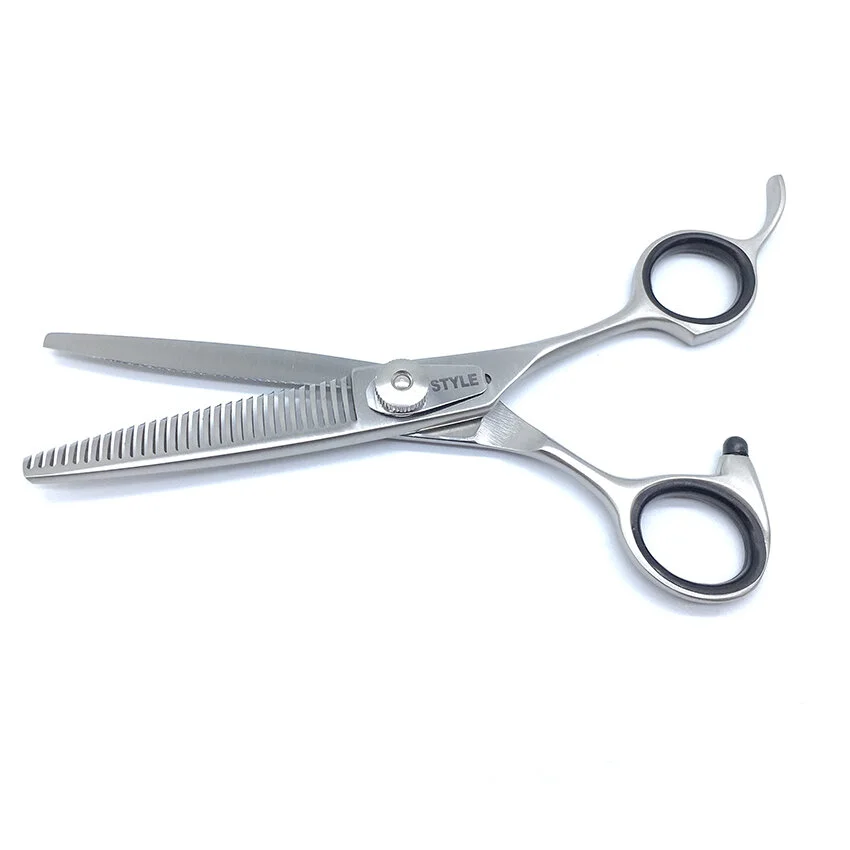
Mid tooth count | Moderate coat removal
What they do
Blenders sit between thinners and chunkers. They remove more coat than thinners, but with a softer, more even finish than chunkers.
Typical features
Around 25–40 teeth
Often more widely spaced than thinners
Straight or curved
Best used for
Necks and shoulders
Body to leg transitions
Faces and chests
Creating smooth flow without visible cut marks
Good to know
Some brands label these as chunkers, others as blenders. Function matters more than the name.
3. Chunkers
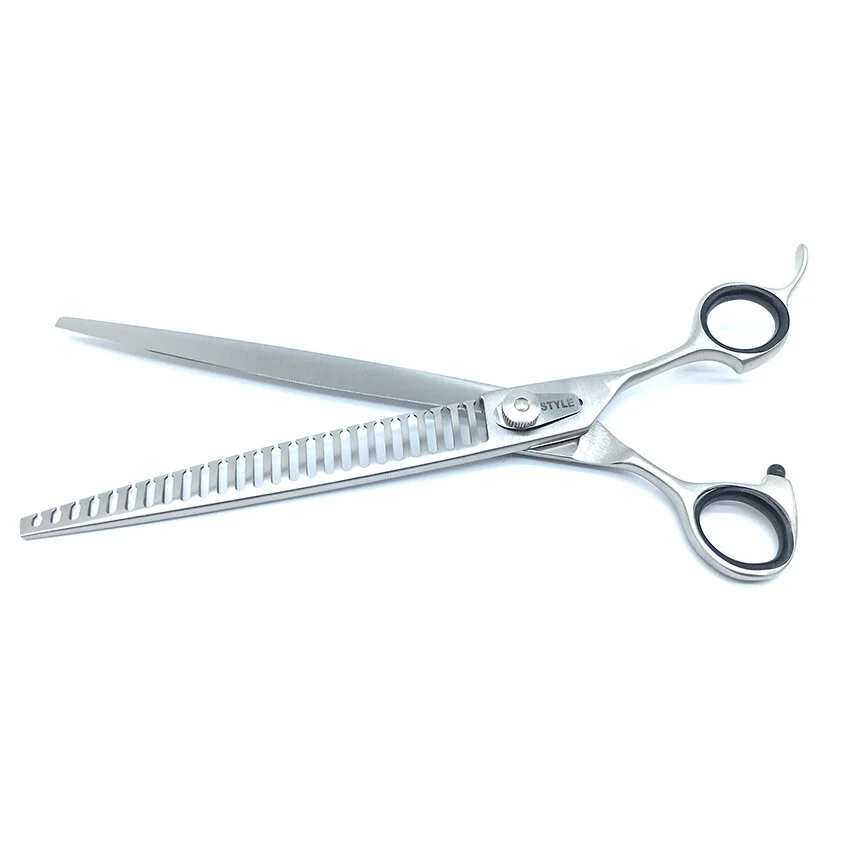
Low tooth count | Heavy coat removal
What they do
Chunkers remove larger amounts of coat quickly. They are a shaping and bulk-removal tool rather than a finishing tool.
Typical features
10–25 teeth (sometimes slightly more)
Wider tooth spacing
Single or double sided
Best used for
Dense coats
Thick legs
Removing weight fast
Pre-finishing before refinement
Watch for
Visible cut marks if overused
Too much coat removal on fine or soft coats
A note on overlap
There is overlap between categories.
For example:
A high-tooth chunker can behave like a blender
A low-tooth blender can behave like a soft chunker
Curved, single-sided tools will always cut more softly than straight, double-sided ones
Understanding how your scissors cut is more important than what the box says.
Quick win
Choosing the right one
Need to remove bulk fast? → Chunker
Need soft transitions? → Blender
Need final polish? → Thinner
