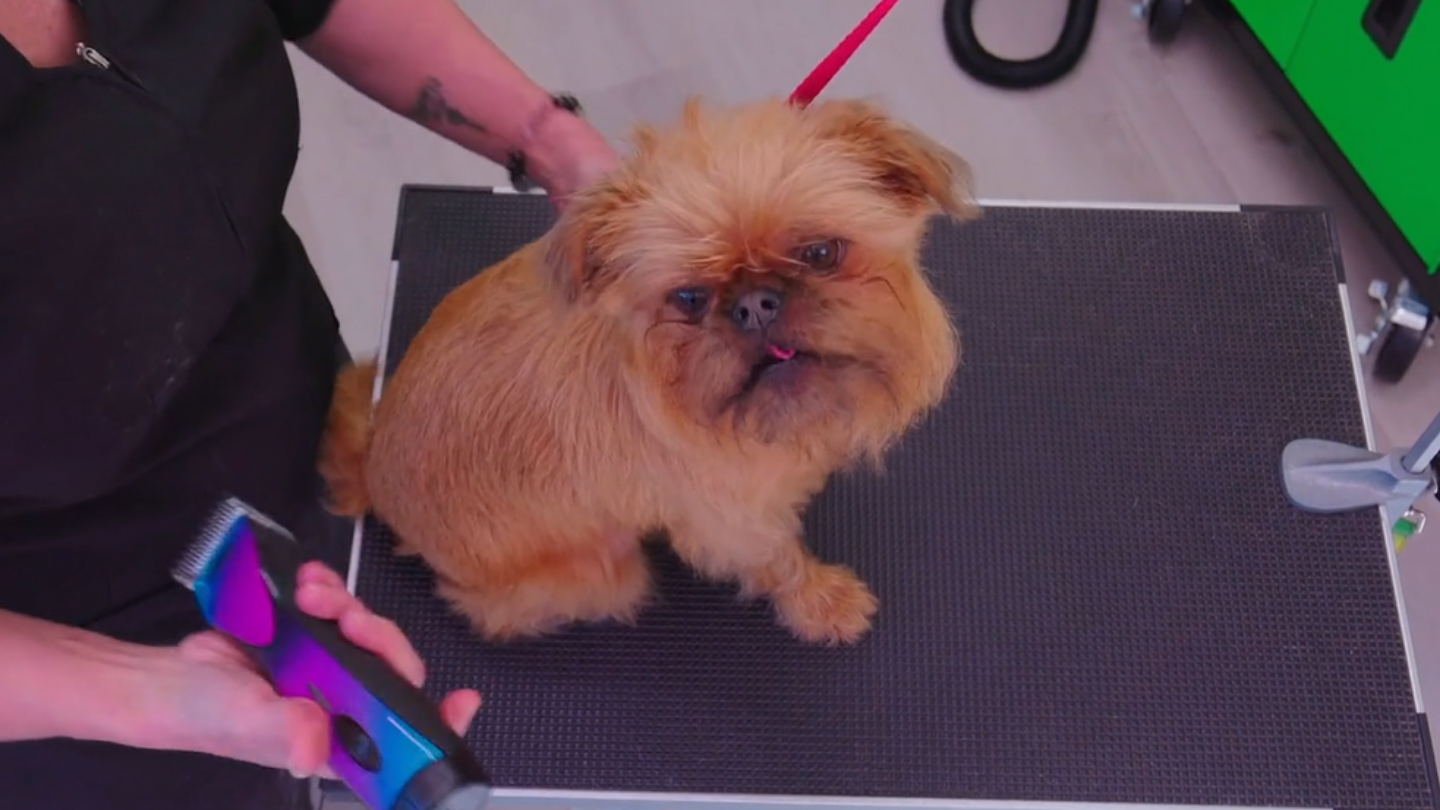
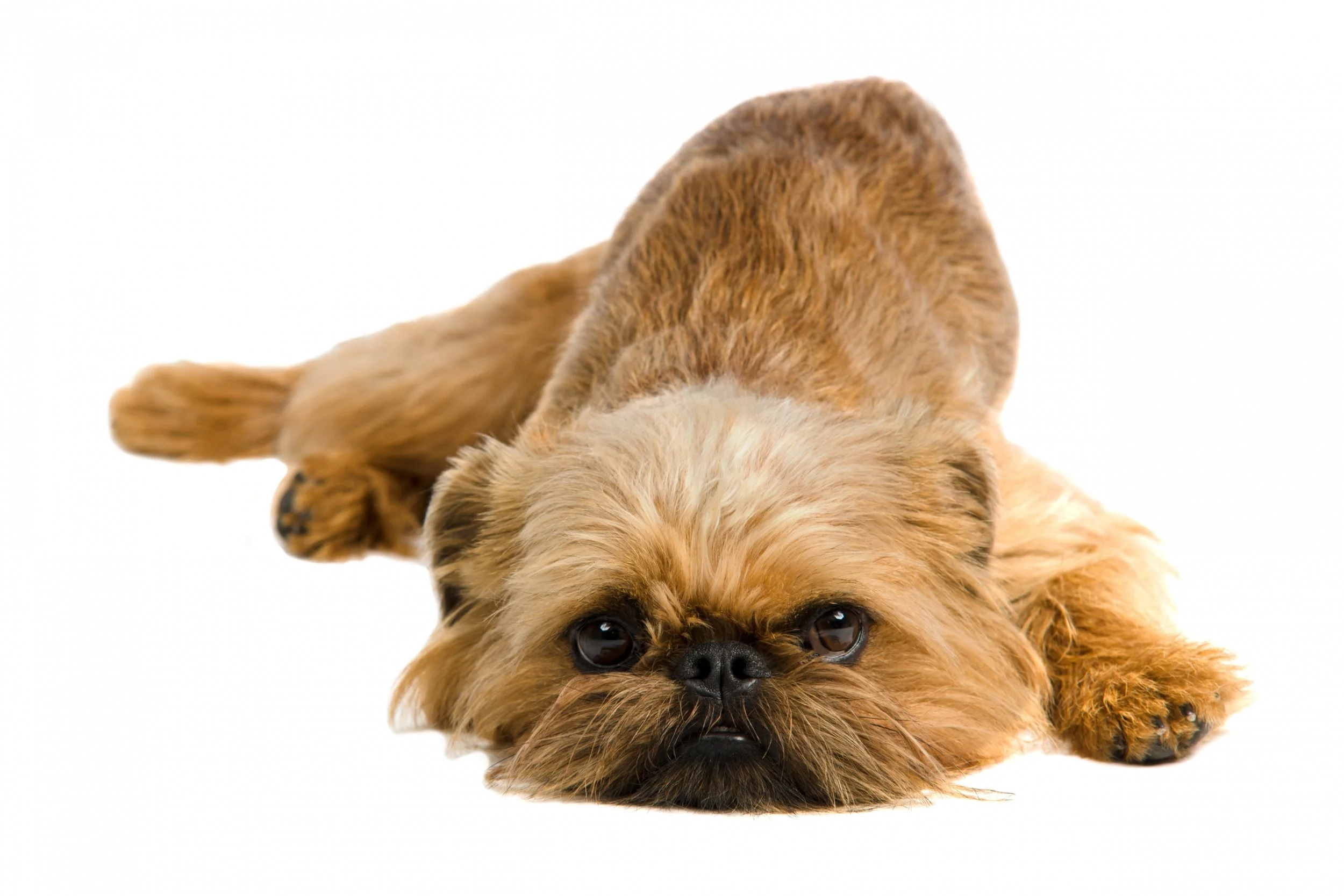
Griffon Bruxellois
The Brussels Griffon or more officially, Griffon Bruxellois, is affectionately known as the "Velcro Dog" for its strong attachment to its human companions! It is a breed that charms with its expressive face and endearing personality. With large, soulful eyes and a distinctive pushed-in nose, the Griffon seems to effortlessly communicate its feelings and thoughts to anyone it meets. Originally from Belgium, these little dogs carry a regal air despite their small size. And really - why is this Breed not a Terrier?!
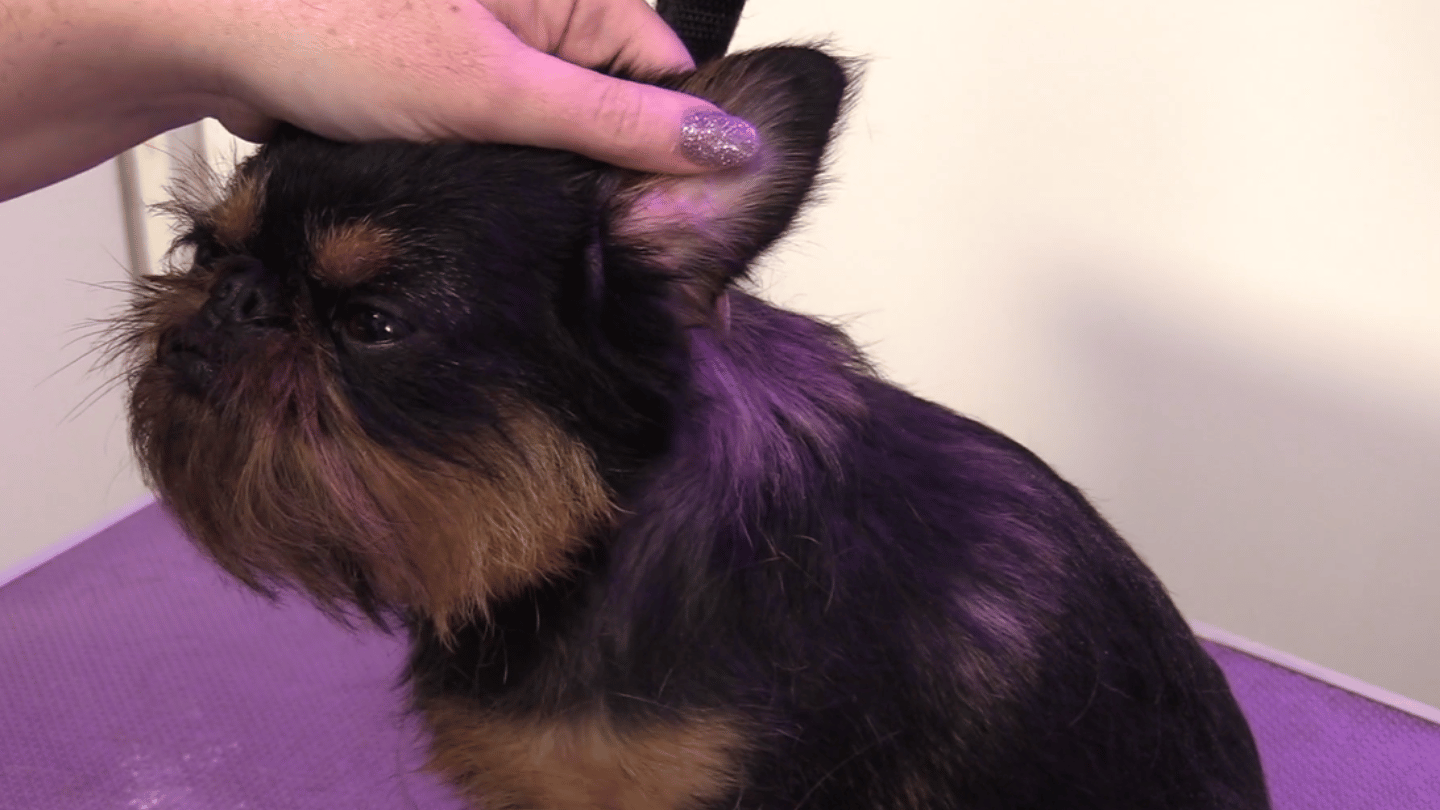
BONNIE
In this tutorial, Michelle will be grooming the gorgeous Griffon, Bonnie. Instead of a full hand strip, Michelle will be performing a pet strip, aiming to maintain Bonnie’s texture, color, and distinctive square shape.
Equipment used:
Diama stripper
Pumice stone
Chalk
Finger condoms
Part 1 Michelle works the coat by pulling only the longer hairs of the coat. The coat is almost blown and comes out very easily. This will give a flat and smooth overall look to the jacket.
Part 2 In this section Michelle will demonstrate how to best show off the Griffon’s little muscular bodies. She will also show how to strip the legs, feet and underline using both stripping tools and also her hands to make it more comfortable for Bonnie.
Part 3 Michelle goes back to the tail. She uses some gripping powder to help pull the longer hairs.
Part 4 Michelle sets the dome head with flat work on the ears and top of the head to exaggerate the beard and monkey-like expression.
Study Notes | Key Concepts
-
The Brussels Griffon is a wire-coated toy breed with a playful, “monkey-like” appearance.
The goal of hand-stripping is to maintain harsh texture and rich color, which are lost through clipping.
Regular 6-week grooming maintains coat health and improves ease of stripping.
-
Use thumb and finger, a diamond stripping knife, or fine tools depending on coat density and sensitivity.
Work with coat direction and layer by layer to prevent bald spots.
Avoid over-stripping blown coats (when hair is too dead), but still aim to remove the top layer.
-
Follow a schnauzer-like pattern: tight body, square outline, slight furnishings on legs.
Strip the rear from the flank to the bend of the knee to a tight finish.
Stretch the skin for easier, safer stripping, especially in delicate or wiggly dogs.
Use thinning shears only when needed to blend or reduce bulk, especially in sensitive zones.
-
Maintain healthy furnishing layers on legs; avoid shortening too much.
Aim for tight, rounded, cat-like feet by stripping and blending hair down.
Work from the longest hairs, checking for symmetry and avoiding abrupt transitions.
-
The head should be short and domed—no eyebrows.
Strip the stop area short to highlight the eyes and cheeky expression.
Preserve the beard—the breed’s defining feature—while working dead coat out to maintain texture.
Ears should be short, tight, and stripped into a V-shape.
-
Majority of stripping is done on a dirty coat for better grip, followed by a bath and light tidy.
Dogs with previous clipper damage may have patchy or soft coats; patience is key.
Work with client expectations (e.g., time, budget) and prioritise coat health and comfort.
CEC
Cec is a lovely example of a Brussels Griffon. Chuckie uses a #5 skip tooth blade on the body and styles the traditional head. Be prepared with your handling notes—this one is a live wire! Watch how Chuckie gently controls Cec when she becomes restless.
Part 1 Body clip and head study
Part 2 The legs and feet. The Brussels Griffon should have cylindrical legs. Chuckie uses chunkers and thinning shears to blend and shape the legs
PROFESSIONAL DEVELOPMENT
The Essential Guide to Hand Stripping is a comprehensive online course designed to teach you everything you need to know about Hand Stripping. Created in partnership with award winning groomer and judge Chuckie Lund, you can check it out at igroomschool.