

MASTERCLASS
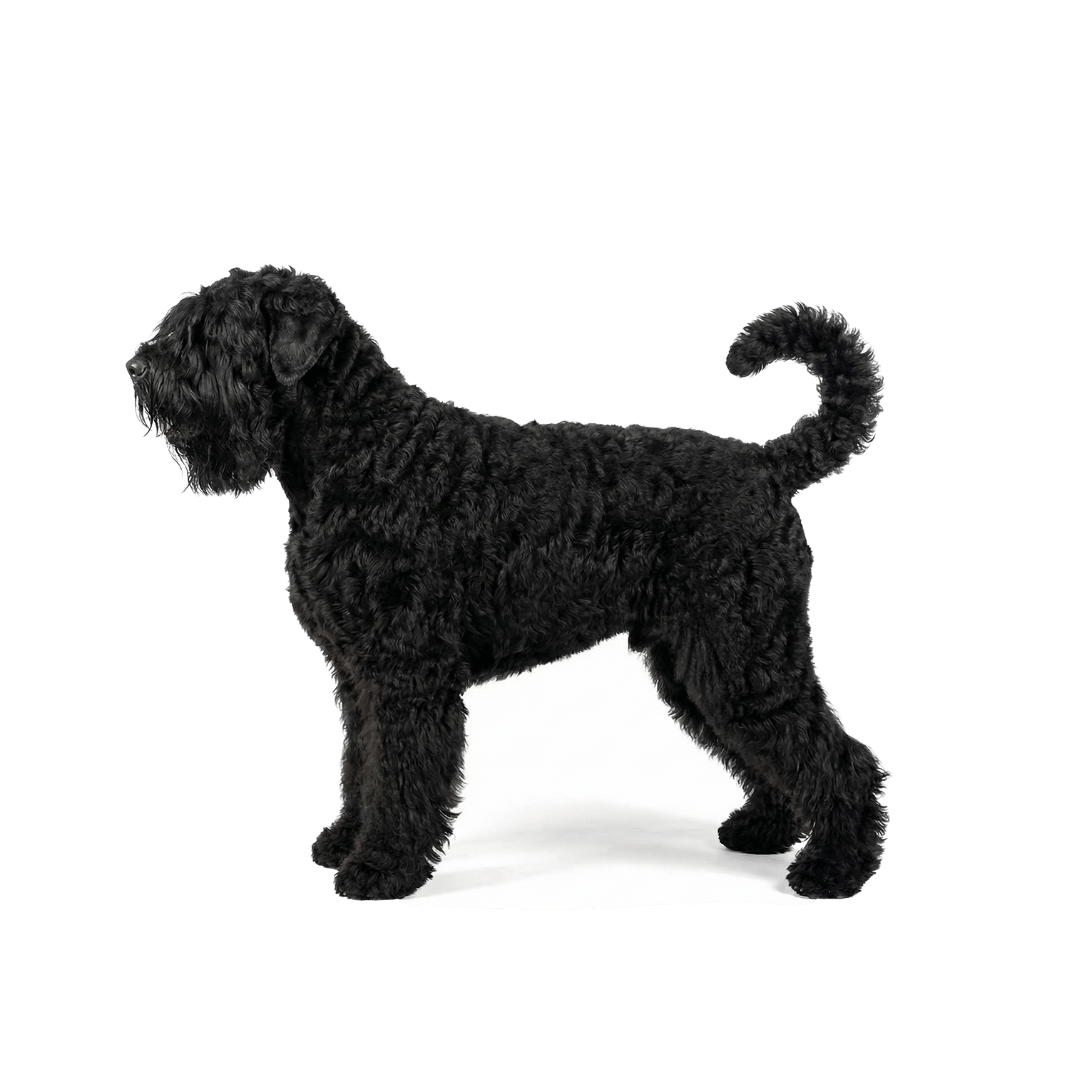
Black Russian Terrier
Black Russian Terriers don’t come through the door every day, and when they do, they bring size, coat, and presence with them.
In this masterclass, Tiarne works through a full groom on Dom, a young Black Russian Terrier, while sharing how this breed was originally developed by the Russian military to be a powerful, intimidating guard dog that was still manageable to handle. The breed is a combination of the Newfoundland, Rottweiler, Giant Schnauzer, and Airedale Terrier, resulting in a dog that is both imposing and highly capable.
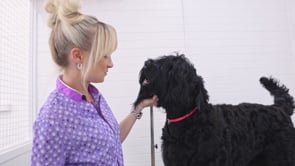
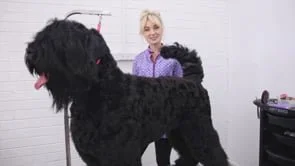
Dom is just one year old and already a big, strong dog, with males reaching 60 kilos and beyond. He is currently in the middle of coat change, which brings a mix of textures across the body. Some areas are wiry where they’ve been clipped, while others still hold a softer, fluffier undercoat. His leg coat is particularly coarse, and like many dogs at this stage, his fall is usually braided during the week so he can see clearly.
This is a practical walkthrough of grooming a young, developing giant breed, with a focus on handling, coat management, and creating a balanced outline that suits both the dog and the breed.
This masterclass leans a little more “real time” than polished, which actually suits the dog and the job. Stick with it, there’s plenty in here you’ll use.
DOM
EQUIPMENT
Straight Scissors
Curved Scissors
Chunkers
Finishing Comb
Clippers
PART 1 T starts with setup, handling, and what to expect from a young, giant breed. Clipper work sets the foundation, with ears and throat cleaned, a rectangle clipped into the skull for shape, and the rear tightened to support a strong outline. Practical notes for salon grooms are included.
PART 2 Shape is established from the front and rear first, then blended through the body. The topline is levelled, shoulders softened, and the rear kept tight. Chunkers are used to suit the coat and maintain a natural finish, with attention to proportion and coat change.
PART 3 The groom is refined through the chest, tail, legs, and feet to create a balanced outline. The head is left fuller, allowing the coat to develop and fall correctly over time rather than over-trimming too early.
Breed Standard at Dogs Australia
This tutorial is also available as a fastForward
Study Notes | Key Concepts
-
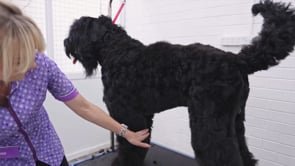
Dom is only just one year old, but already extremely large and heavy. One of the most helpful takeaways in this tutorial is Tiarne’s reminder that a young dog’s size can outpace its muscular development. That means standing for long periods can be tiring, and allowing the dog to sit when needed is not a failure in the groom. It is sensible handling. The setup of the table, tether, and working height also reflects this practical, safety-first approach.
-
This groom is all about shape. Tiarne works from the front and rear first to establish the dog’s proportions, then sculpts the body to keep the outline balanced. Key points include a level topline, a pronounced chest, a tight rear to show angulation, and strong column legs. She also explains how coat can be used to soften or disguise minor faults while keeping the dog looking solid and properly proportioned.
-
The Black Russian Terrier’s dense, coarse double coat needs a finish that suits the texture. Tiarne uses chunkers heavily to maintain a more natural result, especially through the body and legs. She also discusses the awkward coat-change stage, where mixed textures can matt quickly and affect the finish. For pet grooming, she notes that attachment combs are perfectly practical, while this demonstration stays closer to a hand-scissored show presentation.
-
The breed’s head should look strong, substantial, and impressive, so this is not a trim where you take too much away. Tiarne clips a rectangle into the top skull to help create the flat appearance, keeps the throat tidy, and explains why so much coat is left on the head and fall, especially in a younger dog. Rather than over-trimming, the goal is often to let the coat grow and settle so it learns to fall correctly over time.
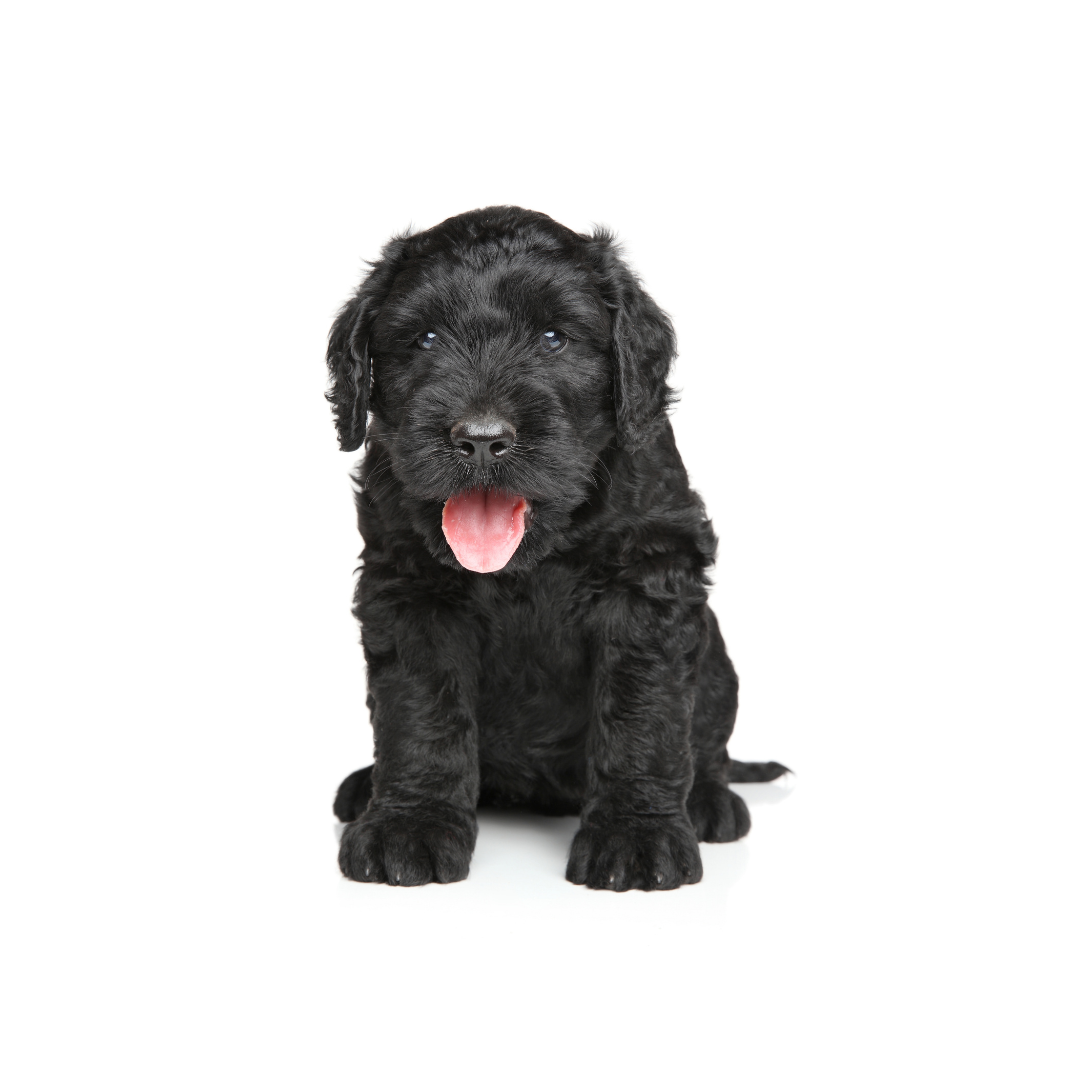
BONUS TRACK
Fun Facts about the Black Russian Terrier
1. Not actually a terrier (plot twist)
Despite the name, they are not a true terrier in the traditional sense. They were developed using a mix of breeds including Rottweilers, Giant Schnauzers, and Airedales, so they behave more like a working guard dog than a scrappy terrier.
2. Built by the military
They were developed in the former Soviet Union as a working dog for the army. Think guarding, patrolling, and handling harsh conditions. Not exactly lapdog origins.
3. Designed for brutal climates
That dense, black coat is not just for looks. It was developed to withstand freezing temperatures and tough environments, which is why coat care is no small job.
4. Slow to mature
They can take up to 2 to 3 years to fully mature, both physically and mentally. That “big puppy” phase sticks around longer than most owners expect.
5. Surprisingly sensitive
For such a solid, imposing dog, they tend to be quite people-focused and can be sensitive to handling and tone. Firm but fair wins every time.
6. Grooming is part of the design
Their coat does not naturally stay neat on its own. Regular brushing, maintenance, and structured grooming are essential to keep that signature outline.
7. They were bred to think
These are problem-solvers. They are not just following commands, they are assessing situations, which is great for working roles but can be… interesting in a grooming environment.
8. One-colour only
Unlike many breeds, they are always black. Any variation is considered incorrect for breed standard.
