
ADVANCED TECHNIQUES

Hand Stripping
What is hand stripping and why do we do it?
Hand stripping is a traditional grooming technique used to maintain the characteristic coat of many wire, harsh and other stripping-coated breeds.
Rather than shortening the coat with clippers or scissors, hand stripping removes mature hairs from the follicle, using the fingers or a stripping tool. On suitable coats, this helps maintain the texture, colour and overall appearance associated with the breed.
While hand stripping is often associated with terriers, it is also used on a number of gundogs, hounds and other breeds. And it isn't just for show dogs. Hand stripping, carding and clipping can all have a place in pet grooming, depending on the individual dog, its coat and the desired result.
Not every coat is designed to continuously grow and be shortened with clippers. In many stripping coats, individual hairs mature and eventually become ready to shed and be replaced by new growth.
Hand stripping removes these mature hairs rather than simply cutting them shorter.
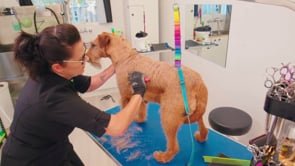
The suitability of a coat for hand stripping depends on more than breed alone. Coat texture and condition, previous grooming, how readily the mature coat releases and, importantly, the individual dog all need to be considered.
Understanding the different areas of the coat
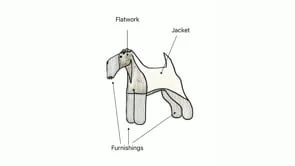
When talking about hand-stripped trims, you'll often hear groomers refer to the flatwork, jacket and furnishings.
Flatwork refers to areas where the coat is generally kept shorter and closer, such as the head, cheeks, ears and parts of the neck.
The jacket is the coat covering the main body of the dog.
Furnishings are the longer areas of coat that contribute to the breed's characteristic shape, which may include facial hair, legs and areas of the undercarriage.
These areas, and how they are groomed, vary considerably between breeds. Understanding the intended coat and outline of the breed is an important part of deciding where and how much coat to remove.
Tools for hand stripping
There is no single tool that is right for every stripping coat. Groomers may use a combination of:
fingers or finger cots
stripping knives in different sizes and tooth configurations
stripping stones
carding knives
undercoat-removal tools
chalk or powder for additional grip.
Tool choice depends on the coat, the area being worked and the groomer's own technique and preference.
A stripping knife is used to help grip and remove the hair, rather than to cut through it. Some stripping and undercoat tools can cut or break coat depending on their design, condition and how they are used, so it is important to understand what your tool is doing to the hair.
Alicia takes us through her grooming toolbox and shows some of the stripping, carding and coat-preparation tools she uses when working with terriers and gundogs.
Good hand stripping is not about grabbing large amounts of coat and pulling.
Work with small amounts of mature coat at a time, supporting the skin with your free hand. Grip the hairs you want to remove and pull in the direction of their natural growth, keeping your movement controlled.
The coat itself will give you information. Mature coat that is ready to be removed should release more readily than coat that is not ready.
The dog will give you information too. Pay attention to their response throughout the groom. If the coat is difficult to remove or the dog is showing increasing discomfort, don't simply pull harder. Reassess the coat, the area you're working on, your technique and whether hand stripping is appropriate for that dog.
Basic hand stripping technique

What is carding?
Carding is related to hand stripping, but it serves a different purpose.
Rather than intentionally removing the outer jacket, carding is used primarily to remove loose undercoat and soft, fuzzy coat sitting beneath or amongst the harsher outer hairs.
Removing this excess coat can help the jacket sit flatter and improve the overall finish. Carding can be useful as part of maintaining a hand-stripped coat, but it can also be incorporated into pet trims where the dog is being clipped.
Carding before clipping
Choosing to clip a pet dog doesn't mean coat preparation stops at brushing and bathing.
For stripping-coated breeds that are maintained with clippers, carding can remove excess undercoat, help the remaining coat sit flatter and help create a smoother, more even finish when clipping.
Support the skin as you work and follow the natural direction of the coat. Keep assessing both the coat and the dog's response rather than continuing simply because more hair can be removed.
In this demonstration, Chuckie cards the jacket before clipping, showing how she supports the skin, works with the direction of the coat and removes excess undercoat before beginning her clipper work
Carding an already clipped coat
Carding can also be useful on dogs that are already routinely clipped.
In this demonstration, carding knives are used to remove loose coat and undercoat from an already clipped coat. A stripping or pumice-style stone can also be useful for lifting and removing loose hair.
It's a good example of why hand stripping, carding and clipping don't always need to be thought of as completely separate grooming choices. Different techniques can be used together where appropriate for the individual dog's coat and grooming plan.
More hand stripping tutorials on igroomhub
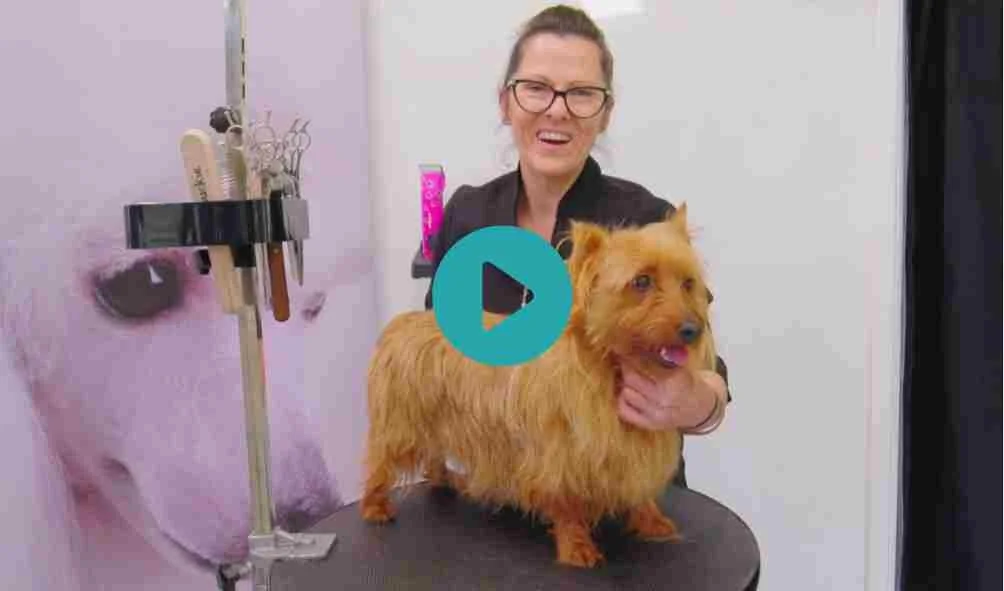
Australian Terrier
Scottish Terrier
Border Terrier

WH Fox Terrier
Irish Terrier
Dachshund
Want to learn hand stripping properly?
The Essential Guide to Hand Stripping takes you beyond the introduction, with detailed learning on coat and hair, tools, terminology, technique, rolling and staging coats, breed standards, handling considerations and more.
Some of the breed demonstrations included in the course are already available to you here on igroomhub, so Members receive 50% off the full course.
Use code CHUX at checkout