

The competition is in four months. The grooming starts now.
Bowie is a medium Labradoodle with an extremely dense, poodle-heavy coat, and he is a competition dog. Not a finished competition dog - a competition dog in progress. The groom in this tutorial isn't about how Bowie looks when he leaves the table today. It's about where he needs to be in four months' time, and what needs to happen between now and then to get there.
Watching a groomer work on a dog they're actively growing for a competition is genuinely different to watching a finished groom. The decisions are different, the tools are used differently, and the whole frame of reference shifts. You're not asking "does this look good now?" You're asking "will this be where I need it to be in sixteen weeks?"
Setting the pattern, not finishing the groom
Bowie is getting an Asian Fusion inspired style - A-frame legs, donut muzzle, earmuff ears, rounded head. But he's missing coat in several key areas, particularly through the legs, and Jess is deliberately leaving sections long that would normally be taken shorter, because those sections need to grow. The body comes off on an orange comb - longer than she'd typically use for Asian Fusion - because the competition is still months away and she wants length to work with.
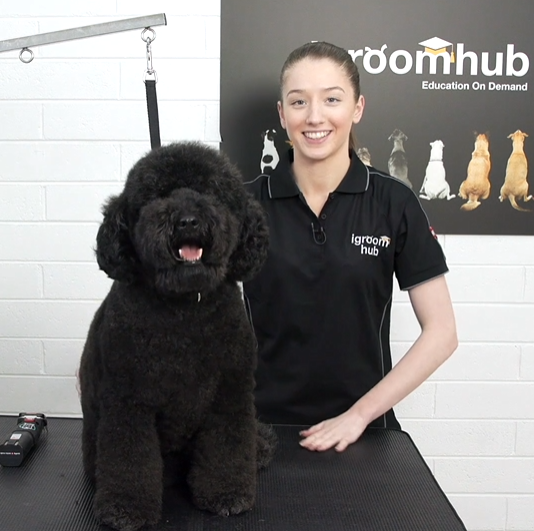
The leg work is about establishing the shape rather than achieving it. Jess is setting in the A-frame pattern, taking off dead and wispy hair that causes knots and slows growth, and leaving the areas that need to fill in largely untouched. Taking too much off now would mean starting over. Taking the right amount off now means arriving at the competition with coat in the right places.
Dead hair is the enemy of growth
One of the most useful observations in this tutorial is about the wispy, wiry ends that accumulate on a coat like Bowie's - especially on a dog that swims regularly. That hair feels different, it knots faster, and it actually impedes healthy growth. Taking those ends off, even when you're trying to grow coat, isn't contradictory. It's the thing that makes the growth possible. The same logic applies to the leg hair Jess is preserving - she's trimming the edges to encourage even regrowth, not to shorten what's there.
The head is the one thing that gets finished today
The head gets the most complete work in this session, partly because it recovers faster than leg coat and partly because setting the head structure early gives a clearer picture of where the whole groom is going. The donut muzzle is established - oval shape, chin taken short, muzzle set from the corner of the eye down, fringe combed forward and cut to expose the eyes. The earmuff ears get shaped but left full. The head sits slightly wider than the muzzle.
Even here, Jess is working around gaps in the coat - a missing section above the muzzle, some areas still growing back in - and making decisions about what to do now versus what to leave for the next visit. It's planning as much as grooming.
What competition grooming actually looks like in practice
Most people see competition dogs in the ring - finished, chalked, presented. What happens in the months before that is less visible and arguably more interesting. It's a series of grooms like this one, each building on the last, each making small decisions that either set the dog up well or create problems to solve later. Watching Bowie's pattern session is a good way to understand what that process actually involves.
This tutorial is available to Members in the Mixed Breeds section of igroomhub.
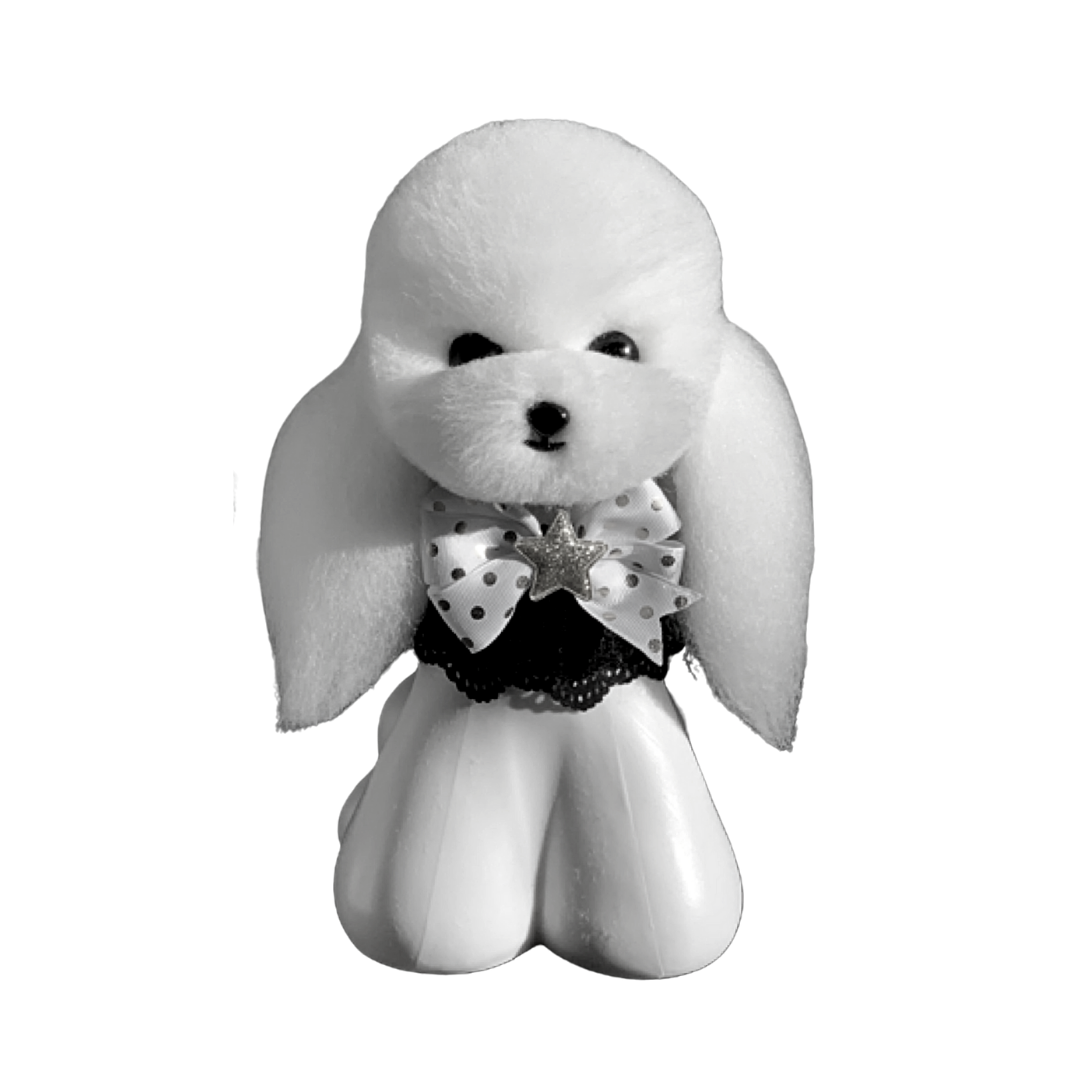
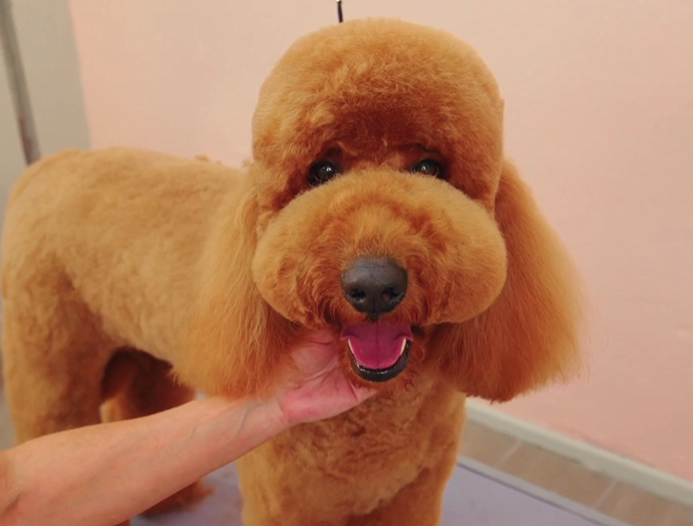


Asian Fusion looks like a style. What it actually is, is a set of proportions - and Sue Wright breaks down exactly how those decisions are made.