

Three heads, one dog, and a very good reason for all of them
Most groomers have a default head. The one they're comfortable with, the one they fall back on, the one that works on most dogs most of the time. Michelle Weber is not here to take that away from you. She's here to add two more.
Daisy is a cavoodle and she sits very patiently while Michelle works through a teddy bear head, a basic round head, and a short head - not as an exercise in showing off, but as a practical argument for having a range of styles. Because the head that suits a dog coming in every six weeks is not the same head that suits a dog coming in every twelve, and the groomer who knows the difference is the one whose clients keep coming back feeling like they got exactly what they needed.
The teddy bear: your six-week head
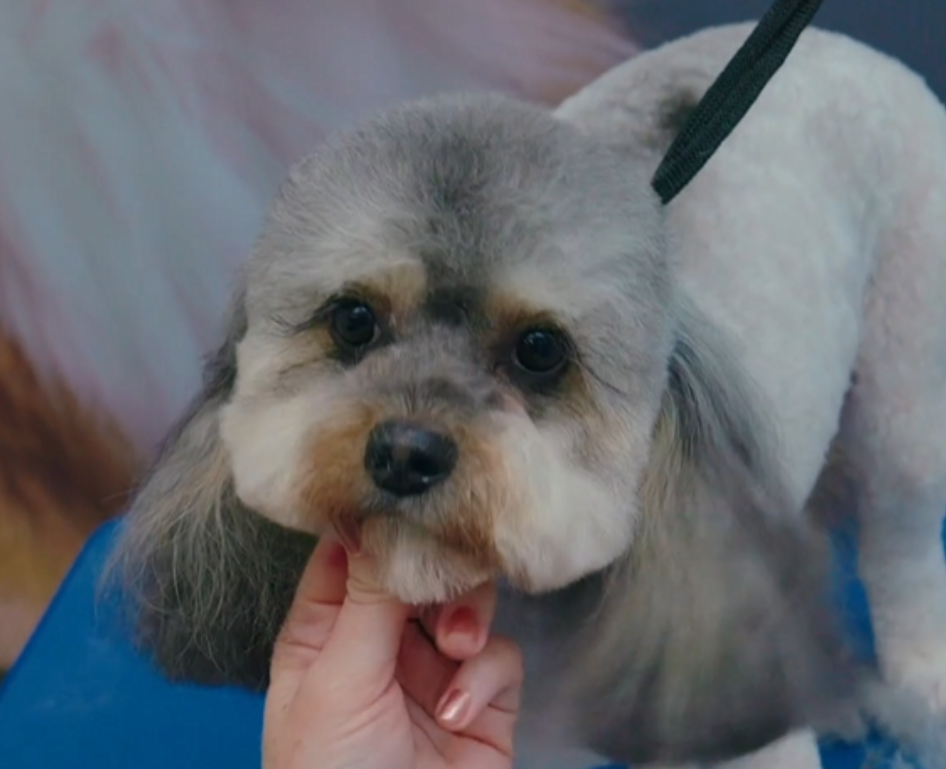
Fuller, bigger, more volume through the muzzle and cheeks. It looks its best when it's being maintained regularly - which is exactly why Michelle recommends it for owners on a six-week schedule. Left longer than that, the fullness that makes it work becomes the volume that mats up behind the ears and sends the owner home with a problem they didn't expect.
The framework Michelle uses - build a square, then round off the corners into a circle - is the same across all three heads. Comb attachments set the length before scissors come out, which means the result is repeatable. If the owner loved it last time, you can do it again, because you wrote down which comb you used.
The round head: your eight-week head
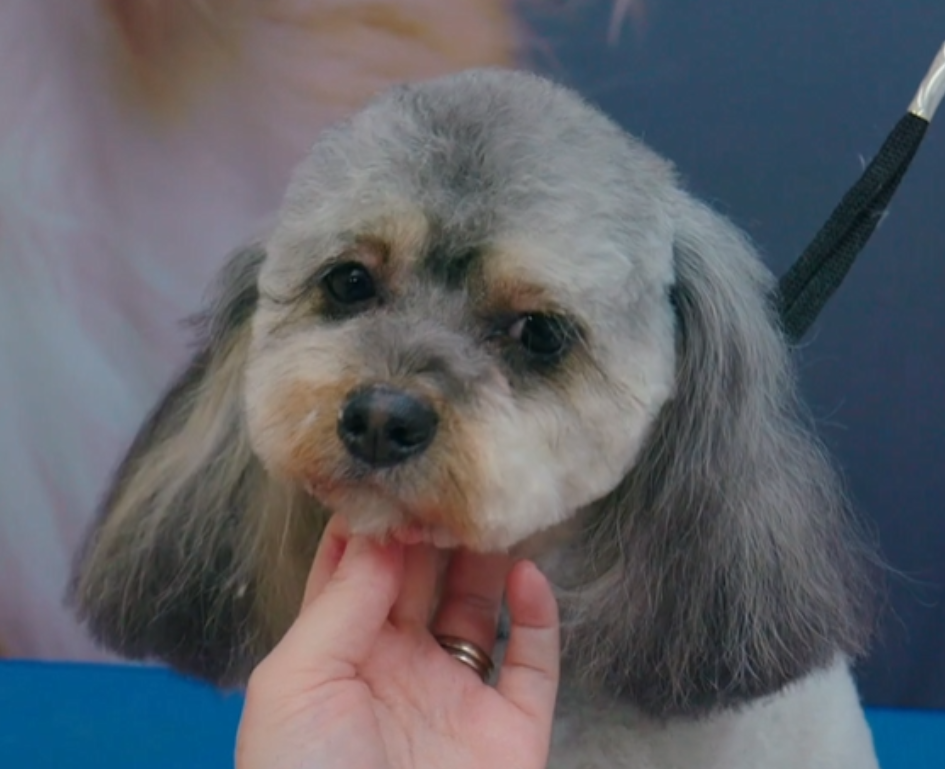
Two lengths shorter. Runs over the skull and muzzle. Less volume, less maintenance between visits, faster to execute. The shorter fringe means less eye buildup for the owner to manage at home. Less beard means less food and water accumulating around the mouth. These aren't just aesthetic calls - they're practical ones that affect how happy the owner is when they bring the dog back in.
The short head: your eight-to-twelve-week head
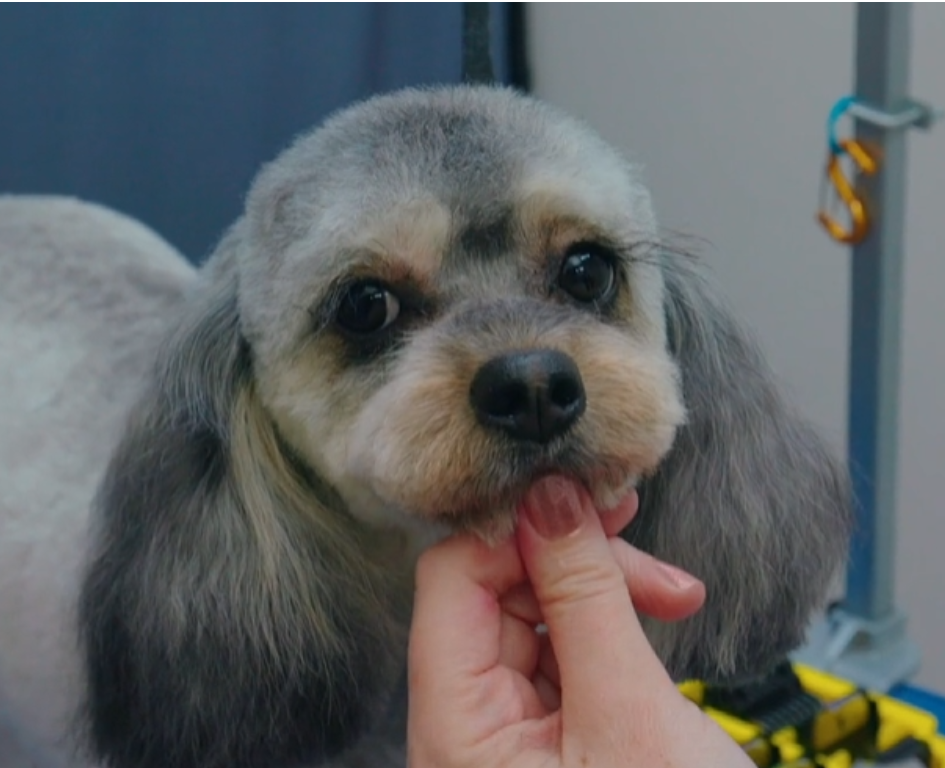
This is the head for the owner who wants it to last, and for the dog that came in on a seven or a five and needs a head that reads as intentional rather than just short. It's also the head that works beautifully on a dog that doesn't come in as often as it should - less coat means less to go wrong, and a short head done well is still a cute head.
The same steps apply. The same square-then-circle logic. The scale changes, the approach doesn't - which is Michelle's whole point. Once you have the framework, the three heads are variations on a theme, not three separate skills to learn.
Why this matters beyond the scissoring
The consistency argument is the one worth sitting with. When you use comb attachments to set length and note down what you used, you're not just building speed - you're building a system that works for your whole business. A different groomer can pick up that dog and deliver the same result. An owner who moves and finds a new groomer can hand over notes that mean something. And you, six weeks from now, can walk into that groom knowing exactly where you're starting from.
Michelle's complete tutorial starring Daisy - covering all three heads in full - is available to Members inside igroomhub.
The blog is just the beginning
igroomhub is an industry membership built for the modern dog groomer - tutorials, masterclasses, business resources, industry discussion and a whole lot more.
You might also like




Theo is a toy poodle in a teddy bear style, and he is Michelle Weber's most posted dog. He gets puppuccinos. He falls asleep during his face groom. He sits on Michelle's table every six to eight weeks and goes home looking exactly like he did last time - which is precisely the point.