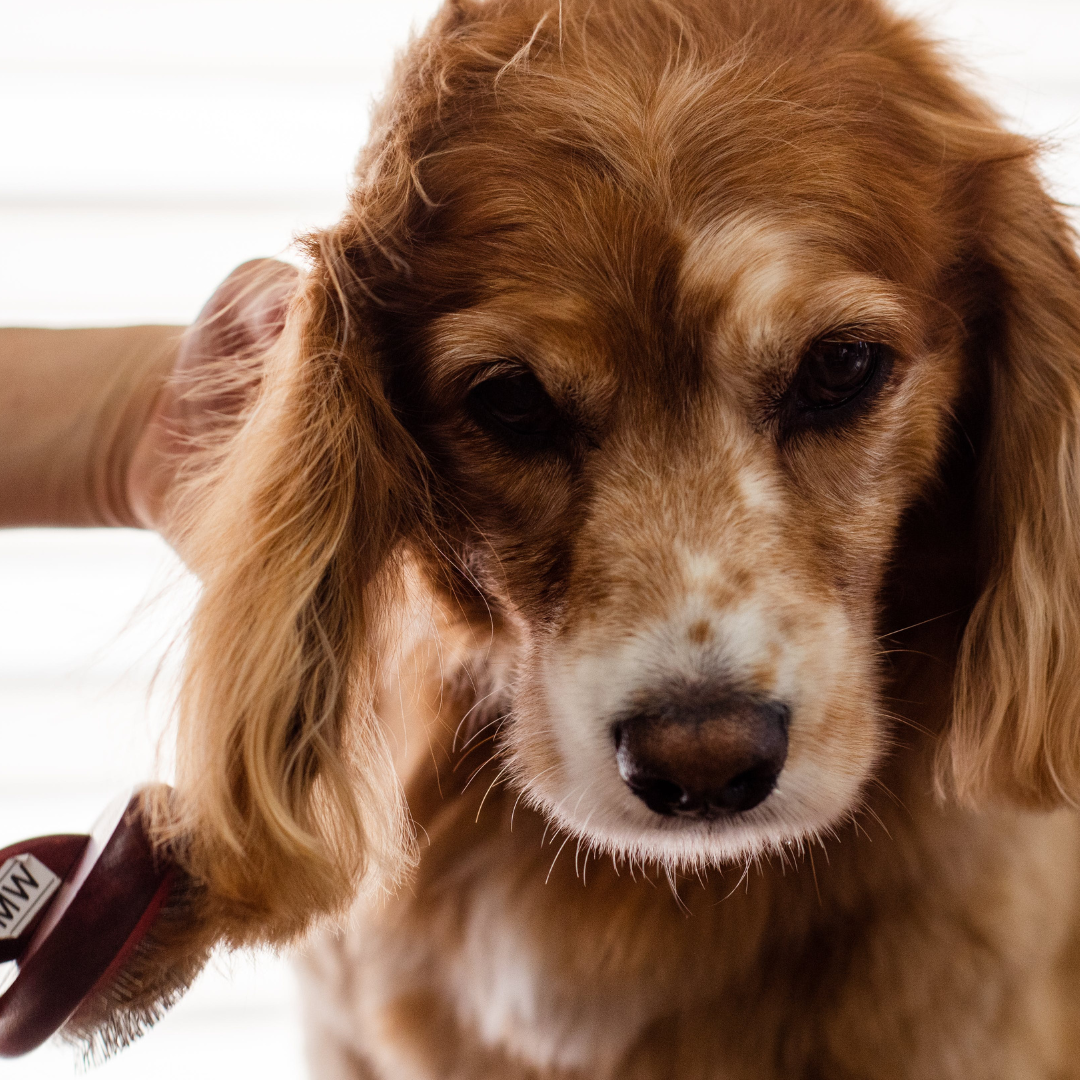
Debunking the Myth: Does a Long Coat Keep A Dog Warm in Winter?
We’ve all had that call (well… many) from clients wanting to push back their winter grooming appointment.
“I don’t want Fluffy to get cold!”
If we got a dollar every time we heard that, well, we would no longer need to look as long and hard at the price of avocado as an add-on to our meals (or comparatively, we could probably put a deposit on a house, but that just comes down to preferences).
But how true is the blanket (pun intended) belief that long hair = warm dog? And are there exceptions?
Let’s Talk Science
This rabbit hole led us into the world of thermodynamics! It’s essentially a pool party of people with very high IQ’s, no time for jokes, and certainly no appreciation for the floaties, flippers and goggles we walked in wearing. But don’t stress, we’re all friends now!
The first law of thermodynamics says energy (in this case, heat) can’t be created or destroyed - it can only change forms. Dogs generate heat internally through their metabolism, converting energy from food into body heat.
Cue our Legally Blonde moment:
If heat can’t be created, a longer coat can’t make a dog warmer.
Mic drop. Call the papers. Victory hair flip.
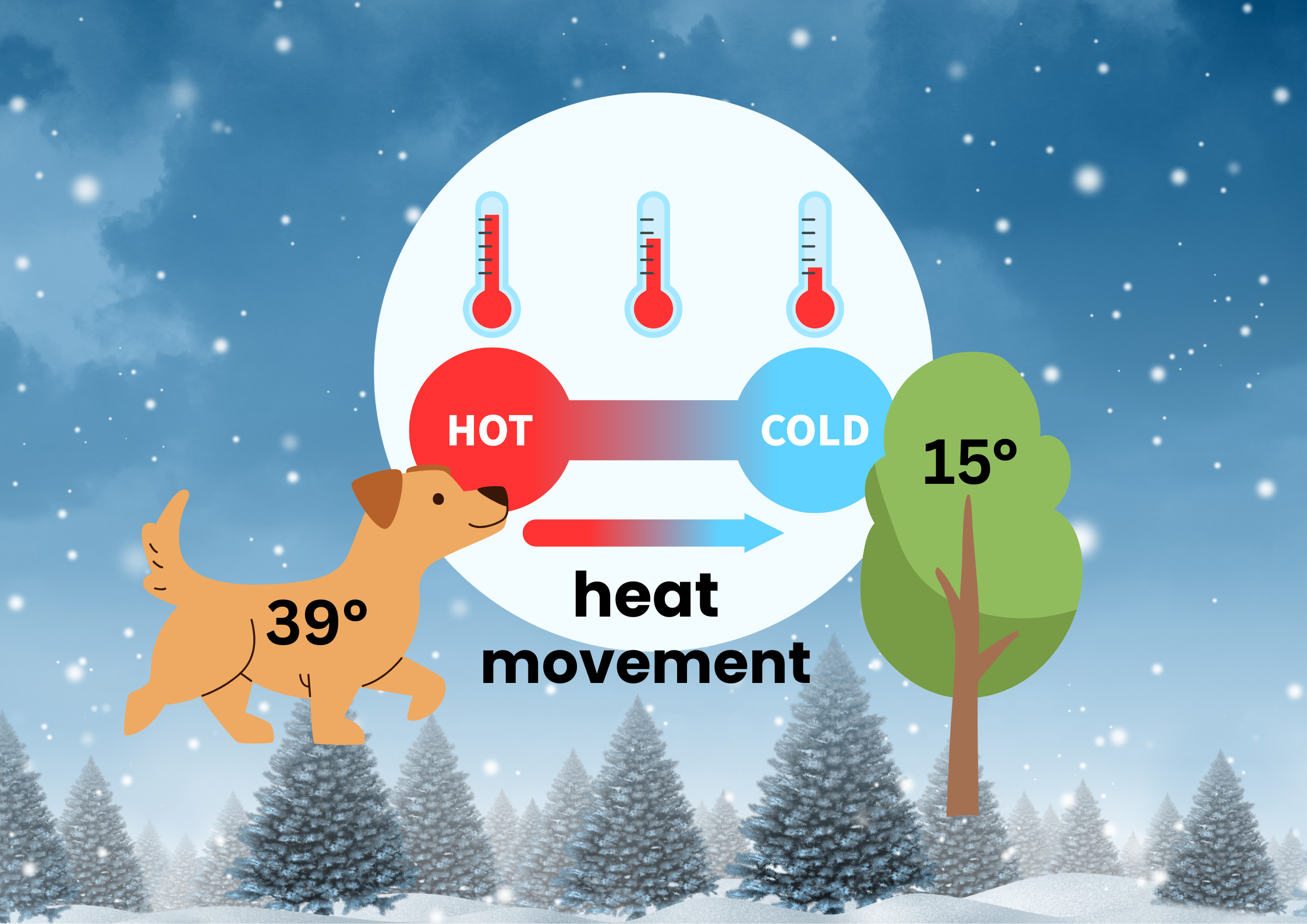
But then the second law of thermodynamics enters the chat. (Thanks for nothing, Katy Perry.) Energy, including heat, always moves from hot to cold. A dog’s body temperature sits between 38.3–39.2°C, so unless your client’s dog lives in a sauna, they’ll naturally lose heat to the outside environment - whether they’re literally outside or not.
So What Role Does Coat Length Play?
Coat length acts as insulation by slowing the transfer of heat from the body to the environment - kind of like dumping flour into a bowl versus sifting it. A longer coat helps retain body heat for longer.
But we didn’t drag you this far through science class just to end there. Because here’s the kicker:
The longer a dog’s coat, the more moisture it retains - and the more likely it is to mat.
Which leads us to our Beautiful Mind moment:
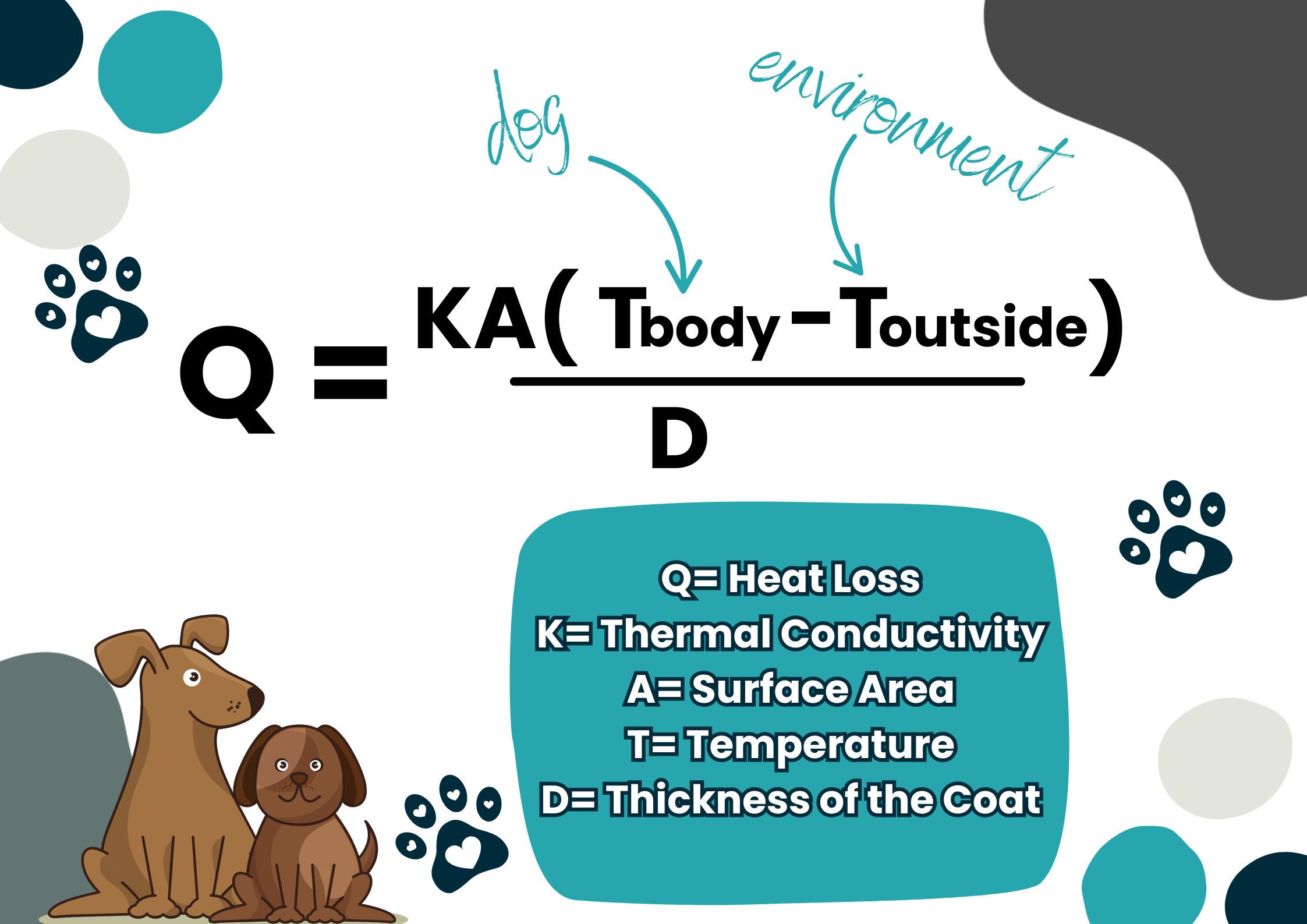
Where:
Q = heat loss
K = thermal conductivity (how easily heat flows - higher if the coat is wet or matted)
A = surface area of the dog
Tbody – Toutside = temperature difference between the dog’s body and the outside environment
D = thickness of the coat
When a coat is wet or matted, the value of K increases, and the effective D (coat thickness as insulation) decreases - meaning the dog loses heat faster. This applies even to double-coated breeds, whose undercoat only insulates effectively when it’s clean, dry, and brushed through.
Or, to say it simply:
It’s not long hair that’s the issue - it’s moisture and matting that break down insulation.
What This Means in the Real World
According to the Australian Bureau of Meteorology, we’re in for a warmer-than-average winter - but with above-average rainfall across the country. So no matter how many towels an owner owns, walks and toilet trips are going to be wet and muddy.
That makes this the perfect time to talk to clients who are thinking of pushing back their appointments.
You don’t need to hit them with a whiteboard and a ten-slide presentation (though we’re not saying you couldn’t). Just gently explain that if they’re not drying their dogs off after walks and brushing them regularly, a longer coat might actually make their dog colder - not warmer.
By having the chat, your client can decide:
Are they willing to commit to drying and brushing at home?
Or would they prefer to come in for a tidy, more manageable trim?
Obviously, we’d love to see them in the salon - but either way, you’re doing your job by keeping the dog’s wellbeing front and centre.
Stay warm, stay dry, and believe it or not - we’ve got a thermodynamic pool party to get back to!
The blog is just the beginning
igroomhub is an industry membership built for the modern dog groomer - tutorials, masterclasses, business resources, industry discussion and a whole lot more.
You might also like