

Before you clip a Westie, card it. Here's why.
Hamish is a West Highland White Terrier and he is, like most Westies that come through the door these days, a pet dog getting a salon clip rather than a hand strip. Chuckie Lund is putting him through a full breed clip - and before a clipper blade goes anywhere near him, she reaches for the carding comb.
It's a step a lot of groomers skip on clipped terriers. It's also a step that makes a meaningful difference to the dog's skin, the finish of the coat, and how the whole groom sits when it's done.
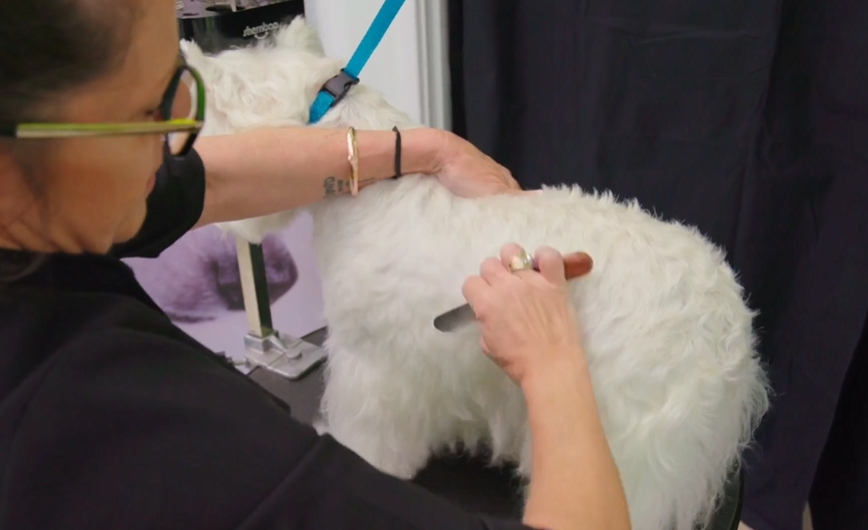
Why terrier coats need carding even when they're being clipped
Westies are a hand stripped breed. Their coat is designed to be worked that way - the harsh outer coat pulled out to encourage new growth, the skin stimulated, the texture maintained. Most pet Westies don't get stripped. They get clipped. And that's fine, but it means the coat needs a bit of extra help before the clippers come out.
Carding at a 45 degree angle before clipping does a few things at once. It pulls out the undercoat that would otherwise sit under the blade and make the finish uneven. It removes the hairs that would have been stripped in a proper hand strip - the ones that are ready to come out but haven't been asked to yet. And it helps the coat lie flat, which means the clippers move through it more smoothly and the result looks cleaner.
The skin benefit is the one worth paying attention to, particularly with Westies. This breed is prone to skin problems - more than most. When dead hairs are left sitting in the follicle rather than being carded out, the follicle can become swollen and irritated. Carding before clipping is a simple step that reduces that risk. It's not a substitute for proper coat management, but it's a genuine improvement on just running the blade straight over an unprepared coat.
What carding does for the finish
Beyond the skin, carding does something useful for the groom itself. Once the undercoat is out and the coat is lying flat, the clipper work sits better. The skirt blends more naturally because there's less bulk underneath disrupting it. The whole silhouette reads cleaner. Chuckie cards from the back of the neck all the way through the body before a blade touches Hamish - and the difference in how the coat sits afterwards is visible before the scissoring even starts.
The rest of the groom
Chuckie takes Hamish through a full Westie breed clip - seven blade on the body, careful blending into the skirt, a layered underline rather than a straight drop, and a rounded chrysanthemum head that she builds by coming out to the side rather than down. Throughout, the carded coat does exactly what it's supposed to: it sits flat, it blends cleanly, and it gives Hamish that tidy, natural look that's harder to achieve when you skip the prep.
Chuckie's complete tutorial with Hamish is available to Members in the Terrier Pet Styling section.


Theo is a toy poodle in a teddy bear style, and he is Michelle Weber's most posted dog. He gets puppuccinos. He falls asleep during his face groom. He sits on Michelle's table every six to eight weeks and goes home looking exactly like he did last time - which is precisely the point.