

Cavoodle
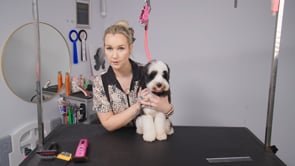
Louis might be a Cavoodle, but his soft drop coat brings its own challenges. In this tutorial, Taylan demonstrates one of her favourite salon styles, pairing a shorter body with fuller legs and a beautifully balanced donut muzzle that's designed to last a little longer between appointments.
Along the way, she shares clever techniques for blending attachment comb lengths, shaping fuller feet without narrowing them, and creating a tighter teddy face that still looks soft and expressive.
LOUIS
Curved scissors
Chunkers
Thinning scissors
Slicker brush
Finishing comb
EQUIPMENT USED
Clippers
No. 4 attachment comb (13 mm / ½")
No. 6 attachment comb (19 mm / ¾")
No. 7 attachment comb (22 mm / ⅞")
Straight scissors
Part 1: Clipper work and setting the pattern
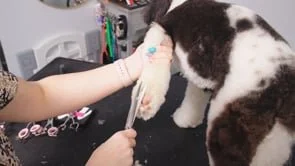
Tayl begins by clipping the legs before the body, explaining how this simple change makes blending much easier. She demonstrates one of her favourite attachment comb combinations, using a longer comb on the legs and a shorter comb on the body to create a smooth, natural transition. She also shares tips for working with softer drop coats, setting up the body pattern, and using wide attachment combs to save valuable grooming time.
Part 2: Feet, legs and shaping
With the clipper work complete, it's time to refine the finish. Tay shows how to bevel the feet without making them appear narrow, create neat U-shaped feet, and build strong leg columns while maintaining fullness. Throughout the lesson she explains how small adjustments underneath the feet and around the hocks help create cleaner outlines that stay looking tidy long after the groom.
Part 3: Opening the expression
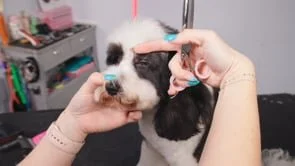
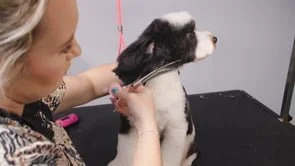
Attention turns to Louis' face, where Tay demonstrates how she creates a tighter teddy head while preserving a soft expression. She explains why she prefers thinning scissors on drop coats, how to work around natural cowlicks, and how to open the eyes without creating that startled or "surprised" look that can happen when too much hair is removed above the brows.
Part 4: Creating the donut muzzle
In the final section, Tay builds Louis' signature donut muzzle from the ground up. She explains how drying technique influences the finished shape, creates layered support to add volume to softer coats, and carefully refines the muzzle into a clean, rounded finish. The tutorial finishes with the final touches to the ears, neck and body, bringing together a polished salon trim that's both practical and adorable.
-
Clip the legs before the body to establish your longer length first. This makes body blending much easier.
Choose attachment comb lengths based on the coat texture and the amount of maintenance the owner can realistically manage.
Brush thoroughly before every clipping pass to prevent tracks and achieve a smoother finish.
-
Blend the shorter body into the longer legs gradually to avoid shelves or harsh transitions.
Keep checking the dog from different angles as you work. Soft coats can hide uneven areas until the dog moves.
Use the natural shape of the dog rather than forcing perfectly straight lines.
-
Open the eyes without making the expression harsh by removing only the hair that interferes with vision.
Build the muzzle in layers, supporting it from underneath rather than simply rounding the outside.
Keep checking that no hair hangs over the nose or into the mouth.
-
Soft coats collapse easily, so regular combing throughout the groom is essential.
Pay attention to natural coat direction and cowlicks when shaping the head.
Fluff drying and proper preparation make scissoring cleaner and more accurate.
-
Step back regularly to assess balance and symmetry.
A polished finish comes from repeated checking, combing and refining rather than taking large amounts of coat off.
Study Notes | Key Concepts
Quick links

Search igroomhub

All Oodles
All Grooming Tutorials

Dashboard
