

MASTERCLASS
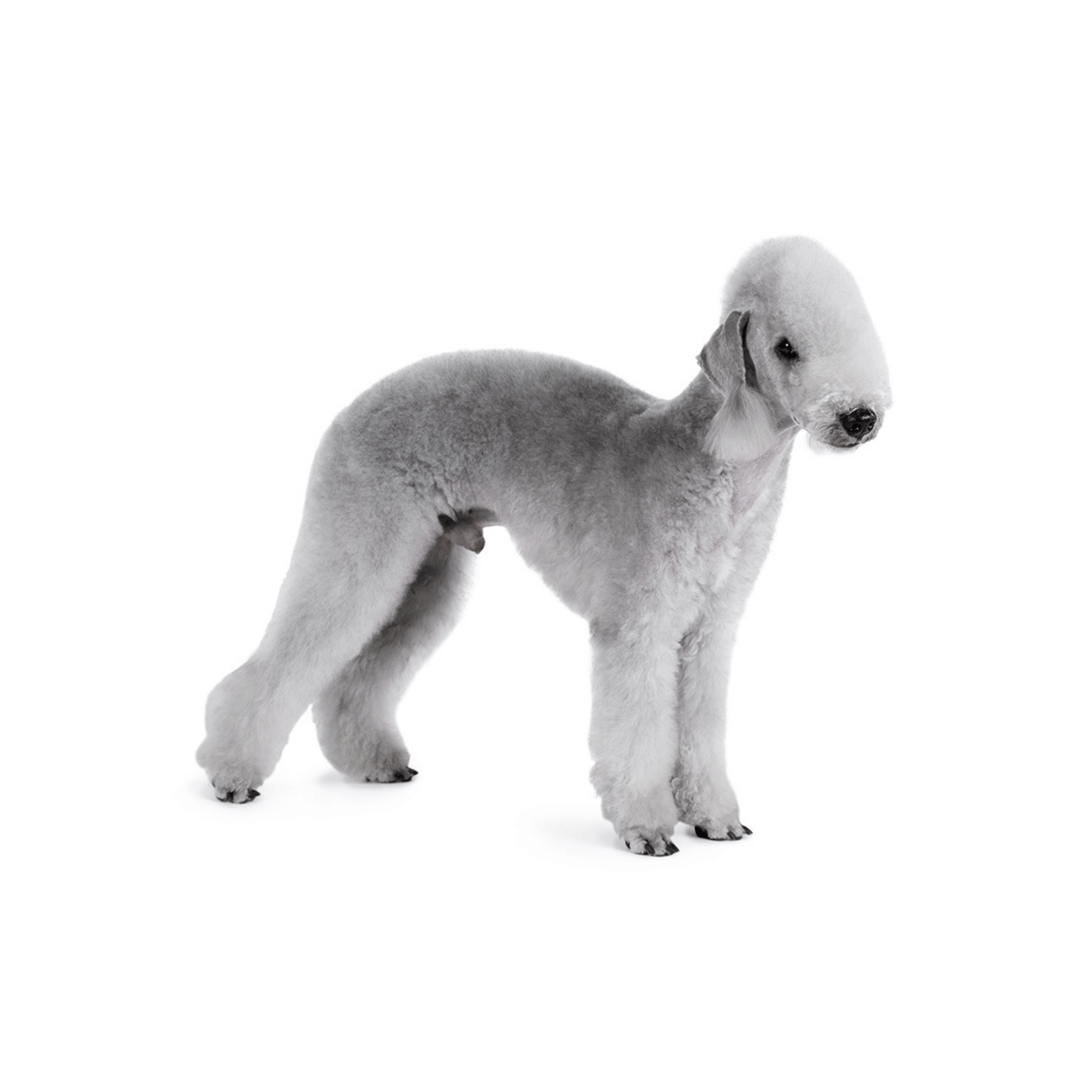
Bedlington Terrier
PRINCE
Bedlington Terriers are known for their soft nature, and coats. Originally named after a mining town in the North East of England, these dogs are rarely seen in the grooming salon and more often in the show ring.
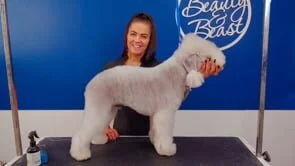
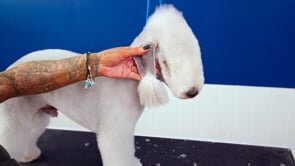
When grooming Bedlington Terriers, understanding their unique coat texture and aiming to maintain their lamb-like appearance is key. Prince is a Supreme Champion and we can see why! Alicia breaks down each component of the groom and finishes with an outstanding product. Get your pen and paper out for this one!
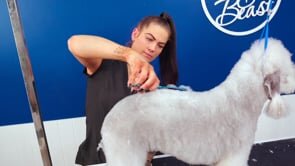
PART 1 Dust off your low blades! Alicia begins with the ears and tail
PART 2 The Bedlington’s topline calls for a rise at the loin; this mirrors the tuckup and curve of the underline
PART 3 Detailed clipping of the back legs, front legs and toes
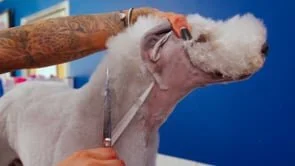
PART 4 The fascinating head study
Breed Standard at Dogs Australia
Study Notes | Key Concepts
-
Use a #50 blade in reverse for sensitive areas like the ears, tail, and throat. Always check the blade temperature to prevent clipper burn.
Liver-colored Bedlingtons may require a #40 blade to avoid skin irritation.
-
The Bedlington’s top line should have a slight rise over the loin, with a smooth transition into the neck and rear.
Use curved shears to shape the top line and straight scissors for the flat rib cage, ensuring a seamless blend between sections.
-
The head should have no visible stop, with a parallel line from the occiput to the nose. Scissor tightly around the lips to maintain a narrow, sleek look.
Blend clipped and scissored areas with thinning shears for a smooth finish without bulging.
-
The rat tail should be clipped with a #50 blade in reverse along the underside, stopping one-third of the way up. The rest should taper naturally into the top line.
Rear angulation should be accentuated with tight scissoring to highlight the curve over the hindquarters.
-
The legs should follow a straight line from the shoulder to the foot, with only slight slopes at the pasterns. Keep the sides of the legs tight to avoid hair flaring outward.
For hare feet, trim the hair on the tops of the toes to emphasise their length.
-
Choose between American or European styles for blending the head and neck. American styles leave more hair on the neck for a smoother flow, while European trims keep the neck tighter.
Always scissor the neck before finishing the top line to ensure proper alignment.
-
Check the dog from all angles to ensure symmetry and balance. Adjust any uneven areas with curved or straight shears.
Ensure that the top line and underline mirror each other: where the top line dips, the underline should rise, and vice versa.
