

MASTERCLASS
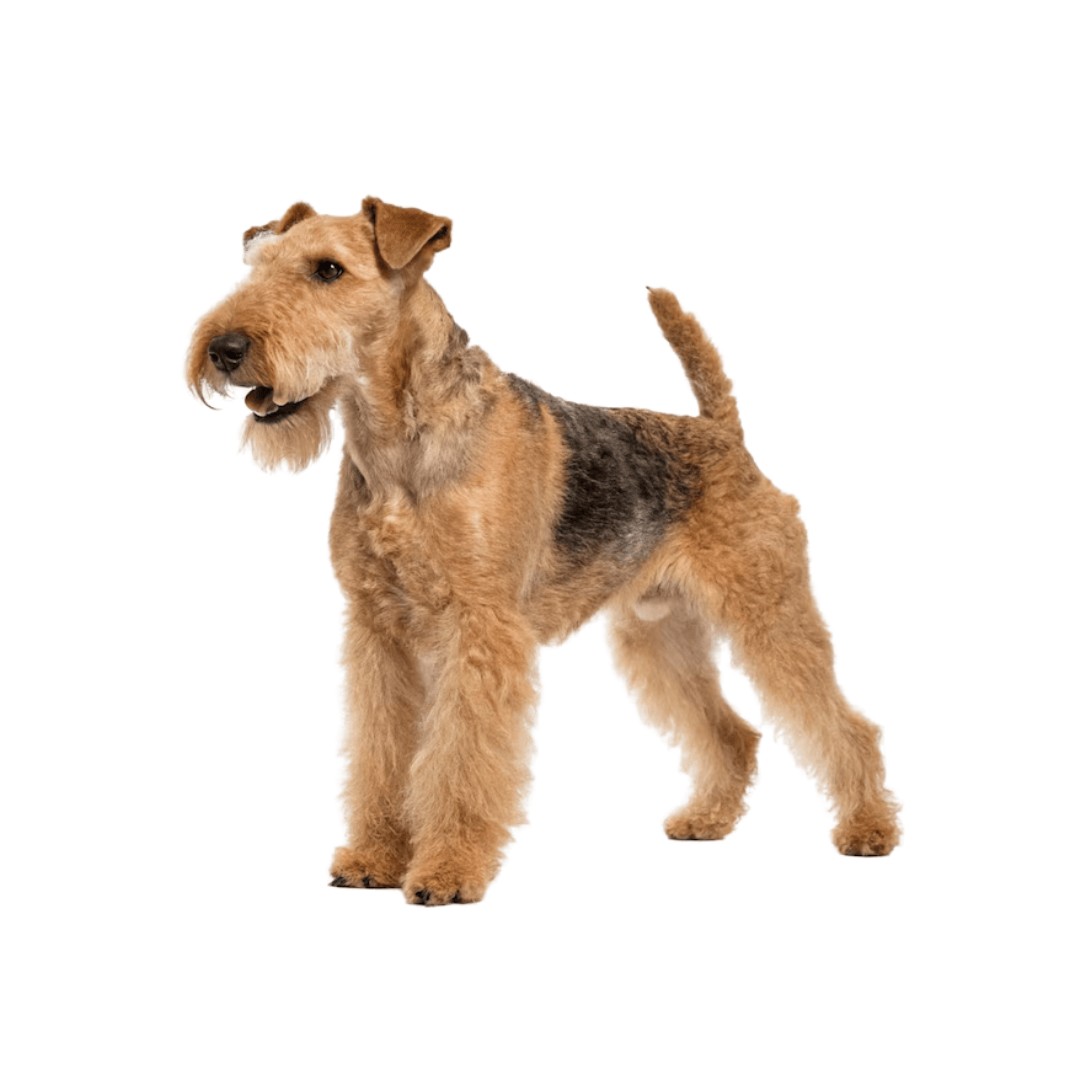
Lakeland Terrier
Lexi is a Lakeland Terrier who has just come into season, which means her normally rolled coat has completely blown out. With no layers left and very little undercoat, Alicia takes her right down to her shortest workable layer and rebuilds the outline from scratch. This tutorial walks you through correct Lakeland breed structure, how to maintain a crisp silhouette even on a compromised coat, and why moderation is the key word in every part of this trim.
LEXI
Part 1: Jacket, Topline and Rear
Alicia begins by stripping the jacket with coarse to extra-fine knives, working through the blown coat to find Lexi’s shortest viable layer. She explains how the Lakeland standard revolves around moderation and how that guides the length choices through the shoulders, neck and back. You’ll see how to maintain a level topline, how to keep the neck-to-wither transition smooth, and how to pull the underline low enough to show depth of chest without making the dog look racy. This section also covers correct rear angulation, shaping the turn of stifle, managing the hock length, and using a belly band to make rear-end stripping comfortable and safe for the dog.
Part 2: Fronts, Legs, Chest and Underline
With the rear finished, Alicia moves to the legs and front assembly. She demonstrates how to strip the legs tightly on the inside while preserving the longer outer layers that define the Lakeland outline. You’ll learn how to straighten the hocks, refine the pasterns, and avoid breaking coat by using fingers instead of knives on longer leg hair. Alicia explains the Lakeland’s flat front profile, how to avoid suggesting a prosternum, and how to create depth of chest by leaving coat below the elbow while removing everything unnecessary through the middle. This part focuses on achieving straight, cylindrical legs, a tidy yet strong chest, and the correct moderate tuck up without creating a skirt.
Part 3: Head, Ears, Fall and Feet
Alicia finishes the groom by rebuilding the classic Lakeland head. She demonstrates how to maintain equal head planes, keep the skull flat, and strip the cheeks tight to preserve the rectangular outline. You’ll see detailed ear work using an extra-fine knife to create small, clean-edged V-shaped ears without breaking coat. Alicia strips the fall, beard and sides of the muzzle to maintain the rectangular profile from every angle, removing anything that breaks the boxy outline. The session wraps up with tight, tidy feet shaped only at the very edges, completing Lexi’s stripped-down but traditional Lakeland silhouette.

Breed Standard at Dogs Australia
This tutorial is also available as a fastForward
Study Notes | Key Concepts
-
Lakeland Terriers are all about moderation. Their breed standard calls for a moderately short back, moderate angulation, a moderate tuck up, and a moderate head. Alicia explains how every grooming decision supports that balanced silhouette, even when the coat has blown due to seasonal hormones.
-
Lexi’s coat has dropped all layers, leaving almost nothing to work with. Alicia takes her right down to the shortest existing layer using coarse to extra-fine stripping knives. This section covers how to tighten the shoulders, flatten the back, manage the withers, and rebuild depth of chest by pulling the underline low.
-
Lakeland legs must appear straight, cylindrical and strong. You’ll see how Alicia strips the inside of the legs tight, leaves the outer layers for shape, maintains short hocks, and follows the dog’s bone to keep every line clean. She also demonstrates how to avoid breaking coat by using fingers on longer leg hair.
-
The Lakeland front is flat, with no visible prosternum. Alicia shows how to pull the entire chest tight except for the section that creates the required depth below the elbow. She removes everything through the middle to prevent a skirt and shapes a moderate tuck up that avoids making the dog look racy.
-
The Lakeland head is a rectangle with equal planes, flat skull and tight cheeks. Alicia strips the muzzle, fall, ears and cheeks with an extra-fine knife to maintain that crisp boxy outline. You’ll learn how to edge the ears cleanly, balance the beard, and keep every angle inside the “rectangle” that defines the breed.
