

MASTERCLASS
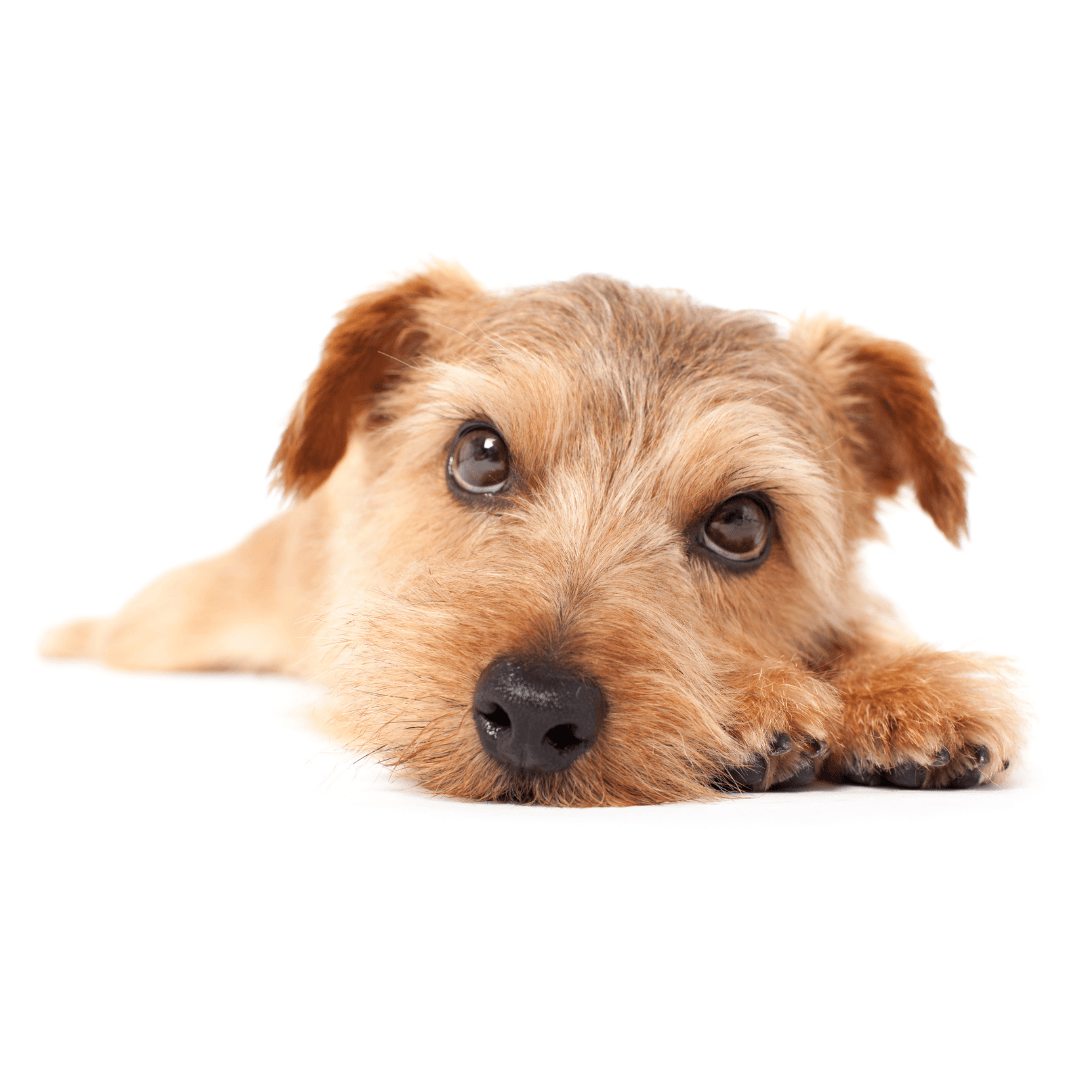
Norfolk Terrier
SHIMMI
A compact, cobby terrier from Group 2, the Norfolk is known for its harsh coat, short legs, and spirited expression. In this advanced tutorial, Alicia Fragidakis demonstrates how to prepare a Norfolk for the show ring using traditional rolling techniques. You’ll learn how to maintain coat texture and colour, shape the outline without over-stripping, and highlight key breed features while keeping the dog comfortable and ring-ready.
Part 1: Rolling the Coat & Shaping the Jacket
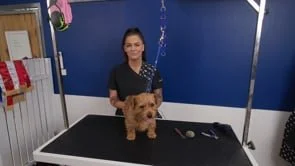
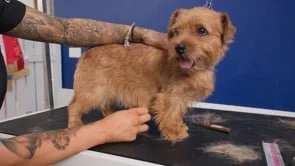
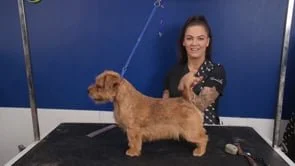
Alicia begins with pads and nails, then moves into rolling the coat using a stripping stone and knife. She works the top line, neck, and shoulders by picking only the longest hairs to preserve depth and texture. Emphasis is placed on stacking the dog correctly during grooming to shape an even outline. The coat is left layered, not sculpted, with special care taken to enhance colour and promote healthy regrowth.
Part 2: Chest, Legs & Furnishings
The chest is styled to highlight the prosternum without creating a bib or heavy front. Alicia removes only the longest hairs around the prosternum to lengthen the neck and bring attention to the forechest. She explains how coat left in the wrong places, particularly the front and rear, can distort proportions and make a short-backed breed appear too long. Furnishings are gently worked to preserve column-like legs, and the rear is tidied to enhance angulation. Throughout, coat texture and silhouette are maintained with minimal scissoring and a focus on balance.
Part 3: Head, Ears & Ruff
Alicia uses a fine stripping knife to tidy the ears and shorten the top skull without flattening the head. She explains the importance of keeping ears tight to the cheek and avoiding excess length in front of the ear, which can disrupt set and profile. The signature semicircle ruff is shaped from nose to ear, and soft fringing is left around the eyes to maintain expression. The goal is a neat, natural-looking head that complements the cobby body.
Breed Standard at Dogs Australia
Study Notes | Key Concepts
-
Norfolks are a pick breed, not a sculpted strip-down. Rolling the coat regularly maintains layers, texture, and rich colour.
Remove only the top layer of long hairs, never dig from the base or pull too much at once.
Always groom with the dog stacked properly to assess top line and shape accurately.
-
This is a compact, short-backed breed. Excess coat at the front or rear can make them appear long.
Keep the prosternum visible by removing long hairs around it, without creating a bib.
Tighten the shoulders and rear just enough to reveal angulation without flattening the profile.
Blend the transition areas carefully and avoid removing too much coat from the back of the neck or turn of stifle.
-
Furnishings should be tidy but never overworked. Use fingers or stones, not knives, to protect texture.
Maintain column-like legs and tight elbows while preserving the coat’s natural bounce and harsh feel.
Harsh furnishings help repel dirt and bindies. Coat texture matters for both form and function.
-
Ears should be tight and neat, shaped with a fine knife to preserve deep colour and avoid fading.
The top skull is shortened to blend into the neck, with fringing left around the eyes and ruff for expression.
The ruff forms a semicircle from nose to ear, framing the face without interfering with ear set.
Avoid scissoring unless minimal finishing is needed. Pull first, blend later.
