

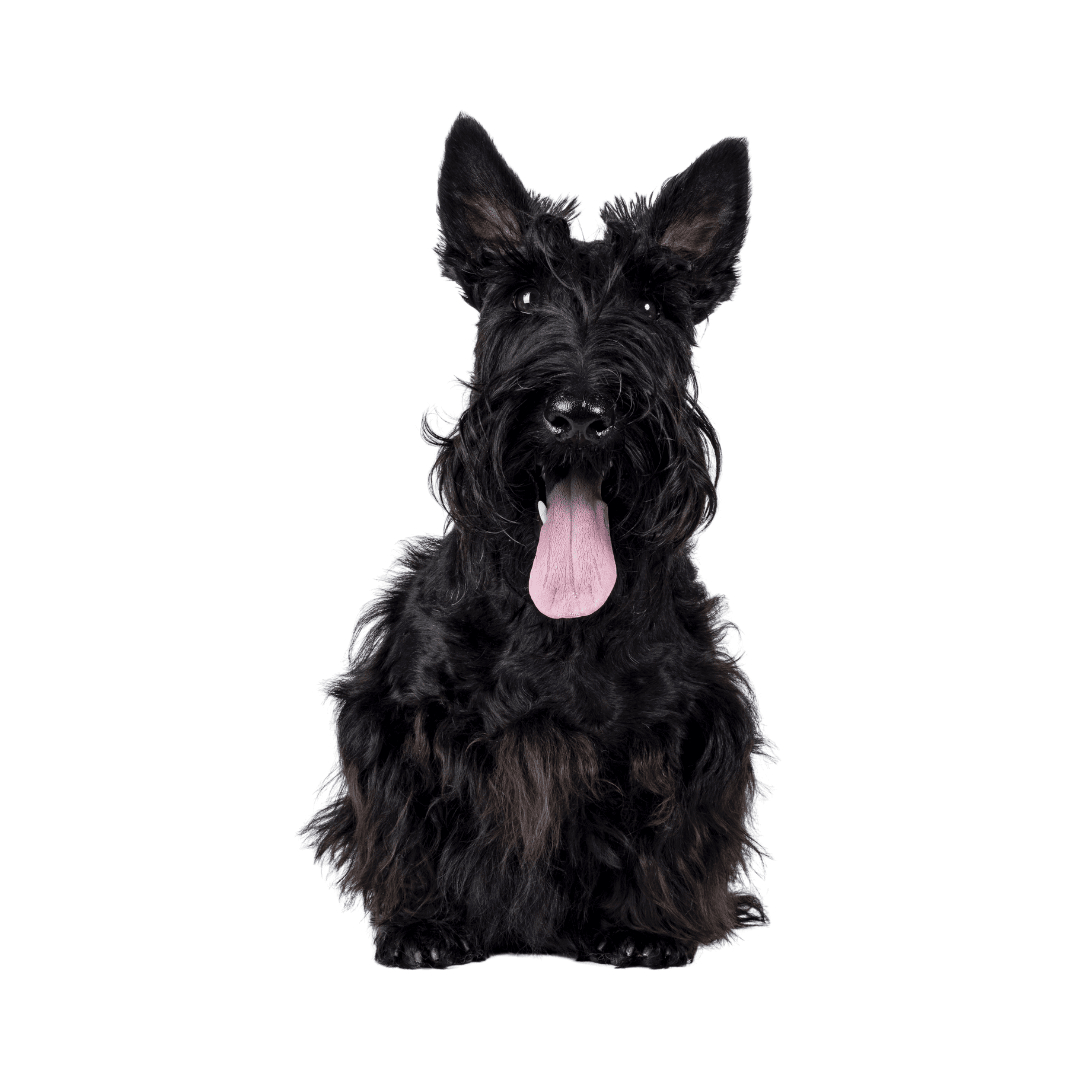
Scottish Terrier
PAISLEY
A distinctive member of Group 2, the Scottie is known for its harsh black coat, signature silhouette, and bold brow. Traditionally hand stripped, Scotties are often clipped in the salon for practicality. In this tutorial, Chuckie walks you through a modified breed trim using clippers, scissors, and strategic carding to maintain correct texture and balance while meeting the needs of Paisley - a chunky little queen with strong opinions and a stylish finish.
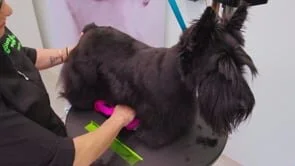
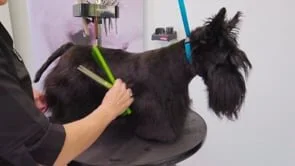
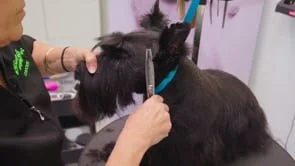
PART 1 Carding & Clipping the Jacket Chuckie begins by carding the jacket to remove dead undercoat, helping the coat lie flat and preventing skin issues. She then clips the body with a #5F blade, shaping the rear and shoulders to flatter Paisley’s figure. Shoulder and chest areas are blended tighter with a #7F in reverse, and the tail is clipped to resemble a carrot shape. Includes tips for skimming technique and using skip tooth blades for blending.
PART 2 Scissoring the Legs & Blending the Jacket The legs are shaped with bevelled feet and tight columns using curved and chunker shears. Chuckie explains how to maintain Scottie proportions, avoiding overexposure of the foot and managing natural dips in the body shape. She blends the jacket into the legs and sculpts the underline for a clean, balanced finish.
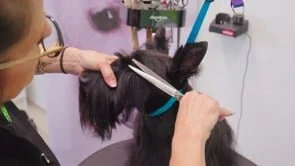
PART 3 Clipping the Head & Shaping the Ears Chuckie clips the skull and cheeks in reverse using the same blade as the body, preserving key points like the tuft in front of the ears. She demonstrates how to shape the ears safely and correctly, exposing the tip while keeping the iconic Scottie expression. Eyebrows are trimmed to sit halfway along the bridge of the nose and shaped for visual balance.
PART 4 Beard Trim & Final Touches Chuckie shortens and blends the beard for a neater, more manageable pet finish, maintaining breed identity without going overboard. Final scissor refinement on the head, a spritz of hold spray for those signature brows, and a flash spray for shine complete Paisley’s polished look.
Study Notes | Key Concepts
-
Scotties are traditionally hand stripped; regular carding helps maintain coat texture.
Carding before and after bathing removes undercoat, flattens the jacket, and prevents follicle issues.
Use a carding knife at a 45° angle and stretch the skin to avoid discomfort.
-
Chuckie uses a #5F blade for the body and tail, with a #7F in reverse to tighten shoulders and chest.
The clip follows the dog’s structure - use skimming and blending to sculpt the silhouette.
For heavier or rounder dogs, clip slightly lower to visually slim the body.
-
Maintain the Scottie’s compact, low-set profile with bevelled feet and tight leg columns.
Avoid pushing furnishings in; let them fall naturally and bevel from there.
Use curves and chunkers for blending, especially around dips and joins.
-
The Scottie head should appear rectangular with narrow cheeks and strong brows.
Clip cheeks in reverse, stopping just before the corner of the eye.
Preserve a tuft in front of each ear to maintain breed expression.
-
Expose the tip of the ear carefully—always trim outwards.
Fold ears out, not forward, to avoid shortening the outer edge.
Support the ear leather with your fingers or palm for control and safety.
-
Brows should sit to halfway down the muzzle for balance.
Some owners prefer longer or shorter brows - adjust to suit.
Beard is trimmed for manageability, not length - keep it tidy but still breed-appropriate.
-
This trim adapts breed standards for a pet lifestyle while retaining key Scottie features.
Tail, jacket, and head are clipped; furnishings and beard are shaped with scissors.
Texture-focused products (e.g. terrier conditioners, coat sprays) are used to finish.
