
CHALLENGING SITUATIONS

Managing Aggression
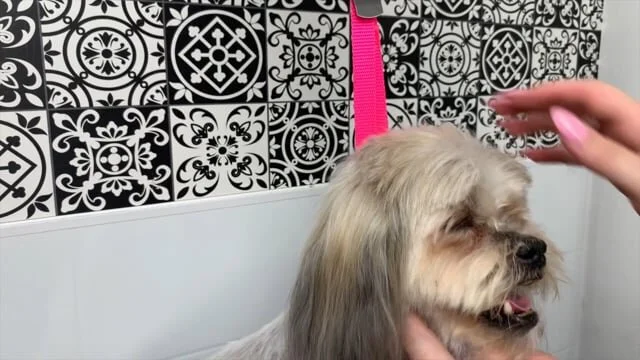
Grooming aggressive dogs requires significant experience and courage. To remain in control of the dog at all times, never take a lead off the dog until you have it tethered securly. Use a calm, controlled voice and touch. Do not rush the dog. Consider your safety and the safety of the dog. Know when to stop the groom. If other dogs or people are present, ensure everyone's safety. It is best practice to complete these dogs start to finish with the same groomer and relatively quickly. Try to not be interrupted when grooming an aggressive dog - you will need all your concentration on the dog. For a refresher on how to use restraining tools, look at the safety restraints section of igroomhub.
TINGSHA
A long-term case study in grooming a reactive dog
When we first filmed Tingsha for igroomhub, Taylan demonstrated how to safely groom a dog who strongly objects to being handled. Tingsha was reactive, easily triggered, and very clear about what he did and didn’t like on the grooming table. The aim of that original series was not to produce a perfect haircut, but to show how a groomer can work through a difficult groom safely while paying close attention to the dog’s behaviour and limits.
Tingsha has continued coming to the salon regularly ever since. Over the years he has been groomed consistently, and groomer Crash has spent a great deal of time working with him and learning how he communicates. Tingsha still doesn’t enjoy grooming, but his tolerance, communication, and ability to work with his groomer have improved significantly. The relationship between dog and groomer is calmer, more predictable, and far more connected than it once was.
Tingsha – Original Series
Grooming a Reactive Dog with Taylan
These videos demonstrate how to approach and complete a groom on a dog who reacts strongly to handling. Taylan works slowly and deliberately, adjusting her handling and restraint choices based on what Tingsha will tolerate on the day.
Part 1
Taylan introduces Tingsha and discusses different types of aggression seen in grooming dogs. She begins the groom with a body clip, explaining how slow, controlled movements and calm handling can help prevent escalation with a reactive dog.
Part 2
The groom continues with attention to areas that are matted or uncomfortable for Tingsha. Taylan demonstrates how to adapt tools and techniques, including blade choice and restraint options, while keeping both dog and groomer safe.
Part 3
Some areas of the groom are more challenging than others, particularly Tingsha’s legs and feet. In this section Taylan demonstrates how a second handler can assist during difficult moments and how pausing and resetting can help avoid pushing the dog too far.
Part 4
Taylan completes the groom by working carefully around Tingsha’s face and head. The focus remains on safe handling and achieving a comfortable, practical result rather than perfection.
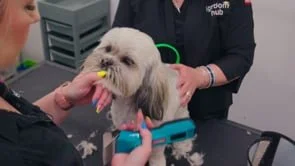
Tingsha – Take Two
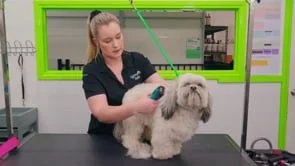
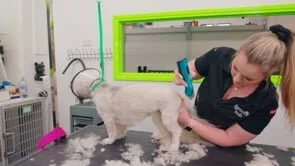
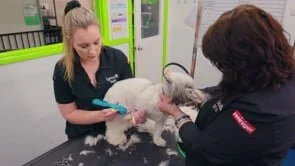
Three Years Later with Crash
Tingsha is now three years older and has developed a strong grooming relationship with Crash, who has been working with him consistently in the salon. These videos show how routine, communication, and patience can gradually improve the grooming experience for a dog who finds the process difficult.
Tingsha is still very clear about what he likes and what he doesn’t like. But Crash understands his signals and works with him in a calm, predictable way, creating a groom that feels far more relaxed for both dog and groomer.
Part 1
Crash begins the groom by working on Tingsha’s head first, addressing the areas he dislikes most while he is still calm and focused. She demonstrates how predictable handling and clear communication help keep him engaged in the process.
Part 2
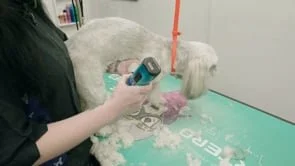
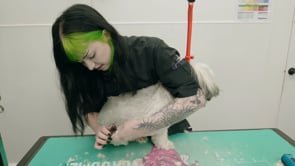
The body clip shows how intentional handling and consistent positioning help Tingsha understand what is happening. Crash adjusts her approach when he becomes reactive, allowing him to reset before continuing.
Part 3
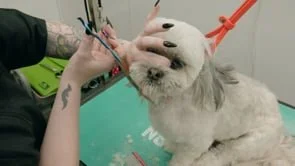
Pads and nails are one of Tingsha’s biggest triggers. Crash demonstrates a controlled and supportive hold that allows the work to be completed safely while minimising stress for both dog and groomer.
Study Notes | Key Concepts
-
One of the most important lessons from Tingsha’s story is that improvement rarely happens in a single groom. When Taylan first demonstrated grooming him, the focus was simply on completing the groom safely while respecting his limits.
Over the years, through regular grooming and consistent handling, Tingsha has become more tolerant of the process. He still doesn’t enjoy grooming, but he now understands the routine and works with his groomer rather than constantly reacting to the situation.
For groomers, this is an important reminder that progress with difficult dogs often happens across many appointments rather than within a single session.
-
Crash uses the same handling patterns with Tingsha each time he is groomed. For example, when she holds him under the chin, he understands that work is about to happen around his head. This consistency allows him to predict what is happening and reduces the element of surprise.
Reactive dogs often cope better when the groom follows a predictable sequence and the handler’s touch is clear and intentional.
-
In the Crash series, the groom begins with Tingsha’s head, one of the areas he dislikes the most. By addressing difficult areas early in the groom while the dog is still calm, the groomer avoids reaching a point later where the dog is too frustrated or tired to tolerate the work.
If the dog reaches his limit during the groom, at least the most important areas have already been completed.
-
Throughout the groom, Crash accepts small compromises rather than insisting on perfect positioning. For example, if she wants Tingsha standing but he chooses to sit, she continues working with that choice rather than forcing him into position.
This approach allows the groom to keep moving forward without escalating the dog’s stress levels.
-
Both Taylan and Crash demonstrate the importance of recognising when a dog is reaching their limit. If Tingsha becomes tense or reactive, the groom pauses briefly to allow him to reset.
These short pauses often prevent a situation from escalating into biting or panic behaviour.
-
When working on sensitive areas such as pads or nails, Crash completes the task once it has begun rather than repeatedly stopping and starting. Repeating the same stressful action multiple times can increase anxiety for the dog.
Completing the task calmly and efficiently reduces the amount of repeated stress the dog experiences.
-
A key theme across both series is that the goal with reactive dogs is not perfection. The priorities are safety, comfort, and hygiene.
If a dog cannot tolerate a particular part of the groom safely, it may be better to leave that area for another appointment or seek assistance rather than pushing the dog to the point of escalation.
-
Crash frequently talks to Tingsha while grooming him, but she is also paying close attention to his body language and responses. Grooming reactive dogs successfully requires both clear communication from the groomer and careful observation of what the dog is telling us.
The relationship that develops between dog and groomer is often the biggest factor in improving difficult grooms.
RAZ
Feature Tutorial - Grooming an Aggressive Dog with Georgina Covington
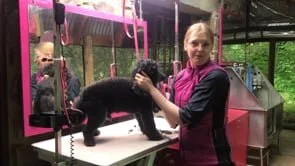
There is much to learn about how we manage a difficult or dangerous dog on the table. Here, Georgina Covington from In The Pink Dog Grooming Salon takes us through the paces of grooming a very aggressive Poodle. Note how Georgina manages herself and the dog through this sometimes-dangerous groom.
TOMMY
Tommy hates his eyes being done. In this video we deomonstrate clipper choice, handling and tips for dogs that don’t enjoy this part of the process