
Bathing and Drying Techniques
Curly & Wavy Coats
Defining Curly and Wavy Coats
Includes
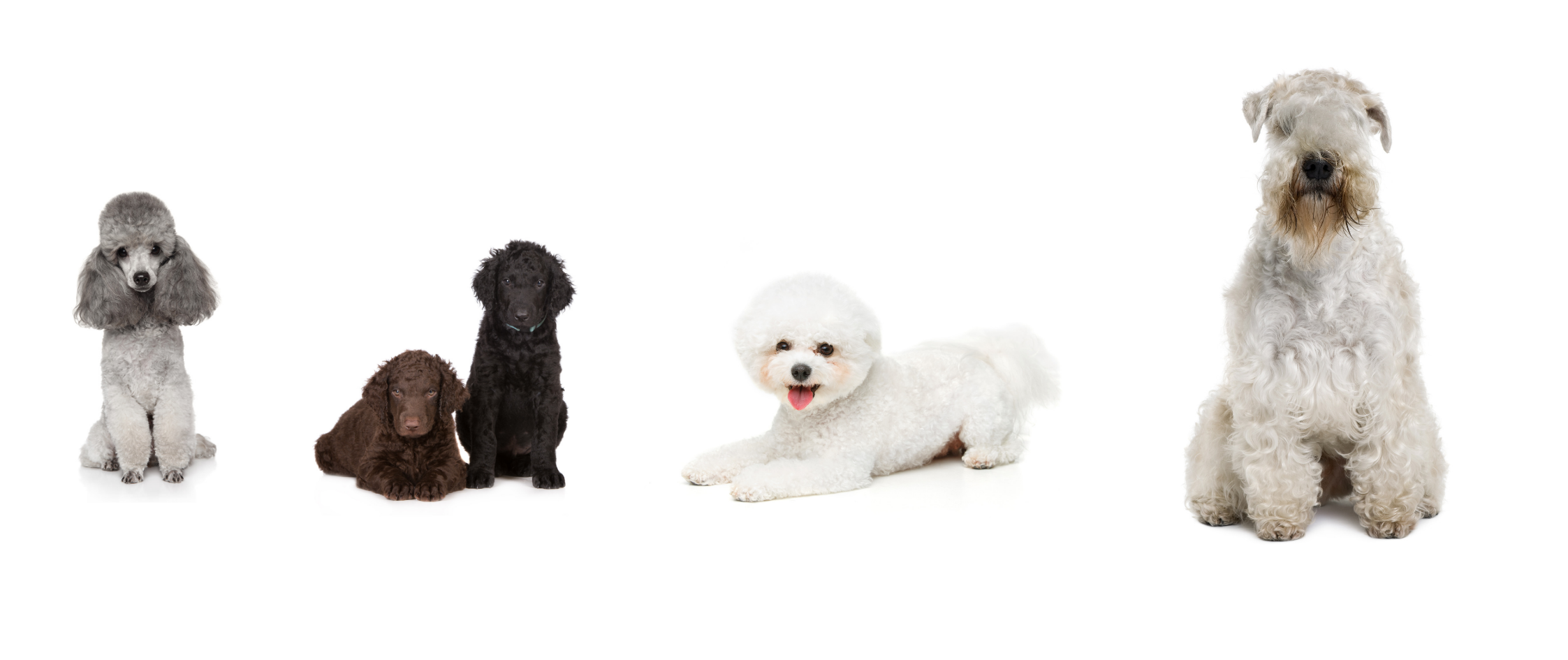
CURLY COATS
Soft – curly or wavy
Sometimes called ‘Powder Puff Coat’
Non-shedding
High maintenance to avoid matting – continuous growth
Regular trimming required
Think of a Bichon Frise, Poodle, Wheaten Terrier, Curly Coated Retriever
AND
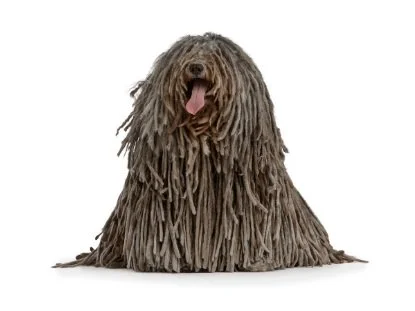
CORDED COATS
Strong top coat entwines itself around soft, woolly undercoat to form a cord
'Controlled Mat' called a Flock
Think of Komondors, Hungarian Puli, Bergamasco Shepherd Dog

Quick guide
The key to bathing and drying curly and wavy coats is understanding how coat preparation influences the finished groom. Thorough cleansing, appropriate product selection and careful drying all contribute to a coat that is easier to work with, particularly when preparing for clipping or scissoring.
-
Before bathing, assess the condition of the coat, the amount of dirt or product build-up present, and the intended styling outcome. A coat being prepared for a full, rounded scissored finish may require a different approach from one being clipped short.
Consider the length of the coat and any areas requiring particular attention, including longer furnishings, ears and tails.
-
Working methodically helps ensure that no areas are missed. Divide the dog into sections and complete each one before moving to the next. The legs, feet, face and ears deserve particular attention, as these areas often collect dirt, grease and debris.
Work shampoo thoroughly through the coat, paying attention to the feet and between the toes, underneath the ears, around the muzzle and through any longer furnishings. A second shampoo can help remove remaining dirt and ensure an even clean, particularly where the first wash has been used to break down heavy grime.
Choose products according to the coat and the finish you want to achieve. Body-building or volumising shampoos can help support a fuller, more lifted finish, while deep-cleansing shampoos may be useful for heavily soiled coats. Colour-enhancing shampoos may also be appropriate, depending on coat colour and condition.
Rinse thoroughly to remove shampoo residue before moving on to conditioning or drying.
-
Conditioning is an important part of maintaining healthy, manageable curly and wavy coats. Shampooing removes dirt, oils and product build-up, while an appropriate conditioner helps improve manageability, reduce friction and protect the hair during drying, brushing and styling.
Choose a conditioner suited to the coat's texture, condition and intended finish. Fine, soft coats may benefit from lighter formulations, while longer, drier or more tangle-prone areas may need additional conditioning.
The aim is to care for the hair while achieving the desired styling result, rather than compromising coat condition for temporary volume.
-
Drying plays an important role in preparing curly and wavy coats for styling. Where a straightened, fluffed finish is required, the aim is to separate the hair, remove as much curl or wave as appropriate, and create an even coat that can be accurately clipped or scissored.
After removing excess water with a towel, a high-velocity dryer can be used to remove most of the moisture. Work systematically, adjusting the airflow and nozzle to suit the length and density of the coat.
Concentrated airflow can speed up drying on shorter areas but may create tangles or whip knots in longer furnishings. A more open airflow is often preferable around ears, tails and other longer sections.
Take particular care around the head and ears, avoiding directing strong airflow into the ear canals, eyes or face.
-
For curly and wavy coats being prepared for scissoring, fluff drying helps straighten, separate and lift the hair to create an even finish.
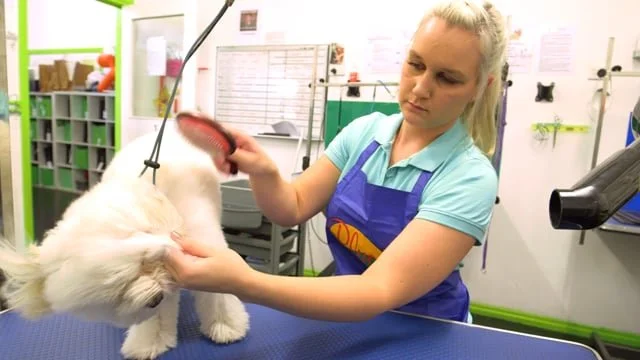
Using controlled airflow and brushing together, work through the coat in sections until the hair is thoroughly dry and straightened. Pay particular attention to the legs, feet and head, where remaining curl or wave can affect the accuracy of the finished trim.
Full heads and topknots may benefit from being dried early, before the hair begins to air-dry into curls.
For a detailed explanation of equipment, brushing techniques and achieving a smooth finish, see our Fluff Drying 101 page.
-
Once drying is complete, check the coat thoroughly with a comb. Begin with a wider-toothed comb to identify any remaining snags, then use a finer comb where appropriate to separate the hair further.
The aim is a clean, completely dry, evenly prepared coat, ready for the intended styling technique.
Not every curly or wavy coat needs to be straightened to the same degree. The dog's coat characteristics, comfort and chosen style should determine the finished preparation.
Bathing and Drying Demonstrations
BICHON X
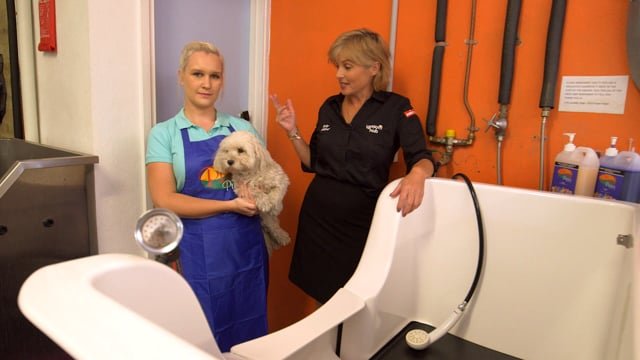
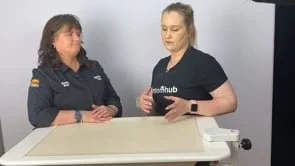
Sue demonstrates the bathing and fluff drying preparation for Hugo's Mushroom Head groom. Watch how she works methodically through the bath, concentrates on cleaning the muzzle and longer furnishings, and uses a combination of high-velocity and stand drying to straighten and lift the coat. She finishes by checking the coat with progressively finer combs, preparing it for scissoring.
TOY POODLE
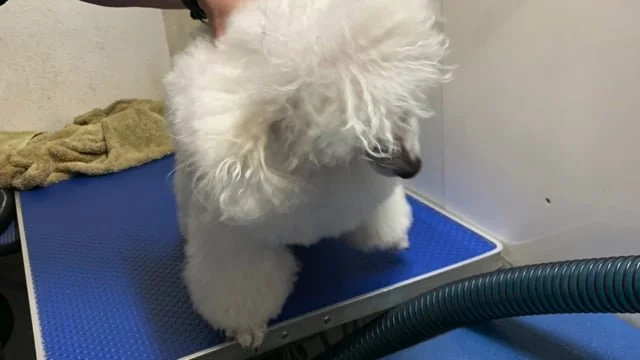
This demonstration explores preparing a young Toy Poodle's softer coat for a fuller, scissored finish. Product selection plays an important role, with body-building and whitening shampoos used to help achieve the desired result. The drying demonstration shows the difference between simply drying the coat and brushing it through in the airstream to create an even, straightened finish.
BICHON FRISE
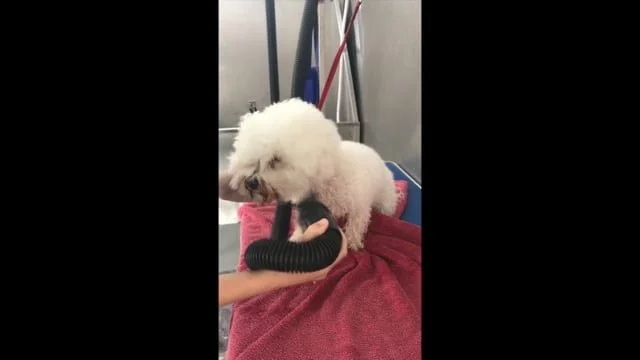
Follow the bathing and initial drying preparation of a Bichon Frise, with particular attention to creating volume and brightening the white coat. The demonstration also highlights the importance of drying a full, rounded head early, before the hair begins to air-dry into curls that make scissoring more difficult.
HAVANESE
Across two demonstrations, Tay works with Nikita, a Havanese with a soft, powder-puff coat. The bathing tutorial covers deep cleansing, colour-enhancing products and thorough attention to the face, ears and feet.
The drying demonstration explores nozzle selection, managing airflow through different coat lengths and finishing with a slower dryer and brush to prepare the coat for grooming.