Nail Clipping
Keeping a dog's nails at a comfortable length is an important part of routine grooming. Overgrown nails can affect how a dog stands and walks, while neglected dewclaws can curl into the skin, causing pain and potentially infection.
Nail clipping can be uncomfortable for some dogs, particularly those who have had a previous negative experience. Calm handling, good technique and knowing when to stop are just as important as knowing where to cut.
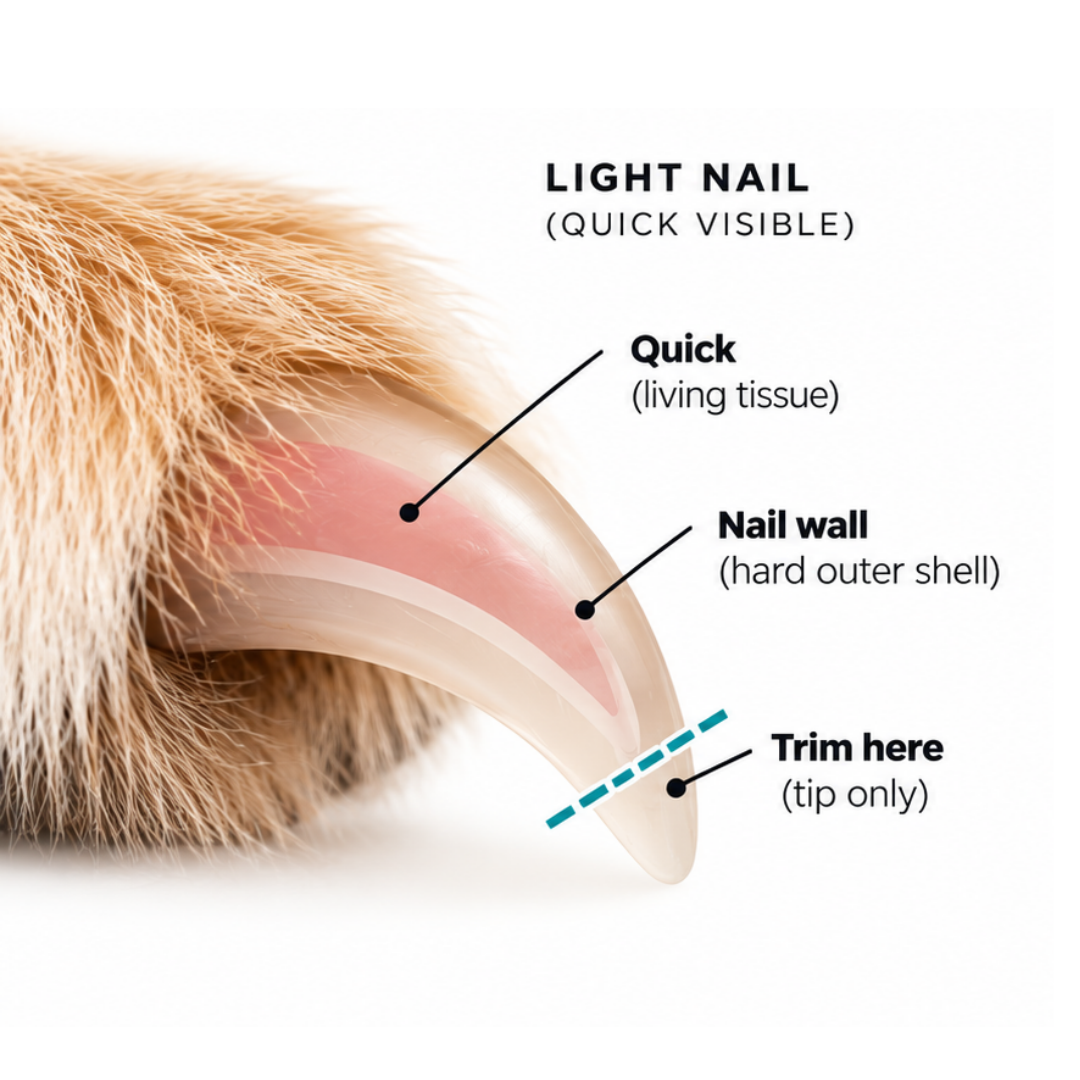
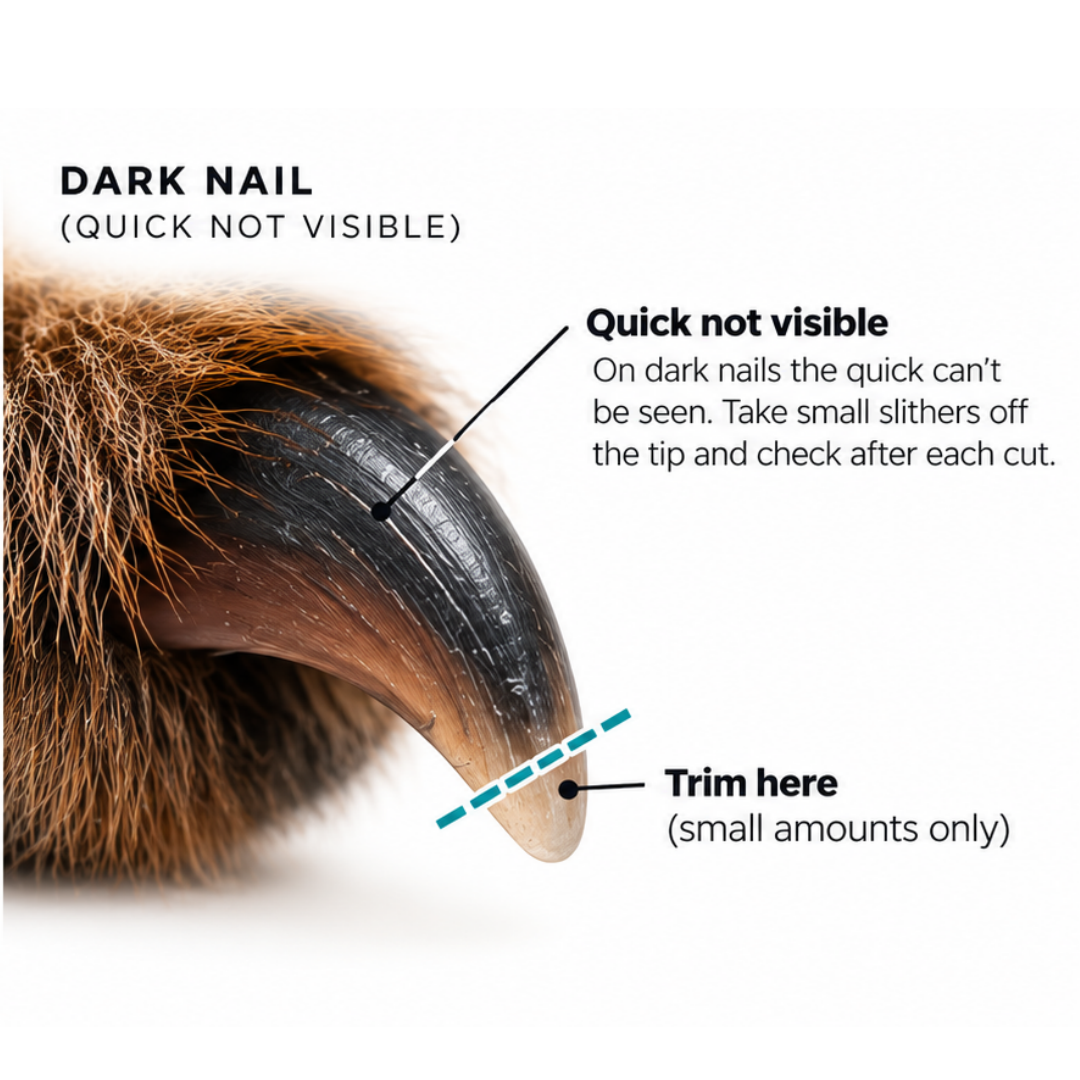
In this tutorial, we demonstrate nail clipping on a Sheltie with a mixture of white, brown and black nails, making it easier to understand how to assess different nail colours, identify the quick and safely remove excess length.

Quick guide
-
The quick is the living tissue inside the nail, containing blood vessels and nerves. On pale nails, it is usually visible as a pink area. Leave a small margin beyond the quick when trimming.
On dark nails, the quick cannot be seen from the outside, so extra care is needed.
-
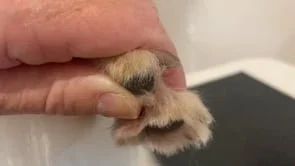
Gently lift and support the dog's foot in a comfortable position. Hold it securely without squeezing the individual toes, and move any surrounding coat aside so you can clearly see the nail.
Viewing the nail from the side helps you assess its length and the angle of the cut. Avoid pulling the leg into an uncomfortable position, and give the dog a break if they're struggling.
-
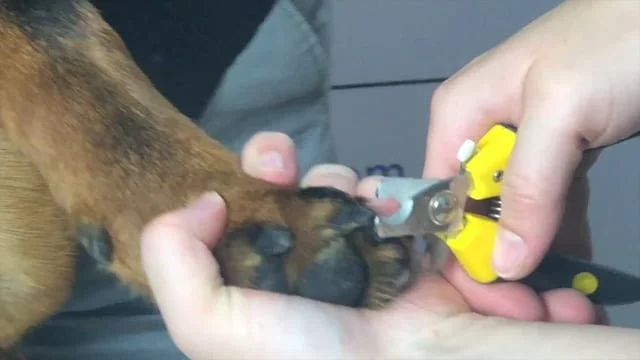
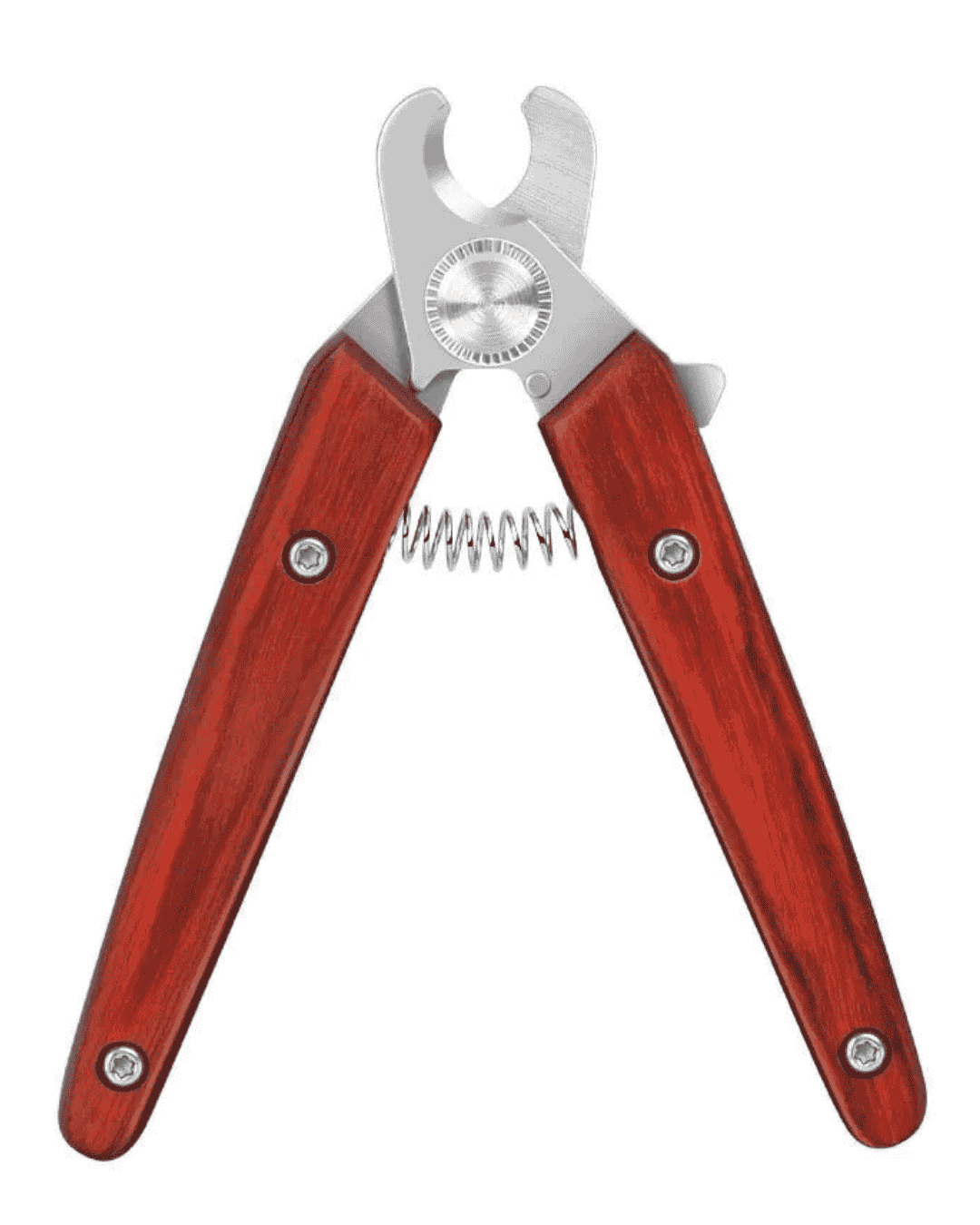
Use appropriately sized, sharp nail clippers. Both guillotine-style and scissor-style clippers can be used.
Remove a small amount from the tip with a clean, decisive cut, following the natural orientation of the nail. Avoid cutting too far back or removing excess nail from underneath.
You can always take a little more off, but you can't put it back!
-
Take very small slivers off the tip, checking the freshly cut surface after each cut. As you approach the quick, a darker central spot may become visible within the nail. This is a warning to stop.
Don't attempt to make every nail the same length. Natural wear varies between individual toes, and rear nails are often shorter than front nails.
-
Check for dewclaws on the front legs and, where present, the rear legs. Because these nails often don't make contact with the ground, they may grow longer without naturally wearing down.
Overgrown dewclaws can curl into the surrounding skin, so regular checks are particularly important.
-
Even experienced groomers occasionally catch a quick. Apply styptic powder and gentle pressure to control the bleeding, keeping the dog calm while it settles.
If bleeding continues despite first aid, seek veterinary advice.
More Nail Clipping Demonstrations
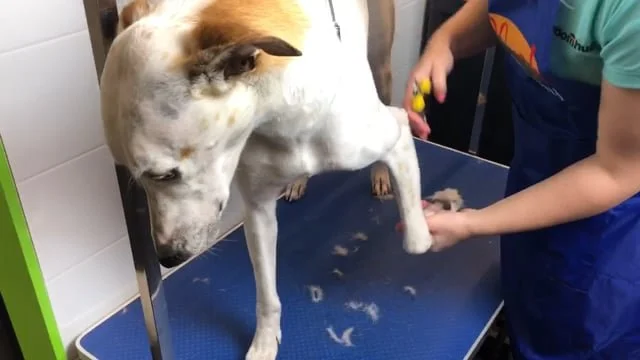
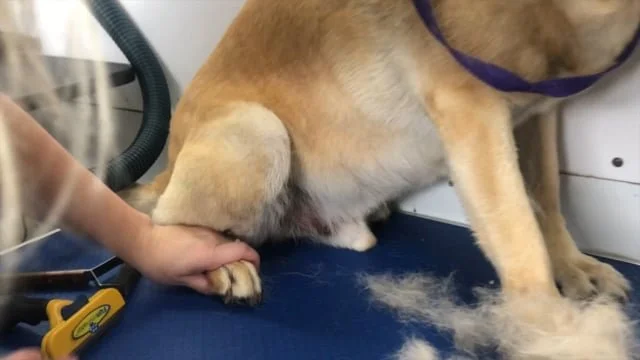
Different dogs, different nails! Here are a few more examples featuring a Toy Poodle, Rottweiler, Labrador and Greyhound. Notice how nail size, shape and colour vary, while the same basic clipping principles still apply.