The Ultimate Dog Groomers Glossary
Not sure what half these grooming terms actually mean?
You’re not the only one. Most groomers learn this language on the job, bit by bit. This glossary is here to help you make sense of the language groomers use every day.
If you're just getting started, you might also like:
→ Your Ultimate Guide to Getting Started as a Dog Groomer
Already grooming and want to see these terms in action?
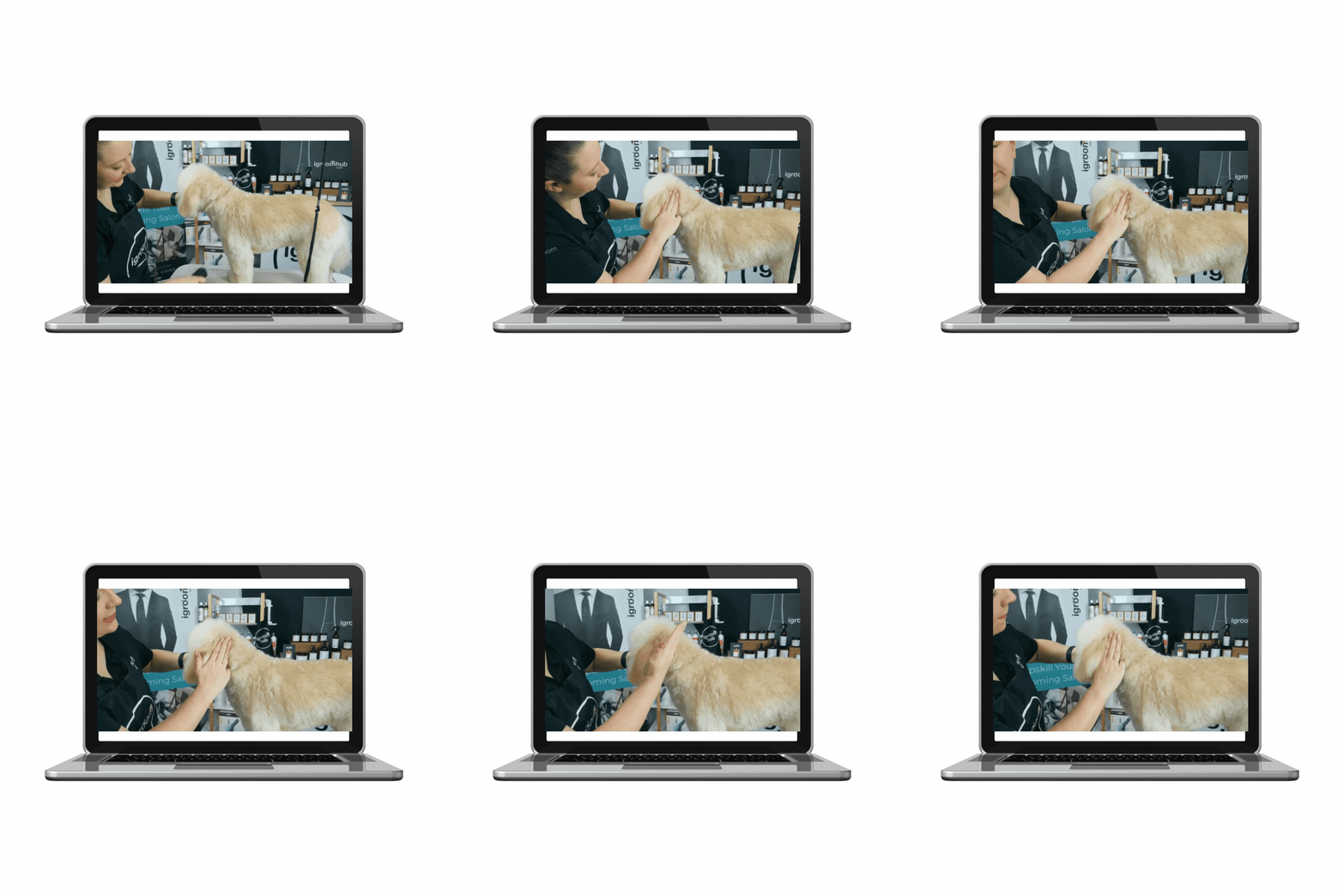
→ Explore real grooming tutorials inside igroomhub
-
• ASCOB: Any Other Colour than Black
• Blaze: a strip of white down the centre of the face
• Blue: a greyish blue
• Brindle: dark and light streaking similar to stripes on a tiger
• Café au lait: creamy brown
• Chestnut: reddish brown
• Chocolate: brown
• Cream: off white
• Fawn: a reddish- brown yellow
• Harlequin: patchy black or grey on white. (Sometimes reversed on Great Danes)
• Landseer: black-and-white Newfoundland
• Mahogany: dull reddish brown
• Mask: dark colour on face
• Merle: dark splotches against a tighter background of the same colour
• Mottled: dark, round splotches on a lighter background
• Mustard: muted yellow
• Parti-coloured: patches of two colours or more
• Piebald or pied: large splotches of two or more colours
• Roan: mix of coloured hairs with white hairs
• Ruby: mahogany red
• Rust: reddish brown
• Sable: black tipped silver, gold, grey, fawn or brown hair
• Sandy: sand coloured, tan
• Seal: black with a reddish tint
• Stage: red (stag): deep red with black hairs
• Wheaten: wheat coloured, tan
• Ticking: little spots of colour lighter or darker than the base colour
-
Bat ear: an erect, forward-facing ear that is broad at the base and round at the top, a French Bulldog has a bat ear
Button ear: an ear that folds forward, covering the inside of the ear. This ear is semi erect. The Parsons Terrier has a button ear
Cropped ear: a drop ear that is cut to stand erect. This is illegal in Australia. Schnauzers, Boxers and Staffordshire Terriers can have cropped ears
Drop ear: pendant or natural ear: this ear folds over and hangs down. A Labradoodle has a drop ear
Prick ear: this ear stands upright. A German Shepherd has a prick ear
Rose ear: a small, thin ear that folds over and back. The Pug or Greyhound may have a rose ear
Semipricked: an erect ear with just the tips folded forward. A Collie is a good example
Hooded ear: a wide erect ear with the edges turning in. Example, Bull Terrier
-
Brush tail: a bush tail that is well coated. Example, an Australian Cattle Dog
Carrot tail: shaped like a carrot and upside down. Example, a West Highland White Terrier
Corkscrew tail: a spiral tail. Example, a Pug
Docked tail: a tail that is shortened by being cut. This practise is illegal in Australia
Flag tail: a tail that is carried high with long silky hair. Example, an Irish setter
Ring tail: a tail that is carried almost in a circle. Example, an Afghan Hound
Saber tail: a tail carried like a sword in a semi-circle. Example, a Siberian Husky
Whip tail: a pointed tail carried straight out. Example a Bull Terrier
-
Dolichocephalic skull: a long slender nose with a high set eye, this allows for exceptional sight. Examples of this skull type are Salukis and Greyhounds
Mesocephalic skull: a broader skull with larger nasal openings, many scent hounds and pointers have this skull
Brachycephalic skull: a compact skull with a much short snout. Bulldogs and Pugs are good examples. Care must be taken around eyes and in the drying process; they are at risk of overheating if not cared for correctly
-
Occiput: the area on the back of the skull where the skull meets the neck
Withers: the ridge above the shoulder blades, below the base of the neck and above the top line
Stifle: the rear leg knee, the joining point of the femur and tibia/fibula
Hock: the rear leg, back section that joins to the foot
Stop: the point where the top of the muzzle and skull meet
Pastern: the rear of the front ankle bend
Brisket: sternum, where the bones form the base of the chest
Flank: the loose skin that sits below the loin and either side of the last rib and thigh
Loin: the waistline, between the last rib and pelvis
Prosternum: the point of the chest or forechest
Zygomatic arches: or cheek bones, the widest point on the dog’s face.
-
Against the grain: to clip against the natural fall of the coat
Breed standard: a blueprint or ideal dog in relation to structure, temperament, coat type etc.; an example of a perfect breed as set out from the Australian National Kennel Council / Dogs Australia
Breed group: dog breeds grouped from 1-7 in accordance with the Australian National Kennel Council / Dogs Australia
Broken coat: wirehaired
Carding: the technique of removing undercoat from a dog using a range of tools
Cat foot: a foot that is neat and round and has a close set arched toes
Coat king: an undercoat rake trade marked by Mars
Cow hocked: hocks that are turned inward
Confirmation: showcases the dogs breed standard. A visual reference to correct breed standard
Fickle leg: an outward –bending leg, bowleg
Hand stripping: is the removal of the undercoat on a wire or broken coated dog
Tuck up: finding the ‘tuck up’ point between the last rib, the flank and the loin. This highlights the dogs’ waist
Skirt: refers to hair furnishings on the dog’s rib cage
Stacking: a dog’s stance in relation to show off his best attributes. This helps create the ultimate profile
Topline: the area along the spine, from behind the withers to the tail set
Tuck up: the highest point of the underline from the flank to the last rib
Undercoat: short, soft dense hair that supports the outer coat
-
Abscess: an infected, pus-filled pocket under the skin
Alopecia: hair loss
Cherry eye: a swelling of the gland behind the dog’s third eye lid. Making an appearance as a cherry in the corner of the dog’s eye
Crop: to amputate part of the ear to make it stand, not legal in Australia
Dewclaw: a nail that is set above the foot on the inside of the back and rear feet, it does not touch the ground
Hip dysplasia: a loose-fitting hip that is usually inherited
Hot spot: an inflamed bald area on the dogs skin, caused by rubbing, licking, scratching or biting
Incontinence: uncontrolled leaking of urine
Kennel cough: a contagious bronchial disease that is caused by a virus or bacteria. The dog will often cough or appear to have a cold
Lick granuloma: excessive licking that causes discoloration of skin and open wounds
Tumour: an abnormal growth that may be malignant or benign
Zoonosis: a condition that can be passed from one species to another. The Australian bat virus, lyssavirus is an example.
Groomer or guesser? Let's find out.
Tip: Bookmark this page. It’s one of those things you’ll come back to.