

The oodle head is where you either nail it or you don't
Walk any dog back to its owner and watch where their eyes go first. It's the face, every time! Which is why the oodle head - that round, expressive, soft-eyed result that owners show you photos of on their phones - is also the thing groomers spend the most time worrying about.
The challenge is that "oodle" covers an enormous amount of ground. A cavoodle and a groodle are not the same dog. A spoodle with a soft wavy coat and a labradoodle with a thick curly fleece are not the same problem. The skull shapes are different, the coat densities are different, the owner expectations are different. What works on one won't necessarily work on the next, and the groomer who can read all of them - and adapt on the spot - is the one whose clients keep coming back.
What makes oodle heads genuinely tricky
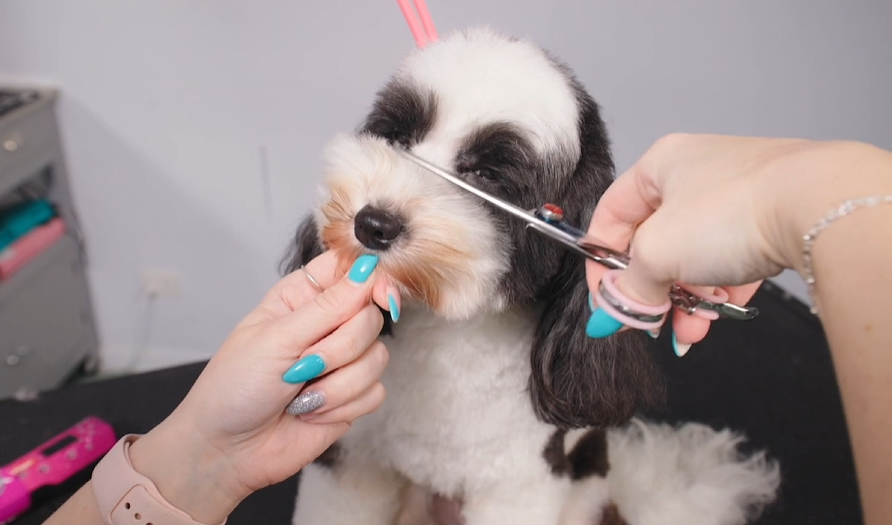
It starts with the coat. Oodles inherit their coat from both parent breeds, which means you can get almost anything - from a near-poodle curl that holds its shape through scissoring, to a soft wavy coat that marks easily and moves as you cut, to a flatter drop coat that falls differently again. Each one requires a different approach to prep, a different scissoring technique, and a different idea of what the finished head should look like.
Then there's the skull. A groodle with a big broad occiput needs to be groomed differently to a cavoodle with a finer, rounder head. The way you create that donut shape - where you start, how tight you go, how you handle the fringe and the visor and the ears - changes depending on what the dog actually has underneath all that coat.
And then there's the owner, who has a photo on their phone and a specific idea of what their dog should look like, and who will notice immediately if it doesn't.
The prep is non-negotiable
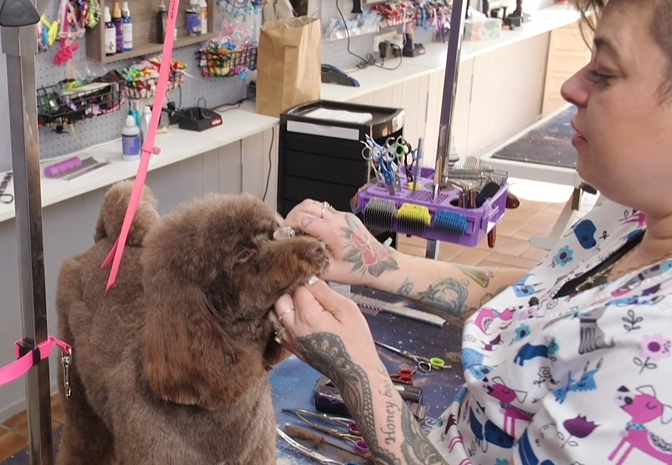
Every educator in this course approaches styling slightly differently. The one thing they all agree on? If the coat isn't prepared properly, you're making life harder for yourself. A coat that hasn't been properly washed, dried, and brushed out will move around as you cut, mat under the comb attachment, and produce a choppy result that no amount of scissoring can fix. Separating every layer, ironing out every curl, making sure the comb goes through from root to tip - that's what makes the blade run smoothly and the finished head look clean and intentional.
Oodle Head Studies
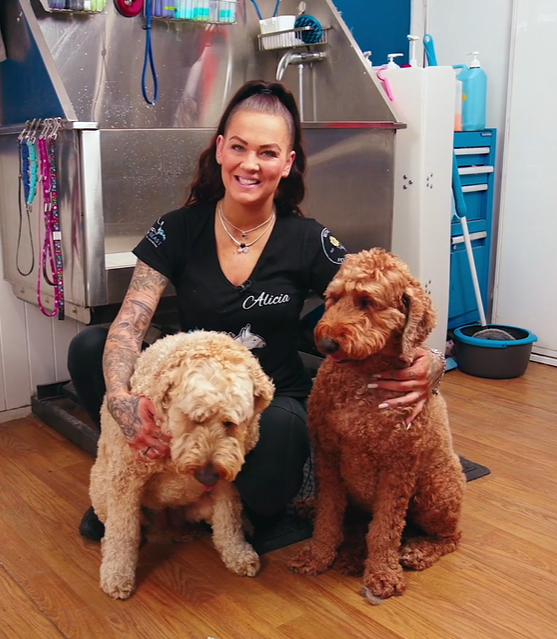
This is exactly what the Oodle Head Studies course on igroomschool is built around. Ten educators, multiple breeds, a huge range of coat types - from Alicia Fragiadakis on a labradoodle to Prue Hammond on a chunky groodle to Michelle Weber demonstrating three different head styles on the same cavoodle. The course also stars a handful of oddball oodles that don't fit neatly into any category - seniors, puppies, mixed coats, finer hair.
The course is about 6.5 hours of video, beginner to intermediate, no prerequisites, and 12 months of access. It's $99 on igroomschool with a certificate at the end. You can enrol here.
If you're already an igroomhub Member, you'll recognise some familiar faces in the course - the individual tutorials are part of your membership. The Oodle Head Studies course brings them together into a structured study path, with self-reflection assessments and a certificate at the end.
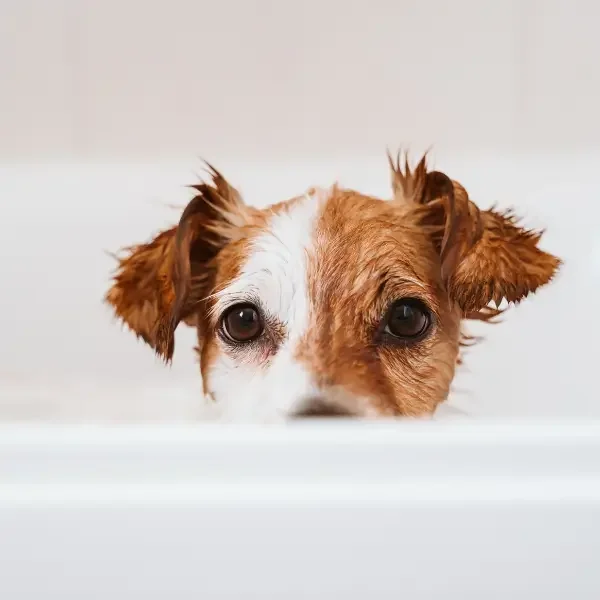


Theo is a toy poodle in a teddy bear style, and he is Michelle Weber's most posted dog. He gets puppuccinos. He falls asleep during his face groom. He sits on Michelle's table every six to eight weeks and goes home looking exactly like he did last time - which is precisely the point.