
CHALLENGING SITUATIONS

Puppies
A puppy's early grooming experiences can shape how they respond to handling, equipment and grooming procedures as they grow. Everything is new, from standing on a grooming table to the sounds and sensations of clippers, brushes, water and dryers.
Introducing these experiences thoughtfully takes patience, flexibility and an understanding of how young dogs develop. The aim is to help puppies feel safe, build positive associations and gradually develop the skills they need for grooming throughout their lives
-
Puppies are still developing physically, emotionally and behaviourally. They may have limited attention spans, find unfamiliar experiences overwhelming and struggle to remain in one position for extended periods.
Growing bodies require careful handling, particularly when lifting, positioning limbs and working around the head and face. Teething may also make handling around the mouth uncomfortable.
Rather than expecting a puppy to behave like an experienced adult dog, adjust the grooming process to suit its stage of development, confidence and individual needs.
-
Positive grooming experiences begin well before the first professional appointment. Encourage owners to introduce gentle, reward-based handling as part of their puppy's everyday routine.
This might include briefly touching paws, examining ears, lifting lips, handling the tail and introducing a soft brush or comb. Keep interactions short and comfortable, and pair them with something the puppy enjoys, such as a suitable treat.
The puppy should be free to move away where safe, and owners should watch for signs that it needs a break. The aim is to build familiarity and positive associations rather than practise holding the puppy still against its wishes.
-
Brushes, combs, clippers, nail trimmers and dryers can all be unfamiliar to a young dog. Introduce equipment gradually, beginning at a distance or intensity the puppy can comfortably tolerate.
Allow the puppy to investigate safe, stationary equipment before introducing movement, vibration or sound. Pair these experiences with rewards and increase the challenge only when the puppy remains comfortable.
Owners can also introduce recorded grooming sounds at very low volumes or practise around everyday household noises. Sound exposure should remain gentle and predictable, without overwhelming the puppy.
-
Early appointments should prioritise familiarity, confidence and comfort rather than completing an elaborate groom.
Consider scheduling puppies during quieter periods, allowing extra time for exploration and providing opportunities for breaks. Depending on the puppy, an initial appointment might involve standing briefly on the table, gentle brushing, a small hygiene trim or an introduction to bathing.
Not every puppy will be ready for every procedure at the same age. Progress should be guided by the individual dog's responses, with appointments planned to build on previous positive experiences.
-
Support the puppy's body when lifting and moving it, avoiding unnecessary pressure on developing joints, the neck or the abdomen. Use secure, non-slip surfaces and keep handling gentle and predictable.
Avoid extending limbs beyond a comfortable range or insisting that a puppy maintain a position it cannot manage.
Handling around the muzzle requires particular care, especially during teething. Introduce face and head work gradually, using minimal restraint and allowing breaks when needed.
-
Bathing introduces several unfamiliar sensations, including water pressure, shampoo, wet feet and slippery surfaces. Use appropriate products, comfortable water temperatures and secure footing.
Drying can be especially challenging because of noise, airflow and vibration. Begin with gentle towel drying and introduce suitable dryers gradually, adjusting airflow, distance and duration to the puppy's comfort.
A puppy may initially tolerate only brief exposure to the dryer. That is useful progress in itself. Avoid forcing the process simply to achieve a perfectly finished coat.
-
The first trim is an opportunity to introduce the sensations of grooming tools while maintaining the puppy's comfort and hygiene.
Begin with manageable tasks, such as clearing hair around the eyes or performing a small hygiene trim, where needed and safely tolerated. Introduce clipper vibration and scissor work gradually.
Coat type, condition and the puppy's needs should guide the choice of clipping length and technique. Attachment combs may be useful for maintaining length, but they are not universally required for puppy coats.
Explain to owners that puppy coats can differ considerably from mature coats in texture, density and appearance. The finished groom may not resemble the adult breed style they have in mind.
-
Owners play an important role in preparing puppies for grooming and maintaining positive experiences between appointments.
Discuss what their puppy is comfortable with, which procedures need more introduction and how they can continue gentle handling and coat care at home.
Provide clear feedback after each appointment, including what went well, where the puppy needed support and what to practise before the next visit.
The goal is not to achieve a complete groom at any cost. It is to develop a cooperative grooming relationship that can continue throughout the dog's life.
Introducing Puppies to Grooming
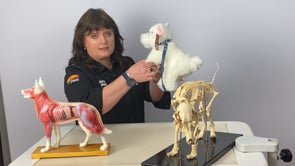
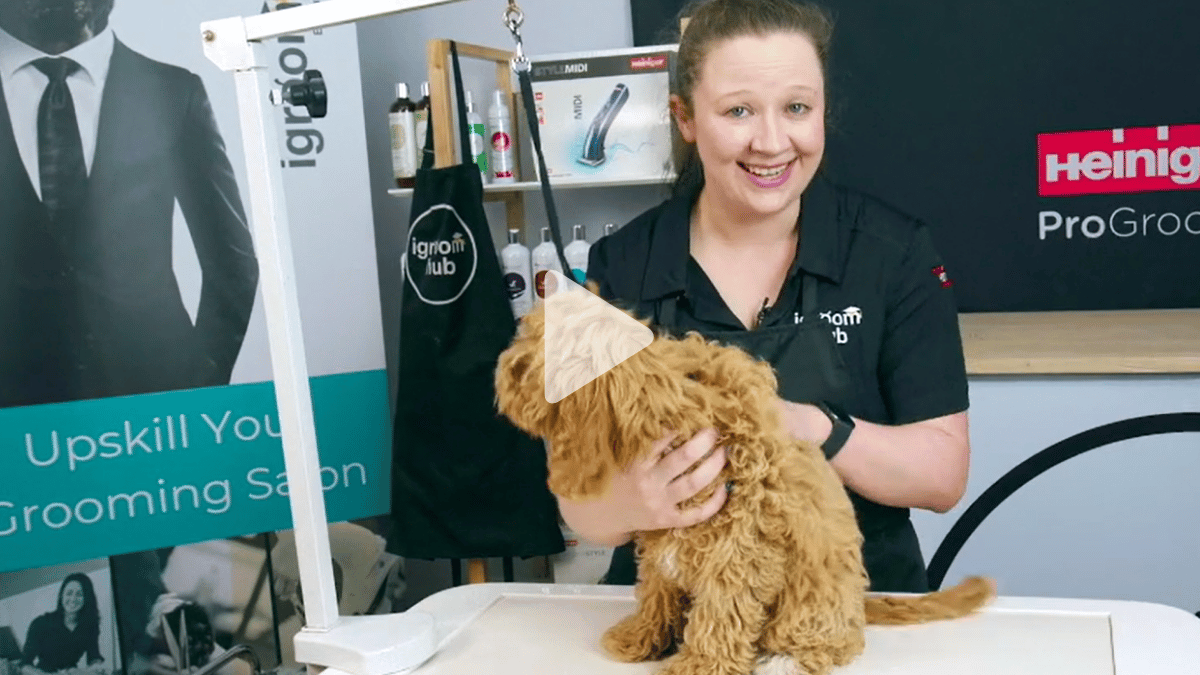
Nat explores the physical and behavioural considerations involved in a puppy's first grooming experiences. Using anatomical models, she discusses safe lifting and handling, developing joints, teething and the importance of working gently around the face. She also shares ideas for planning early appointments, introducing equipment and helping owners prepare their puppies for grooming at home.
More Puppies on igroomhub
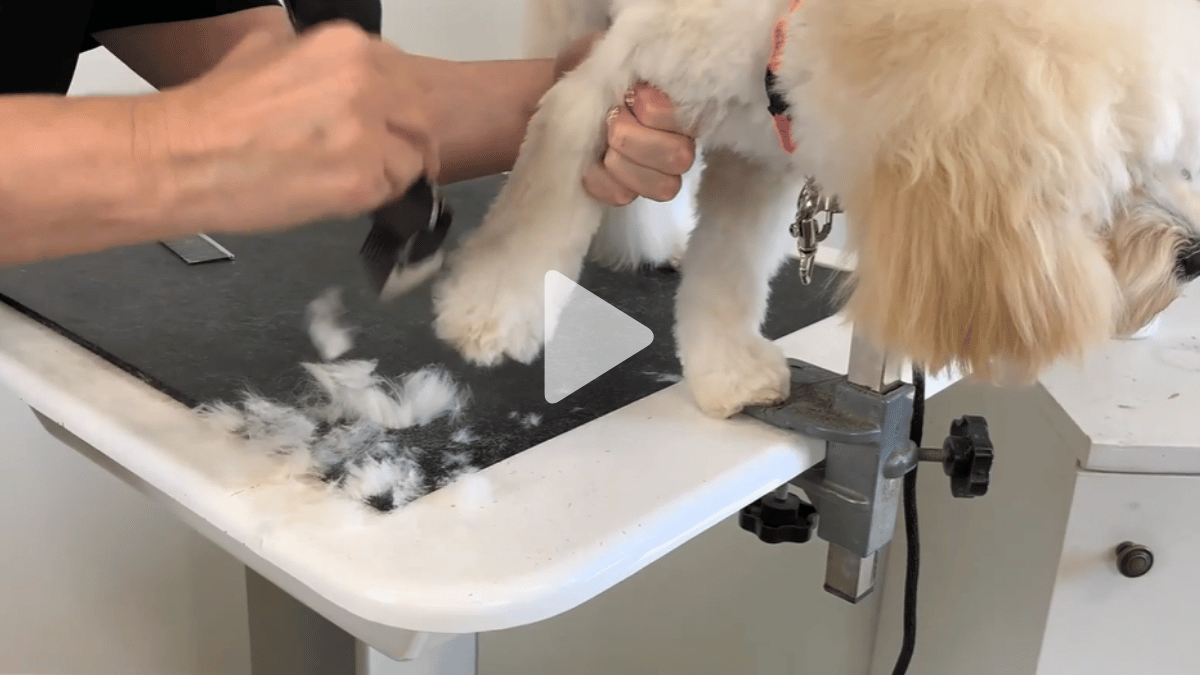
Sue Wright's gentle handling is a must watch. Dolly is a Moodle, and even falls asleep at one point (2 videos)
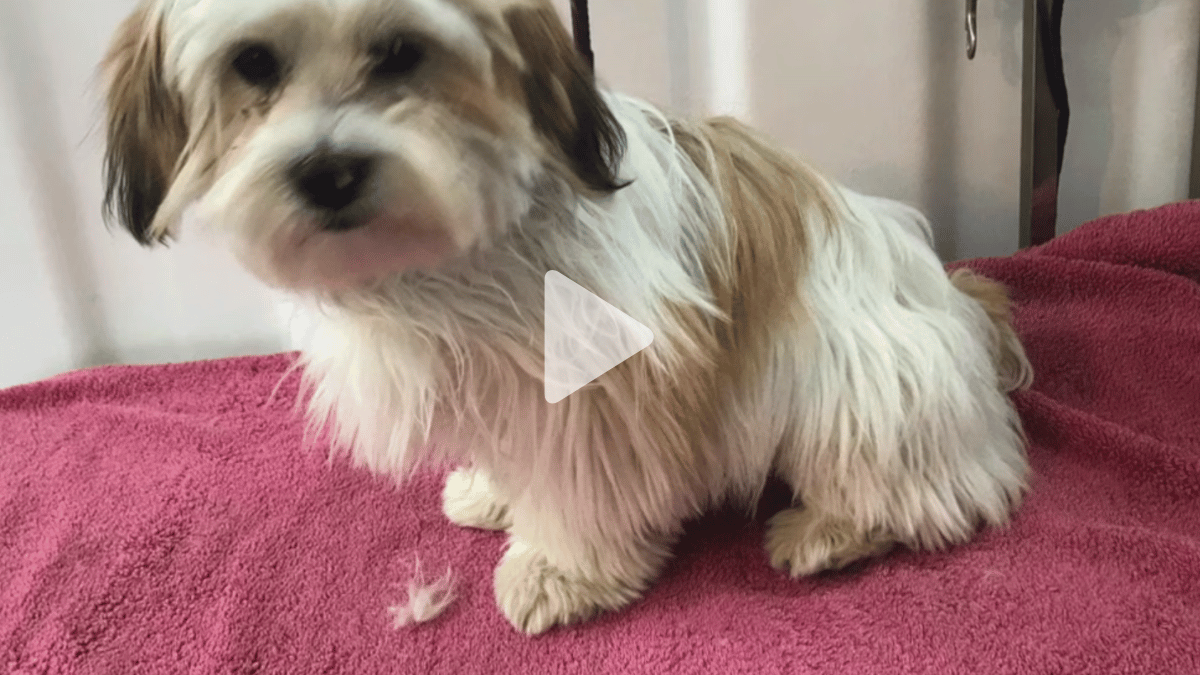
Follow Nicky through this little Maltese Cross’s first full clip, from choosing a longer body length and tidying the legs through to shaping the head and face (1 video)
2 x 4 part tutorials covering Ruby's first bath and mini trim, to her big girl haircut with Colleen. Watch Ruby's progression (8 videos)
Want more on grooming puppies?
These tutorials focus on the hands-on side of puppy grooming, from first clips to gentle handling and introducing the grooming routine.
For our most current approach to introducing puppies to grooming, building positive associations and supporting them through their early grooming experiences, head to Modern Principles of Behaviour-Informed Grooming.