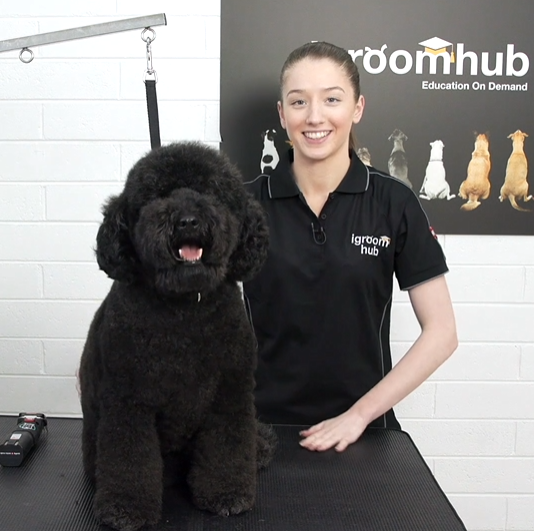
Seven months of growth, one German trim, and a lot of decisions to make
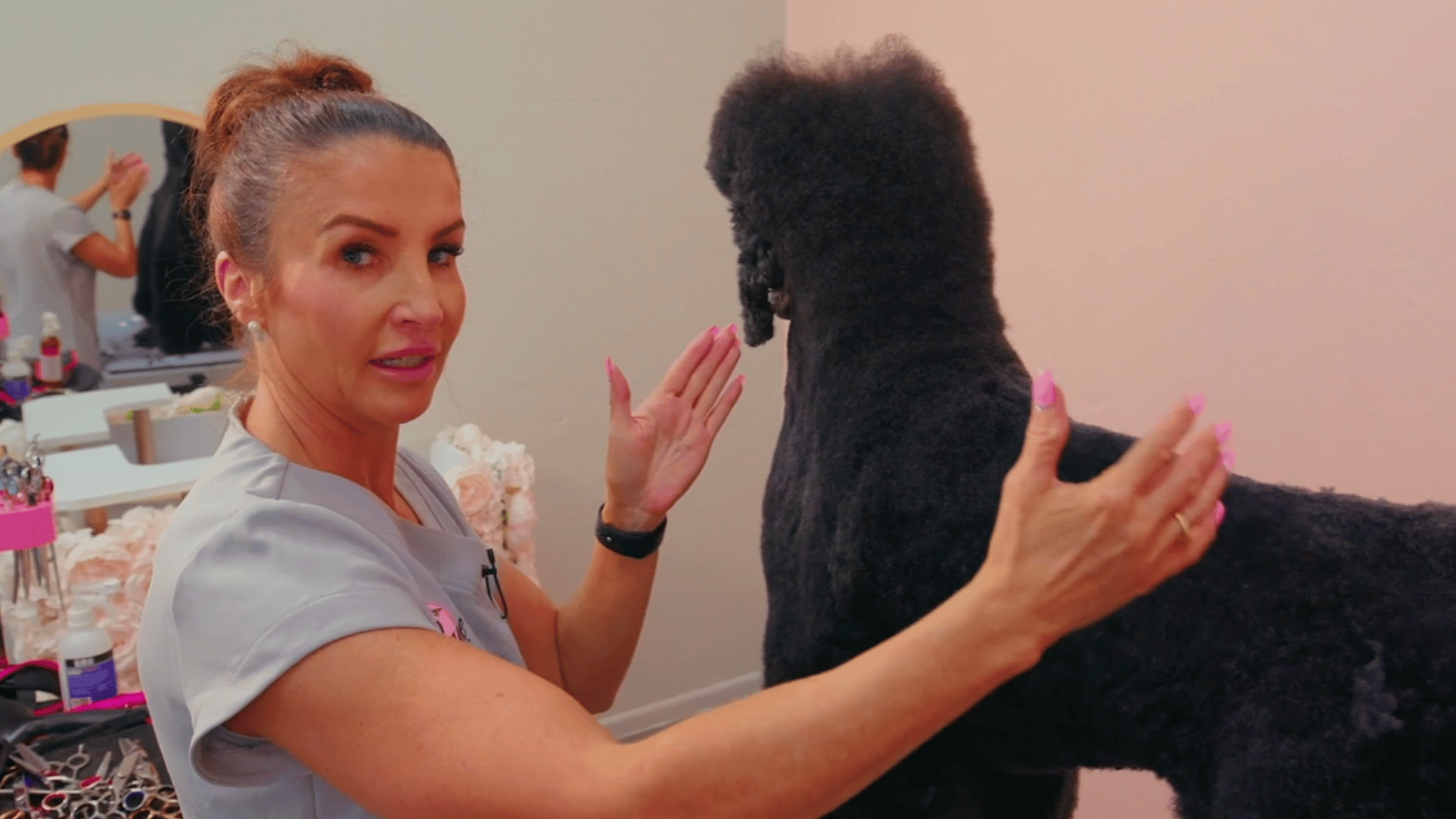
Koro is a black standard poodle who usually lives in a continental or a modified. Prue Hammond has been growing him out for seven months - still shaping as the coat came in, but letting it build - and now she's putting him into a German trim for the first time. Which means every decision in this groom is being made on a dog whose coat she knows intimately, in a style she's still working out on him.
That combination - deep knowledge of the dog, genuine uncertainty about the trim - makes this an unusually honest tutorial to watch.
Blocking in with blades before you scissor
Koro has an exceptionally thick coat, which means prep work takes longer than the groom itself. Prue combs for a long time before she even picks up a blade. Once she does, her approach is to use the clippers to block in the shape first - setting lines, establishing angles, removing bulk - and then follow with scissors. It saves significant time on a big dog, and it means the scissor work is refinement rather than construction.
“You’ve got to work smarter, not harder. I block everything in with the blade and then scissor.”
The top line goes in with a number three, blending off into the ribs. The area behind the ear and down the shoulder comes in with a number four - close enough to give the angulated, masculine look she's after, but not so severe that it doesn't suit Koro at this stage of the trim's development. The base of the tail gets a five.
The German trim is about angles
What distinguishes the German trim from other poodle styles is the angulation - the way the lines of the body, legs, and head work together to give the dog a sculptural, structured silhouette. Prue is constantly stepping back, checking from behind, checking from the side, adjusting. The legs on Koro are large and she's making decisions about how much to take without making them look undersized relative to his body.
The feet are beveled rather than rounded - scissors held on an angle, hair pulled down, working around the foot methodically. It's painstaking on a coat this thick but the bevel is what makes the foot look intentional rather than trimmed.
Knowing your dog is most of the work
What comes through most clearly in this tutorial is how much Prue's knowledge of Koro shapes every decision. She knows where his withers sit under the coat. She knows how he moves and what the trim will look like once he's off the table. She knows which blade will skim better on his particular coat density. She's trained him to stand straight and hold his head high, because a dog that shifts while you're scissoring a top line or setting in a shelf is a dog that ends up with a divot you can't fix.
“I know his anatomy, what’s underneath all this fluff and what I can and can’t do.”
That kind of knowledge doesn't come from one groom. It comes from years of working the same dog through different styles, different coat lengths, different competition contexts. The German trim on Koro is the result of all of that - and watching Prue work through it is a good reminder that the groom is rarely just about the groom.
Prue’s complete masterclass with Koro is available to Members inside igroomhub, or you can rent it for six weeks on igroomschool.