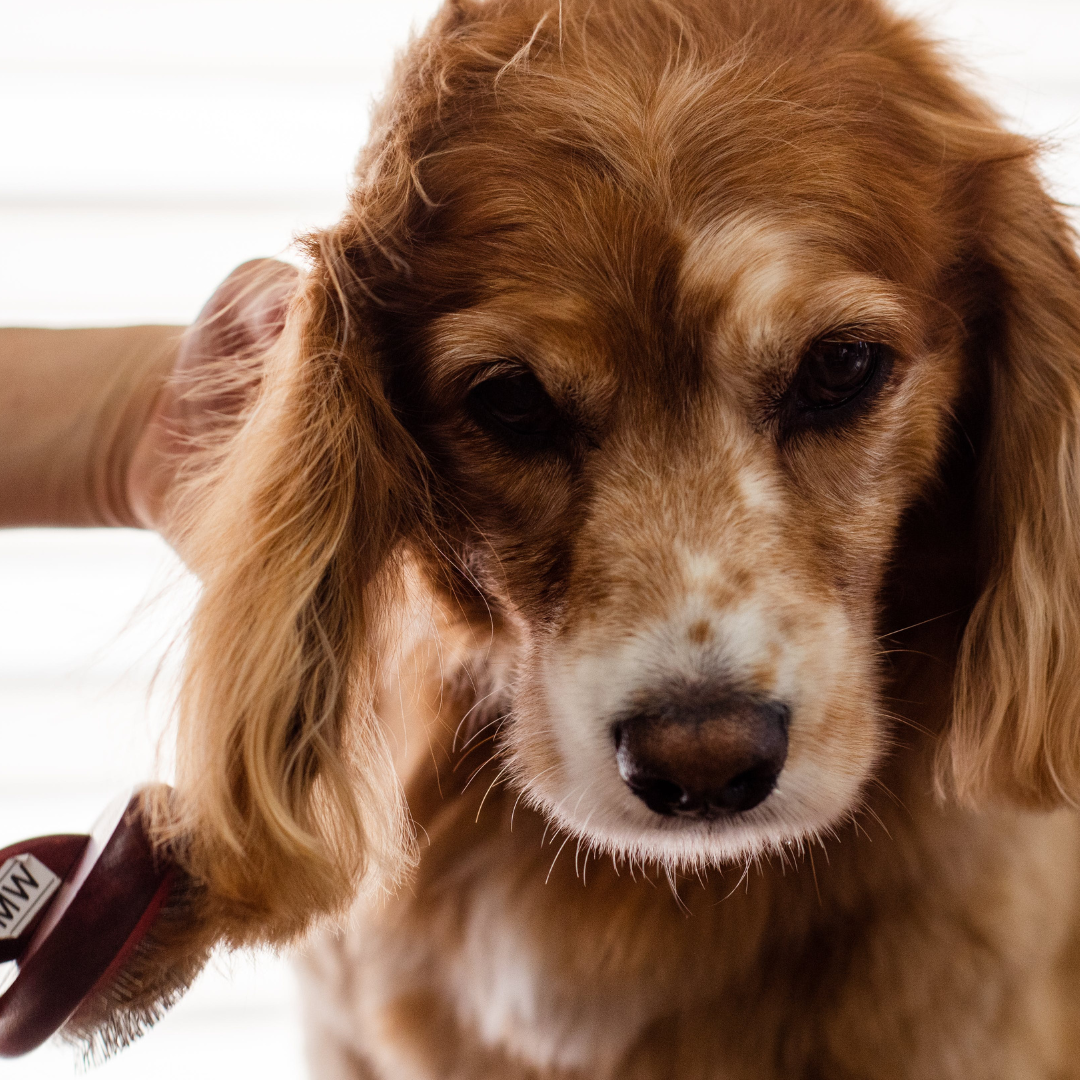
When a Groomer Notices Cognitive Decline First
Have you ever walked into a room and forgotten why you took the trek there in the first place? Well, you wouldn’t be human if you hadn’t, but there would be more cause for concern if you walked into the room and didn't recognise your surroundings anymore.
There is a moment many groomers know all too well. A dog who has come in happily every six weeks for years, suddenly walks in looking like you’ve changed the building on them.
It can be subtle at first. A pause, a blank stare, walking into a corner with the utmost confidence but no exit plan. Often, groomers will notice before anyone else, not because we’re magical mind-readers (although the argument could be made that we are), but because we see these dogs regularly, consistently and in a structured environment.
What Is Cognitive Decline in Dogs?
Age related cognitive decline is commonly called Canine Cognitive Dysfunction (CCD) and is often compared to dementia in people. It can affect memory, awareness, sleep, behaviour and learned routines.
Common signs include:
Confusion or disorientation
Staring into space
Getting stuck behind furniture
Altered sleep patterns
Increased anxiety
Forgetting familiar cues
Pacing or restlessness
Incontinence/accidents indoors
Signs of CCD typically begin to show at around 9 years of age, with risk increasing significantly after age 11, which is hardly fair for our teenagers.. Major decline often appears in geriatric dogs, affecting 28% of dogs aged 11-12 and 70% of dogs aged 15+.
Why Groomers Often Notice First
Getting a groom is a cognitive test without meaning to be. Dogs are required to process new smells, sounds, movements, handling, routines and transitions between spaces. A dog who once navigated this easily may suddenly struggle. Think of this as a brain game of sorts, but with less sudoku and more shampoo.
Dogs also have a better chance of masking signs of CCD at home, where their routines are repeated much more frequently than their six-weekly grooming appointment. A senior dog might not have a problem finding their water bowl each morning but may forget the overstimulation that a high velocity dryer brings.
Signs in the Grooming Space
- Disorientation
Walking aimlessly, getting stuck in corners, forgetting how to turn around.
- Increased Anxiety
Startling more easily, vocalising, clinging, panicking during normal routines.
- Sleepiness or Flatness
Appearing disengaged or unusually hard to rouse.
- Loss of Learned Behaviours
Forgetting how to stand for grooming, difficulty with simple positioning
- Toileting Changes
Accidents in dogs who previously had no issues.
- Night-and-Day Personality Shifts
Regularly happy, then suddenly grumpy… or usually spicy and suddenly zen. Both are worth noting.
The first sign of cognitive decline isn’t always dramatic, it could be as simple as them standing in the wrong place looking mildly betrayed by geometry.
So how do we address this with the owner?
Of course. a professional groomer won’t diagnose dementia. That is for a veterinarian.
But you might gently mention:
“He seemed a little confused today.”
“She’s not settling like she used to.”
“I noticed some changes in how he’s moving and responding.”
“It may be worth chatting with your vet.”
Be sure to come from a place of care and not criticism.
So, become familiar with the signs and don’t be afraid to voice your concerns, because whilst it may just be an off day for Fluffy, it could be indicating something more serious, where early detection could be incredibly important.
With love,
igroomhub