When Owners Stay for the Groom
(and why that rarely helps the dog)
A new groomer shared a situation recently that will probably sound familiar to most people in the industry. It began, as many of these things do, with good intentions on everyone’s part.
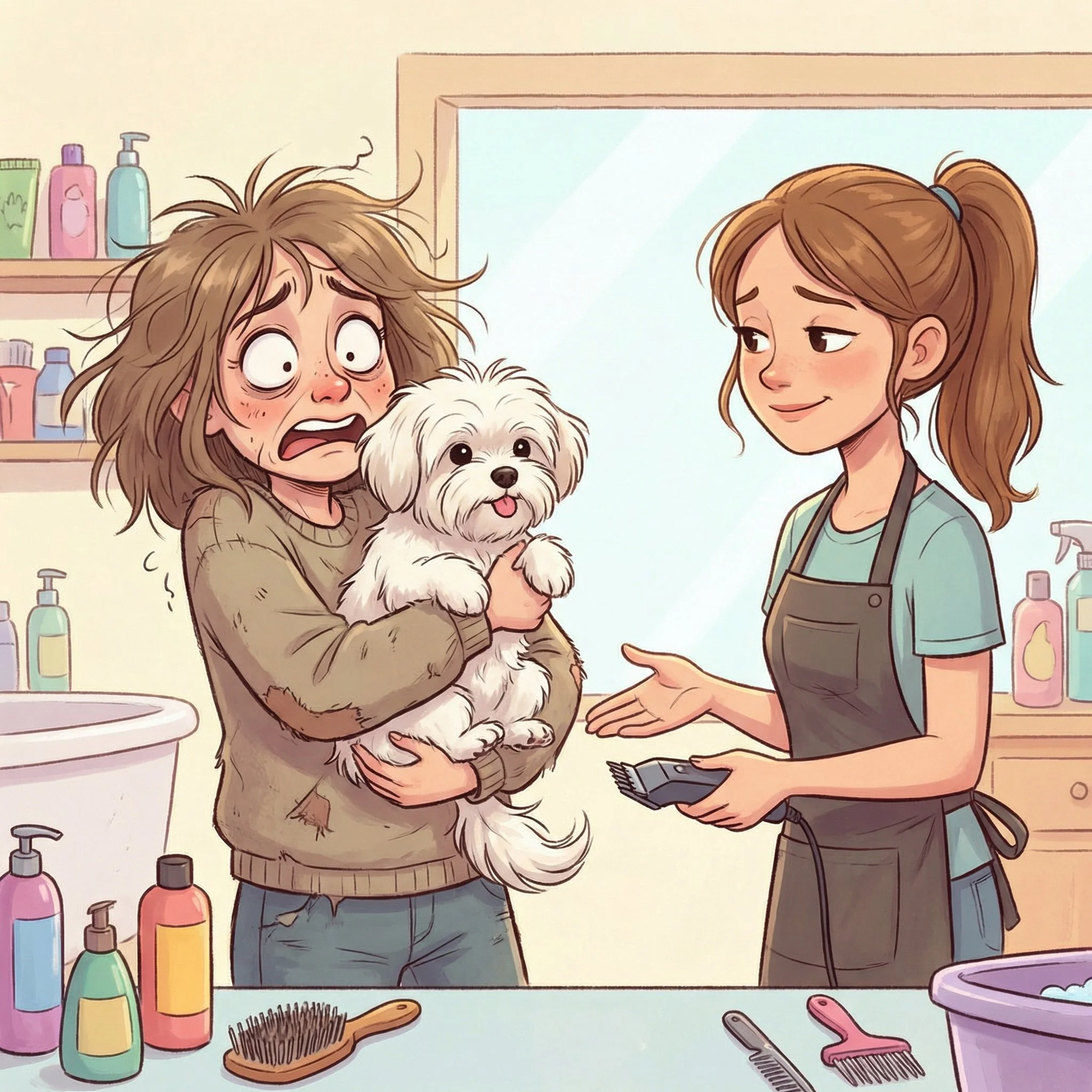
The dog booked in was nervous. The owner was worried about leaving him. The groomer, wanting to be kind and accommodating, agreed that the owner could stay during the groom so the dog would feel more comfortable.
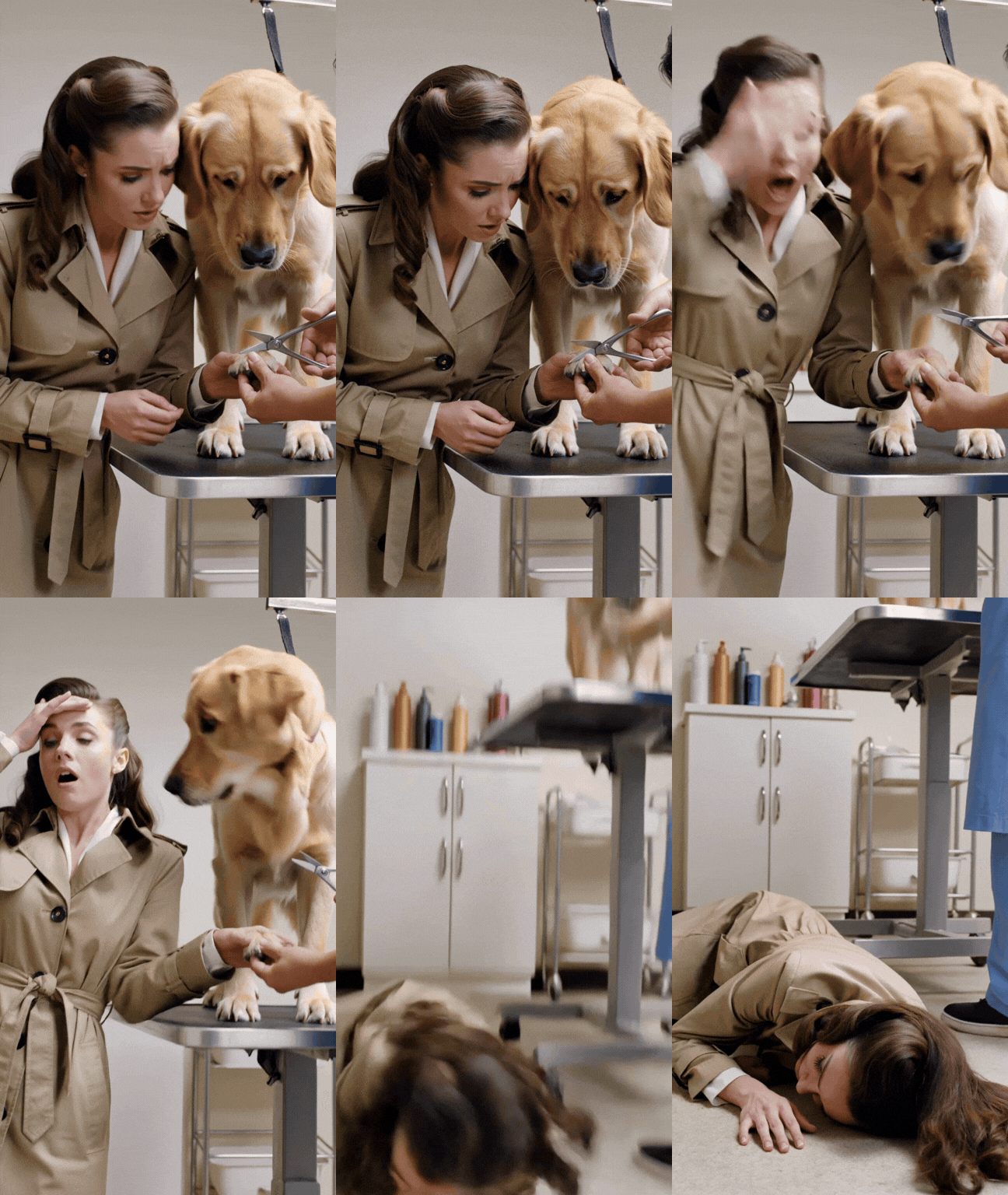
Anyone who has been grooming for a while can probably feel where this story is heading already. (Hi 👋)
The owner stood nearby while the groom was underway and talked through the process, offering (copious) reassurance to the dog and the occasional bit of guidance to the groomer. Everything appeared to be going smoothly until it came time to trim the nails. The dog began to shake, the groomer clipped, and one nail was quicked.
The dog wasn’t particularly distressed and the situation looked manageable, but before the groomer had a chance to deal with it properly the owner scooped the dog up and headed straight to the vet. Now the groomer is left wondering whether they should pay the vet bill and whether they should still charge for the groom.
At first glance the story seems to revolve around the quicked nail. That tends to be the moment everyone remembers, because a drop of blood always looks dramatic if you’re not used to seeing one.
But the nail probably isn’t the most interesting part of this situation.
The more revealing part is what was happening in the room before the clippers ever touched the dog.
Dogs are extraordinarily good at reading the emotional state of the humans around them. Anyone who has worked with animals for long enough has seen how quickly tension travels down a lead. Owners often don’t realise how much information they are broadcasting with their posture, their breathing, or those little worried noises people make when they are trying very hard not to sound worried.
When someone stands beside the grooming table quietly anxious about what might happen next, the dog notices. From the owner’s perspective they are staying close so their dog feels supported. From the dog’s perspective their trusted human appears deeply concerned about something happening on that table, which is a fairly convincing signal that perhaps the dog should also be concerned.
Once that loop begins it tends to feed on itself. The dog becomes more alert and unsettled, the owner notices the dog is unsettled and becomes more worried, and before long the whole room feels a little tighter than it did when the dog first walked in.
None of this is malicious or intentional. It is simply the way dogs and humans influence one another.
Unfortunately it is also exactly the sort of atmosphere that makes delicate tasks like nail trimming more difficult than they need to be.
Dog grooming requires a surprising amount of concentration. Anyone who does the work knows how much is happening at once while a groom is underway. You are managing the dog’s balance and behaviour, working safely with sharp tools, watching body language, adjusting technique moment by moment, and trying to keep the entire experience calm enough that the dog doesn’t feel the need to protest.
Now imagine doing all of that while someone stands beside you offering running commentary about the process. It’s a little like calling a plumber to fix a pipe and then standing over their shoulder explaining how plumbing works. The plumber might smile politely for a while, but eventually they are going to wish you’d step back and let them get on with the job.
Dog groomers are in much the same position.
The traditional rhythm of grooming has developed the way it has for good reason. The owner hands the dog over, the groomer gets to work, and the owner returns when the job is finished. Once the human half of the partnership has stepped outside, many dogs relax surprisingly quickly. Without that emotional back-and-forth between dog and owner feeding the tension in the room, the environment often settles into something calmer and more predictable. Though it is always worth staying curious about whether that settling is genuine relaxation or something quieter. A dog that becomes very still and compliant once its owner has gone is not always coping. Sometimes it has simply learned that communication is pointless. The difference matters, and it is worth watching for.
It also allows the groomer to focus properly on the dog, which is not an unreasonable expectation when someone is working with clippers, scissors and nail trimmers around a moving animal.
None of this means groomers are trying to hide anything from their clients. Quite the opposite. Groomers are simply trying to create the kind of environment where the dog can be handled safely and the work can be done well.
When the blood appears
Which brings us back to the nail.
Quicking a nail is one of those small incidents that most groomers will experience sooner or later. Dogs move unexpectedly, nails grow in unpredictable ways, and sometimes the quick sits a little further forward than anticipated. In the vast majority of cases the bleeding stops within moments once clotting powder is applied, and the dog quickly returns to worrying about far more important things, such as whether there might be a biscuit involved.
But if you’ve never seen a quicked nail before, the sight of blood coming from your dog’s paw can feel like a full emergency.
For the owner in this story the thought process probably went something like this:
There is blood → That blood belongs to my dog → Something terrible must be happening → I must leave immediately and find a vet before things escalate.
In other words, a perfectly understandable burst of holy-shit-it’s-my-dog panic.
From the groomer’s perspective it’s a moment that usually lasts about thirty seconds while the styptic powder goes on and the dog looks mildly offended that everyone has stopped paying attention to them.
From the owner’s perspective it can feel like the opening scene of a limited series veterinary drama.
And when that moment happens in a room that is already a little tense, it is easy for everyone’s adrenaline to spike at once.
The quieter lesson underneath
There is also a quieter lesson here for groomers who are just starting out in the industry.
Clients learn very quickly what to expect from you. If you allow owners to stay beside the table directing the groom, that becomes the experience they expect every time they visit. If you establish from the beginning that dogs are dropped off and collected later, most clients accept that this is simply how professional grooming works.
Setting those boundaries isn’t unfriendly. It is part of creating a calm, safe environment where the groomer can concentrate and the dog has the best chance of settling into the process.
After all, dog grooming involves sharp tools, moving animals, and a fair bit of trust on everyone’s part.
It works best when the groomer can focus on the dog, the dog can relax into the routine, and the owner returns later to pick up a dog that looks and feels better than when it arrived.
And sometimes the kindest thing a groomer can do for a nervous dog is simply take the lead, offer the owner a reassuring smile, and say:
“We’ve got him from here.”
Of course, a calm room and a focused groomer are only part of the picture. If a dog is genuinely struggling with the grooming environment, the most useful thing a groomer can do is not just manage the owner, but try to understand what the dog is telling them. Slowing down, reading the signals, and adjusting the approach accordingly will do more for a nervous dog in the long run than any amount of owner management.
The goal is not just a dog that tolerates the groom. It is a dog that copes a little better each time.
With love,
igroomhub x