
Sometimes, at the end of a groom, the person picking up the dog bends down, gives them a cuddle and says, ‘Oh, you smell beautiful.’
It’s a lovely moment. We understand why a groomer would want to put a little spritz on the dog before that handover. We also understand why someone would go to the pet shop the following week and buy a bottle so they can get that same smell at home. It smells like their dog has just been looked after.
Once the dog’s home, though, the person goes off to put the kettle on and the dog goes to their bed. By then, one of them has already stopped thinking about the cologne. The other is still wearing it.
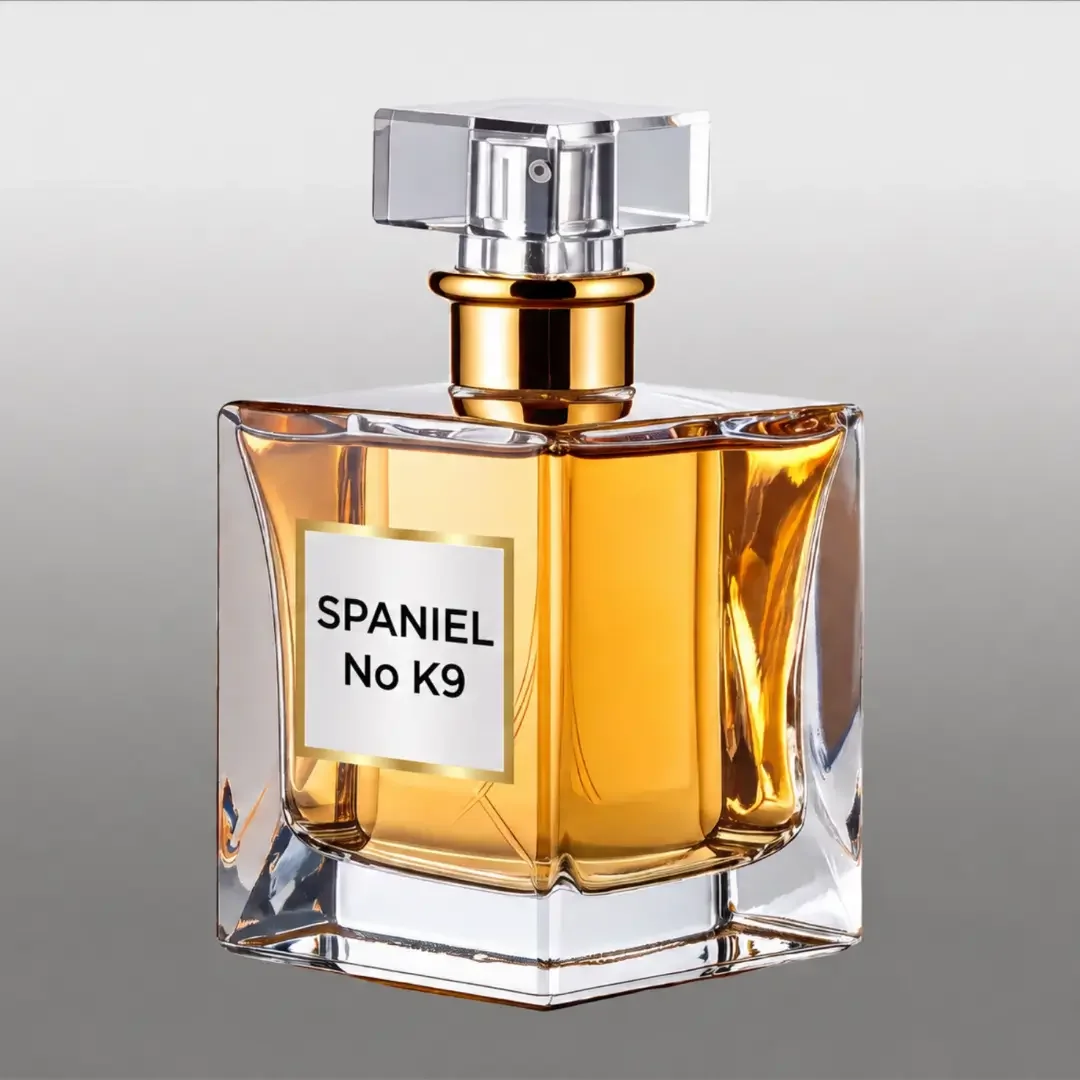
A tale of two fragrances
For Nat’s birthday, we spent an afternoon at a fragrance-making workshop. We love fragrance, and it was fabulous. A little more of this, a little less of that, until we both walked out smelling exactly how we wanted to.
On the way out, we spotted a shelf of fragrances made for dogs. We’d seen them in pet shops and grooming ranges before. Now here they were at a perfume workshop for people.
As much as we loved what we’d made, we’d had enough by the time we got home, so we washed it off. It made us wonder what the dog would choose, if anyone asked.
When did dogs get a signature scent?
We call them our babies. We buy them little coats and choose collars as though we’re buying jewellery. It’s easy to look at a freshly groomed dog with round feet and a teddy bear face and get a bit carried away. Give that same dog half a chance, though, and they’ll be under the hedge investigating something deeply unappealing.
There’s room for a bit of silliness in how we love our dogs. A coat can keep a dog warm, and a collar can carry their ID. If they’re comfortable in the little green jumper you couldn’t resist, fair enough. With cologne, we think we’ve taken the humanising a step too far. We’ve taken something we enjoy doing to ourselves and made it part of how we care for an animal whose experience of smell is very different from ours.
And it’s easy to buy into. Pet shops stock colognes marketed for use between baths. Grooming ranges sell them alongside the shampoos and conditioners we already use. Dolce & Gabbana even sells one with ylang ylang, musk and sandalwood as part of a ‘dog’s beauty routine’. A shopper could be forgiven for thinking their dog is missing out on something.
What’s going on in that little nose?
Think about the lamppost your dog just has to stop at every morning. You’ve walked past it a hundred times. As far as you’re concerned, it’s the same lamppost. For the dog, it’s worth checking again. The smells around it can change even when the street looks exactly the same to us.
There’s some lovely science behind that. When a dog sniffs, part of the incoming air follows a separate route into a pocket deep inside the nose. The folds in that pocket are lined with scent-detecting tissue, giving the dog a large surface for picking up odours. Each nostril draws in air from a slightly different spot, which can help the dog work out where a smell is coming from. And as the dog breathes out between sniffs, air exits to the sides, helping draw fresh scent towards the nose for the next sniff. There’s another clever bit! When the dog breathes out, very little air flows back through that scent-detecting pocket. That gives some of the odour from the last sniff a little longer in contact with the tissue that detects it. If you’ve ever watched a dog work their way across a patch of grass with their nose down, that’s some of what’s going on.
They’re also picking up information about other individuals. In one study, dogs spent longer investigating a sample of their own scent when researchers added another odour to it. In another, dogs followed a familiar person’s scent trail and reacted differently if they found a different person at the end. Think about that for a second. The smell on the ground gave the dog a reason to expect a particular person.
Here’s a number that surprised us. Dogs are estimated to have up to 300 million smell-sensing cells in their noses, compared with about 5 to 6 million in humans. A dog might pick up a trace of a fragrance ingredient we can’t smell at all. But once we can both smell the cologne, those numbers can’t tell us how strong it smells to the dog or whether they find it pleasant. We know how it smells to us. We’re guessing how it feels to wear it all afternoon.
That’s a nose built to read the world. We tend to judge cologne by how it smells when we hold the bottle or cuddle the dog. The dog is the one who has to wear it.
A sniff is one thing. Wearing it is another.
In a study of canine scent preferences, researchers set out fragrance samples and let the dogs move around and investigate them. A dog could approach a smell, spend a bit of time with it and move on. The researchers also pointed out that dog cosmetics often carry strong fragrances designed to appeal to owners. That’s worth thinking about when the person choosing the scent is the one who gets to put the bottle down and walk away.
If a dog has had enough of the lamppost, they can keep walking. If they’ve had enough of the cologne on their coat, they can leave the room, the car or the house and still be wearing it.
When Dolce & Gabbana launched Fefé, the UK RSPCA raised concerns that added fragrance could be unpleasant for dogs, given how heavily they rely on smell to explore their surroundings. The ASPCA also notes that dogs with skin allergies can develop irritation from dog perfume, and that dogs with nasal allergies may be affected by the smell.
‘Safe for dogs’ still leaves a question
A dog can tolerate a fragrance and still prefer to move away from it. Once it’s on their coat, that choice has been made for them. So even if a product is safe to use as directed, we’d still ask what the dog gets out of wearing it.
That’s where we land on welfare. Having a say in what happens to them matters to dogs, and putting a fragrance on their coat takes that say away. The fragrance is there for us to enjoy. The dog is asked to live with a choice we made for ourselves.
What if the dog does smell?
First, there’s ordinary dog smell. There’s also ‘I rolled in something and I’m very pleased with myself’ dog smell. You’ll probably know which one you’re dealing with.
For everyday care, RSPCA Australia recommends choosing a dog shampoo suited to the dog’s skin and coat, and working out how often to bathe them based on their health, coat and what they get up to. Sometimes the thing that needs a wash is the blanket they’ve been sleeping on all week. And if a new or unusual smell hangs around after a bath or keeps coming back, ask your vet about it. Skin conditions, ear infections and dental disease can all cause persistent odour.
Some shampoos leave a scent too. We choose shampoo to clean the coat, and we rinse it out. With cologne, leaving a fragrance behind is the point.
We know where we stand. What do you think?
The science gives us a pretty good picture of what happens when a dog sniffs. Their nose can pick up traces of odour we’d miss, so they might still smell something on their coat after we’ve stopped noticing it. What we don’t know is how long a particular cologne stays detectable to the dog, how strong it smells to them, or whether they’d choose to keep smelling it. That’s where we’re all guessing.
Who the product is sold to is easier to answer. The fragrance is picked to appeal to the person holding the bottle. The company makes a sale, the human gets a scent they like, and the dog wears it. Maybe they’re perfectly happy with it. Maybe they’d move away from it if they could. Once it’s on their coat, that choice is gone. What’s the dog’s reason to wear it?
References
Research on how dogs sniff · Research on airflow around the nose · Study on dogs distinguishing their own scent · Study on dogs following a familiar person’s scent · Study on canine scent preferences · UK RSPCA comments in The Guardian · ASPCA grooming guidance · RSPCA Australia grooming guide · Australian veterinary guidelines on yeast skin infections · Melbourne Veterinary Specialist Centre on ear infections · RSPCA Australia on bad breath · University of Melbourne researcher on dogs’ smell cells (ABC News)